Why a Straightedge Can Stop the Ritual
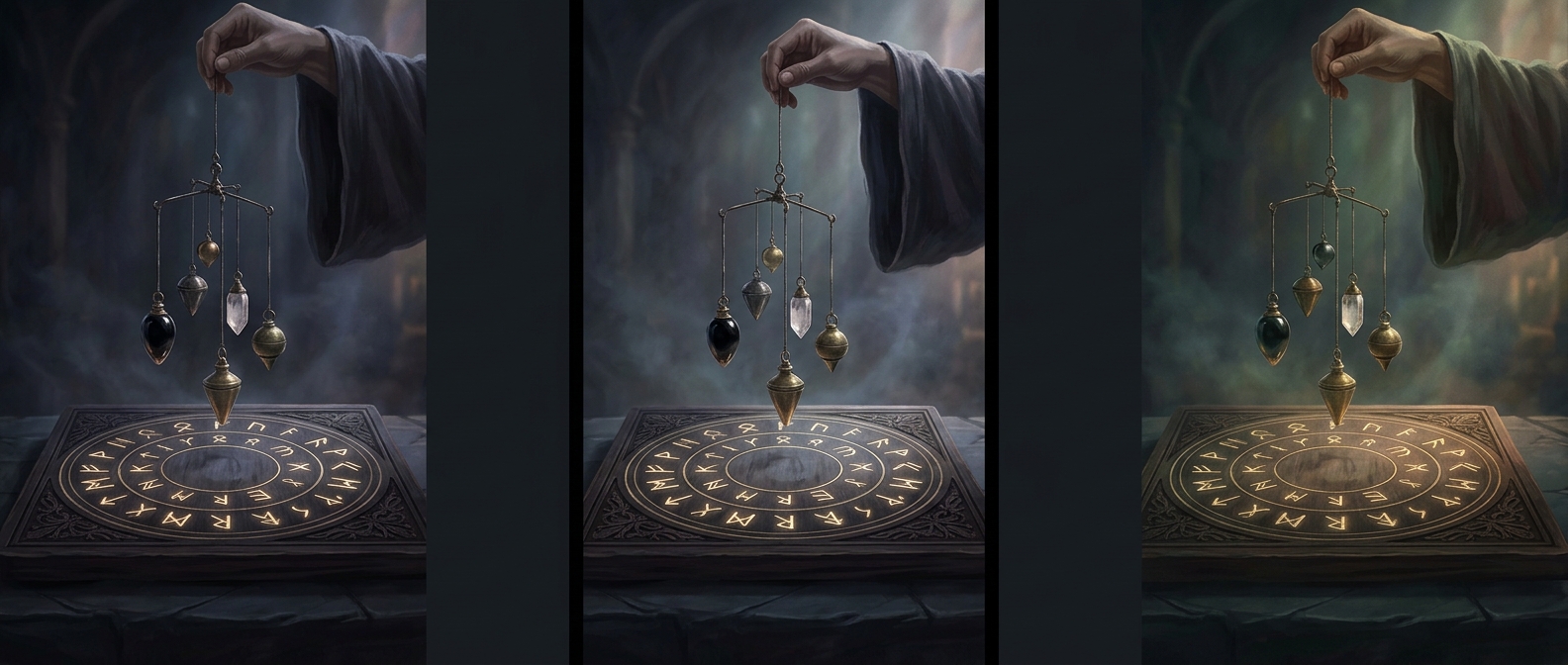
A ritual diagram is not always a quick sketch. Its lines may mark a boundary, divide a space, or position symbols in a deliberate arrangement. When the design calls for straight edges, a ruler—or a simple wooden straightedge—turns an approximate drawing into one that can be repeated consistently.
That makes the tool part of the preparation, not an optional flourish. If the diagram must be completed before the next step, a missing straightedge creates a very ordinary bottleneck: the person doing the drawing has to stop, search, and wait before continuing.
The Small Tool Behind the Big Pause
A straightedge does one unglamorous job: it guides a pencil or other marking tool along a straight path. It does not need to measure anything; unlike a ruler with marked units, a plain edge can be enough. But without it, a hand-drawn line may drift, especially when the design contains several connected boundaries or repeated shapes.
The contrast is what makes the interruption memorable. A carefully ordered ceremony can depend, at one crucial moment, on locating an everyday piece of wood. The ritual may be elaborate; the delay is simply that the ruler is somewhere else.