A Shared Story Can Make Heartbeats Rise and Fall Together
When people watch an emotionally gripping movie, their heart rates can follow similar patterns: speeding up during tense moments and easing during calmer ones. The response is surprisingly intimate because it happens inside each viewer’s body, even though the audience is simply sitting together.
The Screen Gives Bodies the Same Cues
A suspenseful pause, a sudden danger, or a moment of relief directs viewers’ attention at roughly the same time. The brain interprets those events as emotionally important and adjusts the body through the autonomic nervous system, which regulates functions such as heart rate without conscious effort. A threatening scene can prepare the body for action; a release in tension can let that arousal subside.
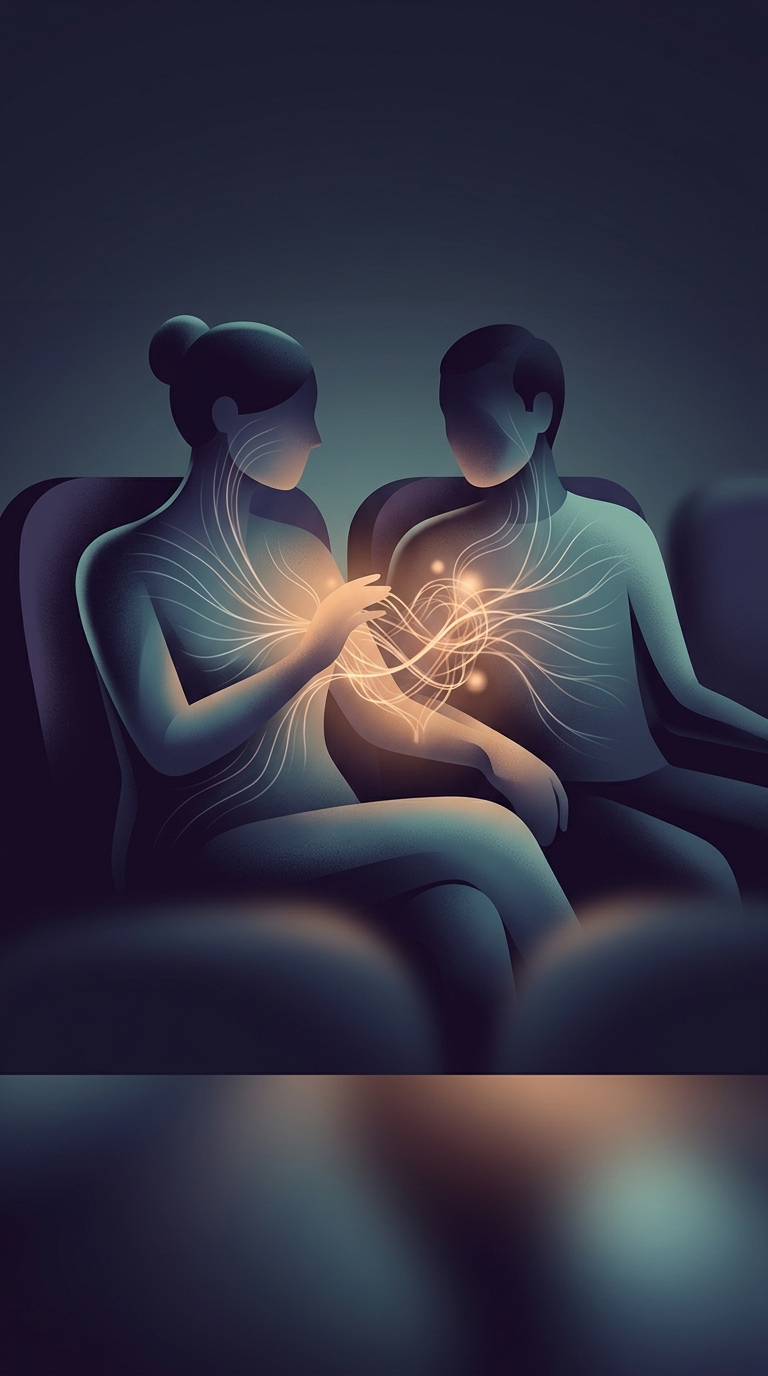
Because everyone is responding to the same sequence of events, their heart-rate patterns may resemble one another. This is physiological synchrony: bodies changing in parallel in response to shared experience. It does not mean the hearts are communicating or beating in lockstep, and viewers need not feel exactly the same emotion.
Attention Is Part of the Connection
The effect depends on more than being in the same room. A movie can hold attention and deliver emotional cues in a carefully timed sequence, giving the audience a common rhythm of suspense and release. If viewers become distracted or react differently, their bodily responses may diverge.
So a theater audience is not just sharing a plot. During a gripping scene, many people may be undergoing similar shifts in arousal at the same moment, each through their own nervous system.