Why the Two Halves of a Face Can Differ
A facial expression is not a single movement switched on evenly across the face. Small muscles around the eyes, mouth, and brows receive signals from the brain, and those signals do not always arrive with equal strength on both sides.
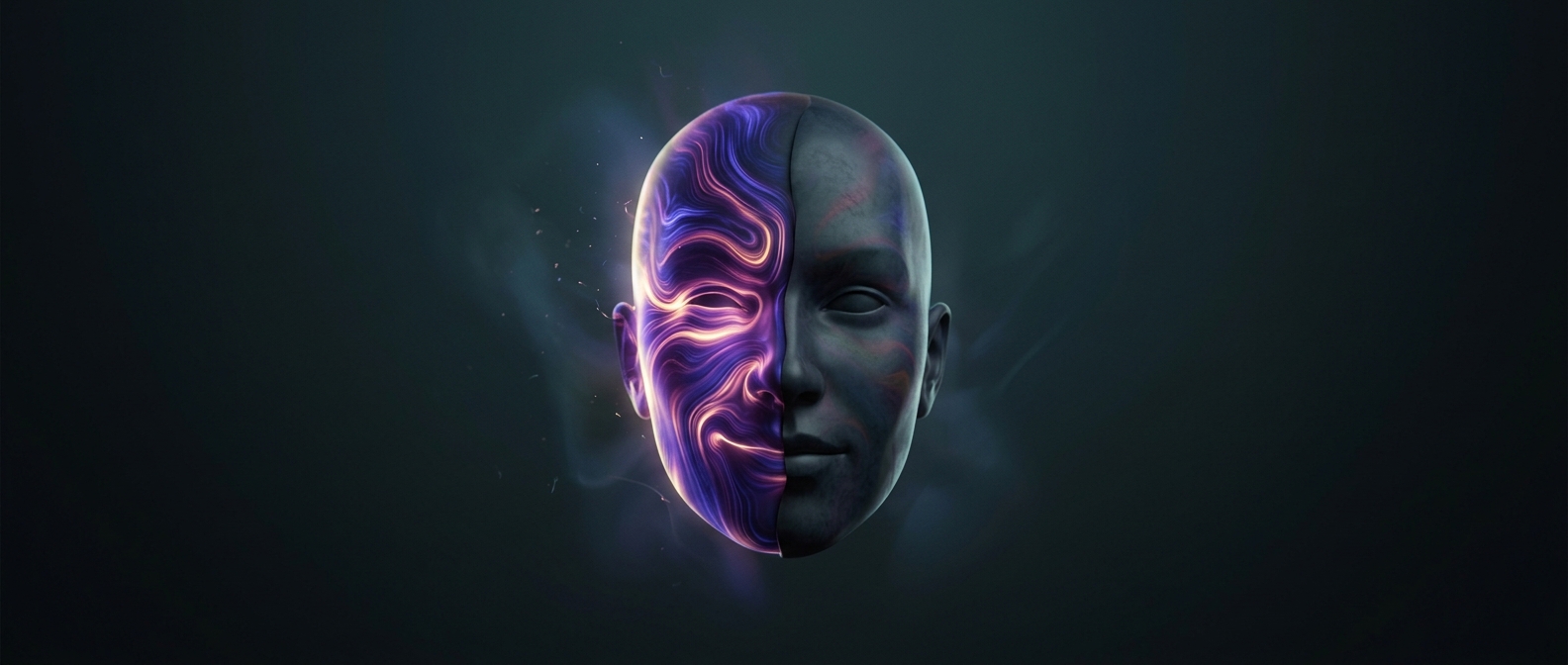
For many facial movements—especially around the lower face—motor commands are weighted toward the opposite side of the brain. The right hemisphere therefore has strong influence over the left side of the face. Because the right hemisphere also tends to play a prominent role in processing and expressing emotion, its signals can make an emotional movement more pronounced on the left.
Emotion and Deliberate Expression Use Different Routes
A spontaneous grin or grimace is not controlled in exactly the same way as a smile someone deliberately poses for a camera. Intentional movements rely heavily on brain regions involved in planning and voluntary control. Emotional expressions draw more on networks that generate and coordinate reactions, including circuits below the cerebral cortex—the brain’s outer layer.
These routes interact, and both hemispheres contribute. The result is a tendency, not a rule: one corner of the mouth may lift farther, or one eye may tighten more, without the other side remaining still. Muscles in the upper face also receive substantial input from both sides of the brain, so the left-right pattern varies by movement.
Asymmetry Is Normal, Not a Mood Meter
Expression changes from moment to moment with attention, effort, and the particular emotion being felt. A posed expression may be more even than a spontaneous one, while a fleeting reaction can pull one side ahead before the other catches up. A stronger left-side expression reflects overlapping brain pathways, not a reliable way to read someone’s feelings. The visible difference is often slight—but in a close-up, a small mismatch between the two sides can make an expression look more vivid or more spontaneous.