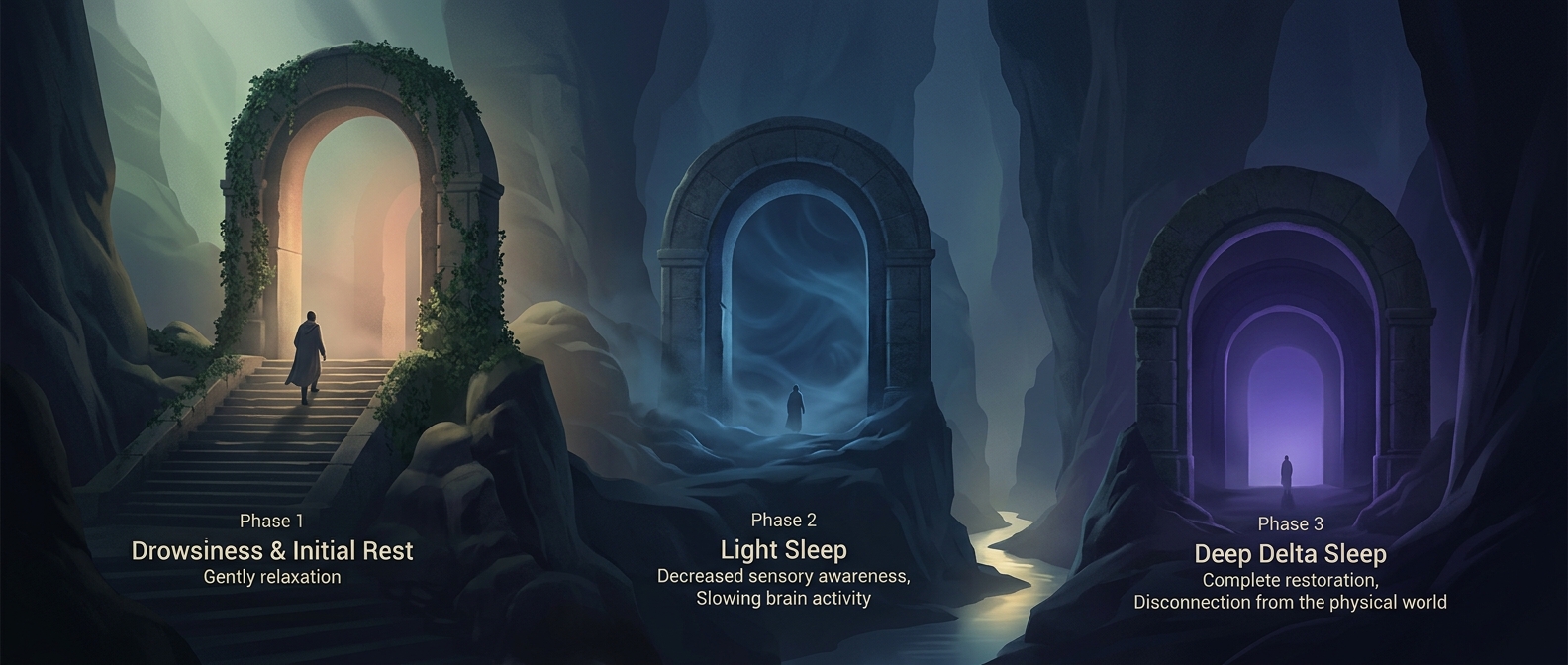
How a sleeping brain can keep the body moving
Sleepwalking is a partial awakening: the brain shifts out of deep sleep enough to support actions such as sitting up, walking, or opening a door, while the systems responsible for full awareness and judgment remain largely asleep. The person may have open eyes and appear awake, but they are not processing the situation as they would when fully conscious.
This mismatch helps explain why a sleepwalker can respond oddly—or not at all—when someone speaks to them. If they are fully awakened, the abrupt transition from deep sleep can leave them confused and disoriented for a short time. It does not make the heart stop; that is a myth, not a known effect of waking someone from sleepwalking.
The immediate concern is where they are walking
Because awareness and judgment are impaired, a sleepwalker may not recognize a staircase, an open door, or traffic as a hazard. The practical risk comes from the surroundings, not from waking the person itself.
If someone is sleepwalking, calmly guiding them back toward bed is often the simplest response. If they are near immediate danger, prioritize getting them out of it; waking them may be necessary, but they may be startled or confused. Avoid grabbing or shaking them unless needed to prevent harm.
The useful distinction is simple: waking a sleepwalker is not a cardiac emergency, but their lack of awareness can make an ordinary route through the house dangerous.