The brain eases into sleep, one stage at a time
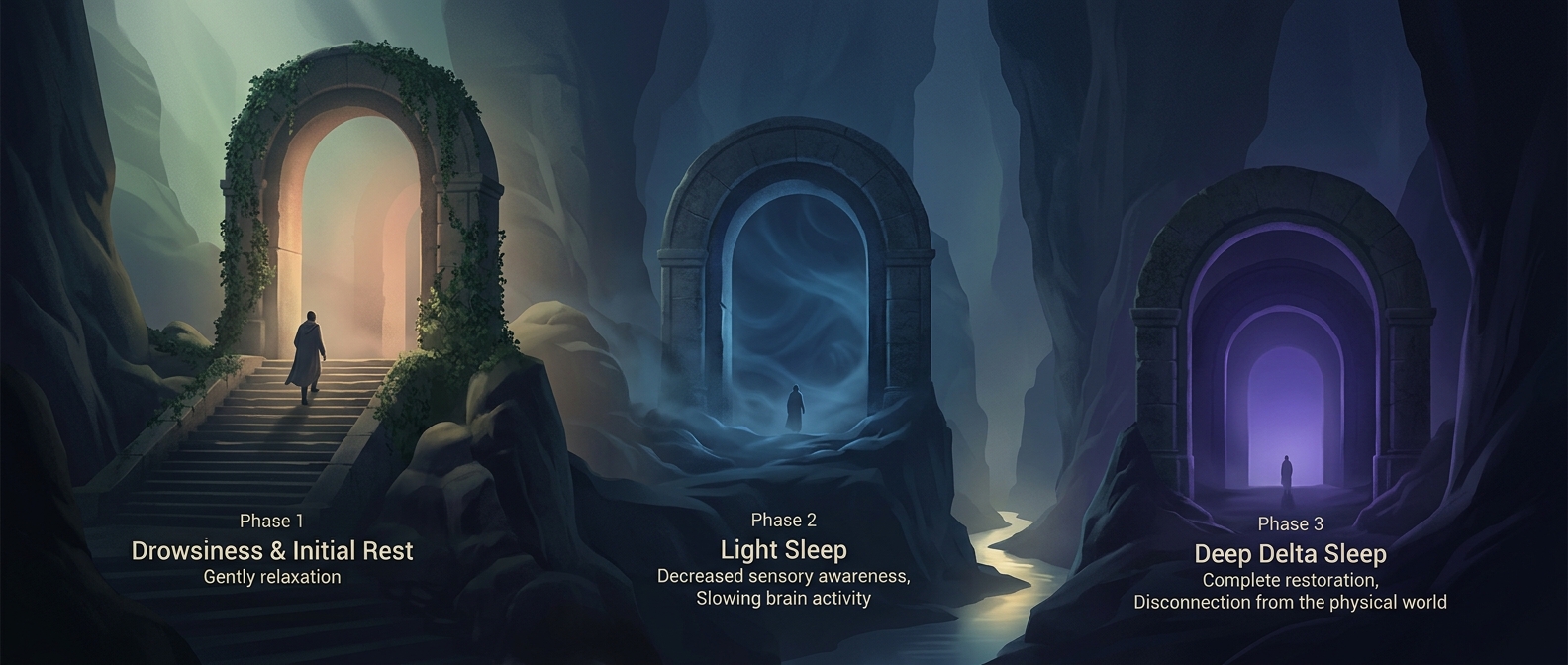
Sleep onset is not a switch that flips from awake to unconscious. As the brain shifts out of wakefulness, its electrical activity changes in recognizable patterns. The first stage, N1, is light and brief: awareness of the room begins to fade, and a person may still respond easily to a sound or touch.
N2 brings brief bursts of activity
The brain then spends more time in N2, a still-light stage that makes up a substantial part of ordinary sleep. Its signature sleep spindles are short bursts of rhythmic electrical activity. These are not moments of waking; they are part of the brain’s sleeping pattern, alongside occasional larger waves called K-complexes.
N2 is a transition, but not merely a hallway to deeper sleep. The brain can move back toward lighter sleep during the night, and a sleeper may pass through N2 repeatedly before reaching deeper stages.
N3 is the deepest part of the handoff
In N3, often called deep or slow-wave sleep, slow, large electrical waves become prominent. A sleeping person is generally harder to wake than in N1 or N2, and waking from N3 can bring a few moments of grogginess or confusion.
These stages describe changing patterns, not three perfectly separated compartments. The brain’s activity shifts over time, and sleep later cycles between lighter and deeper stages. That is why someone can appear to fall asleep quickly while the brain is still making a gradual passage from the last traces of wakefulness into deeper sleep.