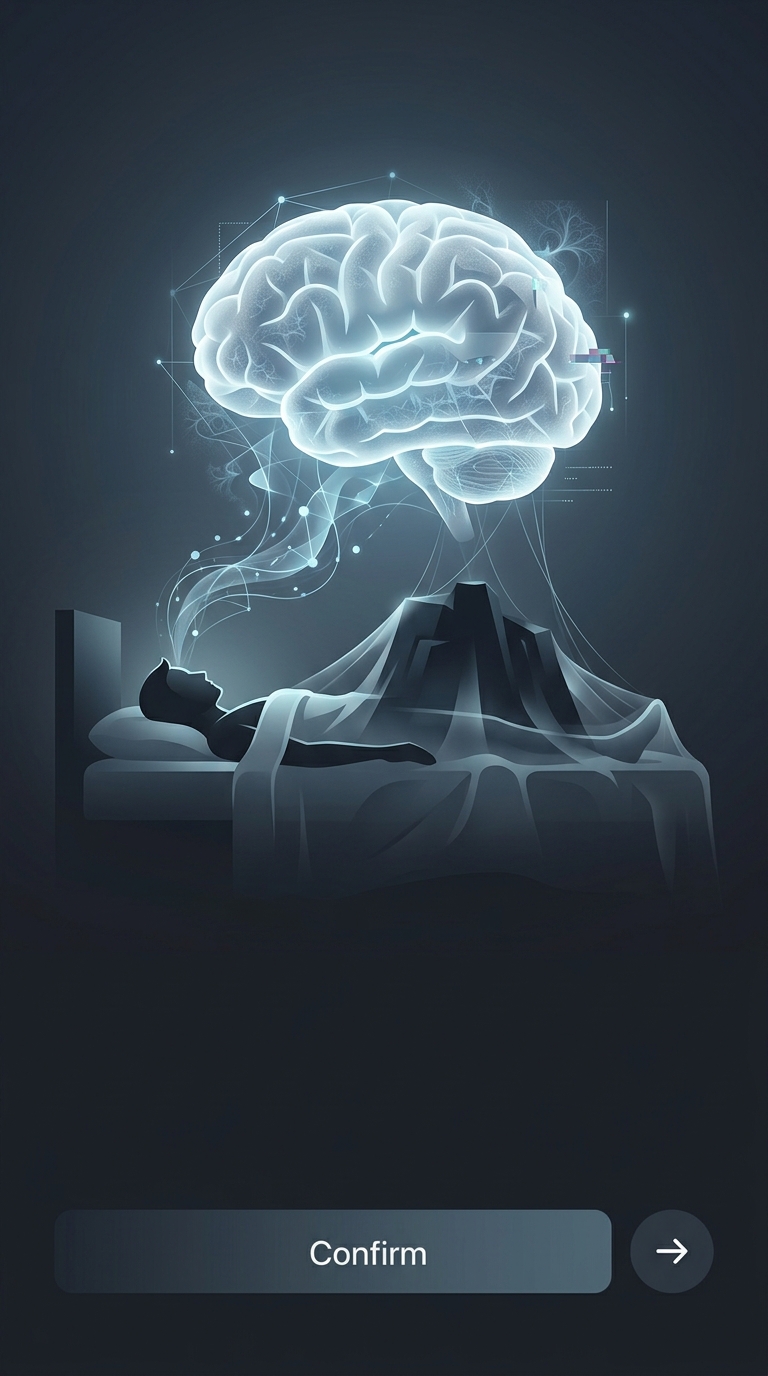
How a Sleeping Brain Can Keep a Routine Going
Sleepwalking usually happens during deep, non-rapid-eye-movement sleep, when the brain is not dreaming in the vivid way associated with REM sleep. In a partial arousal, some brain systems become active enough to support standing and simple, practiced actions, while the systems that support full awareness and deliberate decision-making remain largely asleep.
That uneven handoff helps explain why a sleepwalker may walk through a familiar room or perform a routine action without responding normally to people nearby. The body can draw on well-practiced movement patterns, but the person is not navigating with the alert attention they would use while awake. Their eyes may be open, yet that does not mean they are fully aware of what they see.
Familiar Routes, Unfamiliar Risks
A known path requires less moment-to-moment planning than an unfamiliar one. That can make ordinary movement possible during a partial arousal, but it does not make the person reliably capable of judging obstacles or danger. A staircase, an open door, or an object left in a walkway can turn an apparently purposeful trip into a hazardous one.
Sleepwalkers often have little or no memory of an episode afterward, because the brain was not fully awake to form and store a normal account of what happened. The striking detail is that coordinated movement is not proof of conscious intent: a person may seem to be carrying out a plan while the attention and judgment that normally guide that plan are still offline.