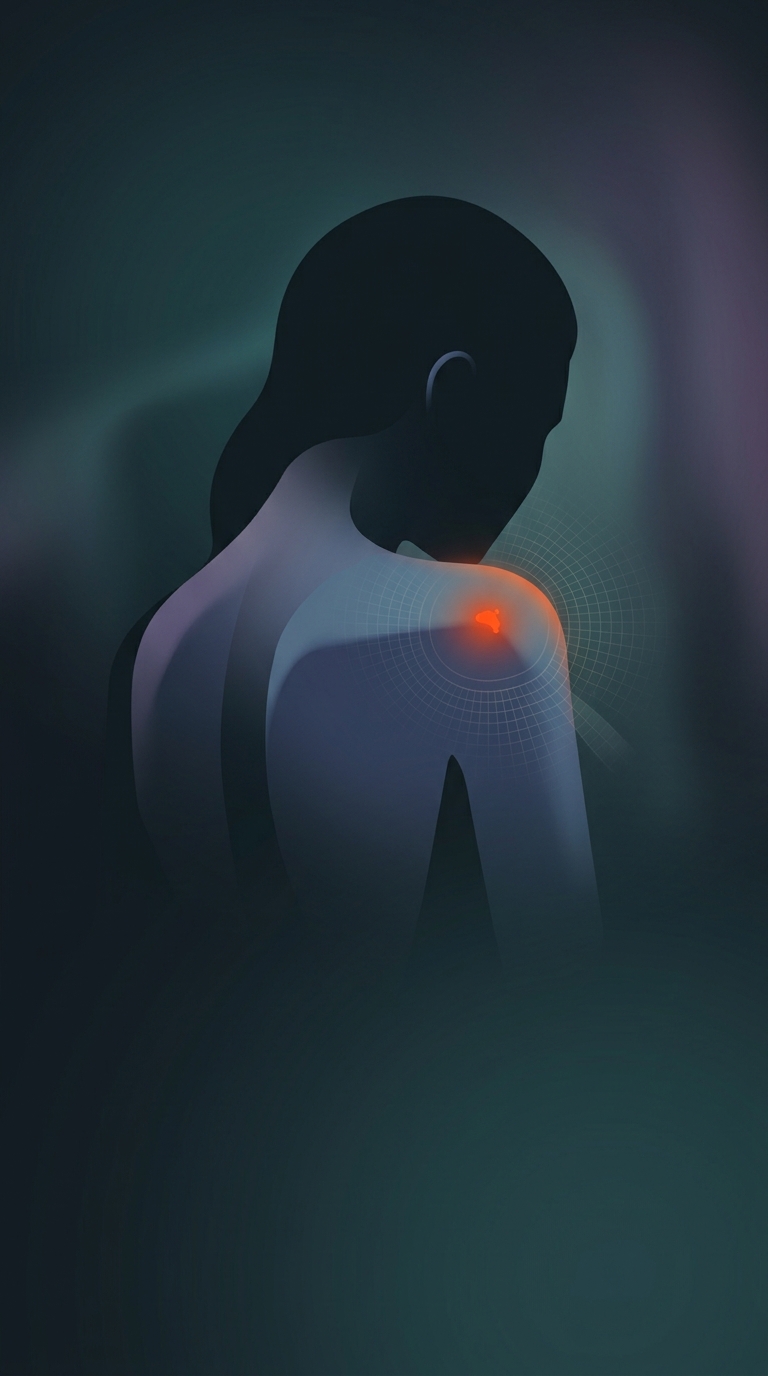
Why a scratch quiets an itch
Itch and pain are not completely separate sensations. Some of the nerve pathways that carry them converge in the spinal cord, where incoming signals can influence one another. A scratch supplies a strong competing signal: activity from pain-sensing nerves can recruit local circuits that dampen itch messages before they travel onward to the brain. The brain also shifts attention to the sharper sensation, making the itch feel less urgent.
That change is temporary. Scratching does not necessarily remove whatever started the itch—such as an insect bite, dry skin, or inflammation—so the original signal can still be there once the counter-sensation fades.
How relief becomes a cycle
A forceful scratch can break the skin’s outer barrier, even when the damage is too small to notice. Injured tissue may release substances that stir up inflammation and activate nearby sensory nerves. Those nerves can then send more itch signals, prompting another scratch. The skin becomes more irritated, and the short-lived relief makes repeating the behavior tempting.
This is why “just don’t scratch” can be difficult advice to follow: scratching works briefly, which reinforces the response, even as it may worsen the source of the itch. The same action can interrupt the sensation now and intensify it later. With persistent itching, the useful target is not merely the urge to scratch but the condition irritating the skin in the first place.