Why a hormone shift can trigger migraine
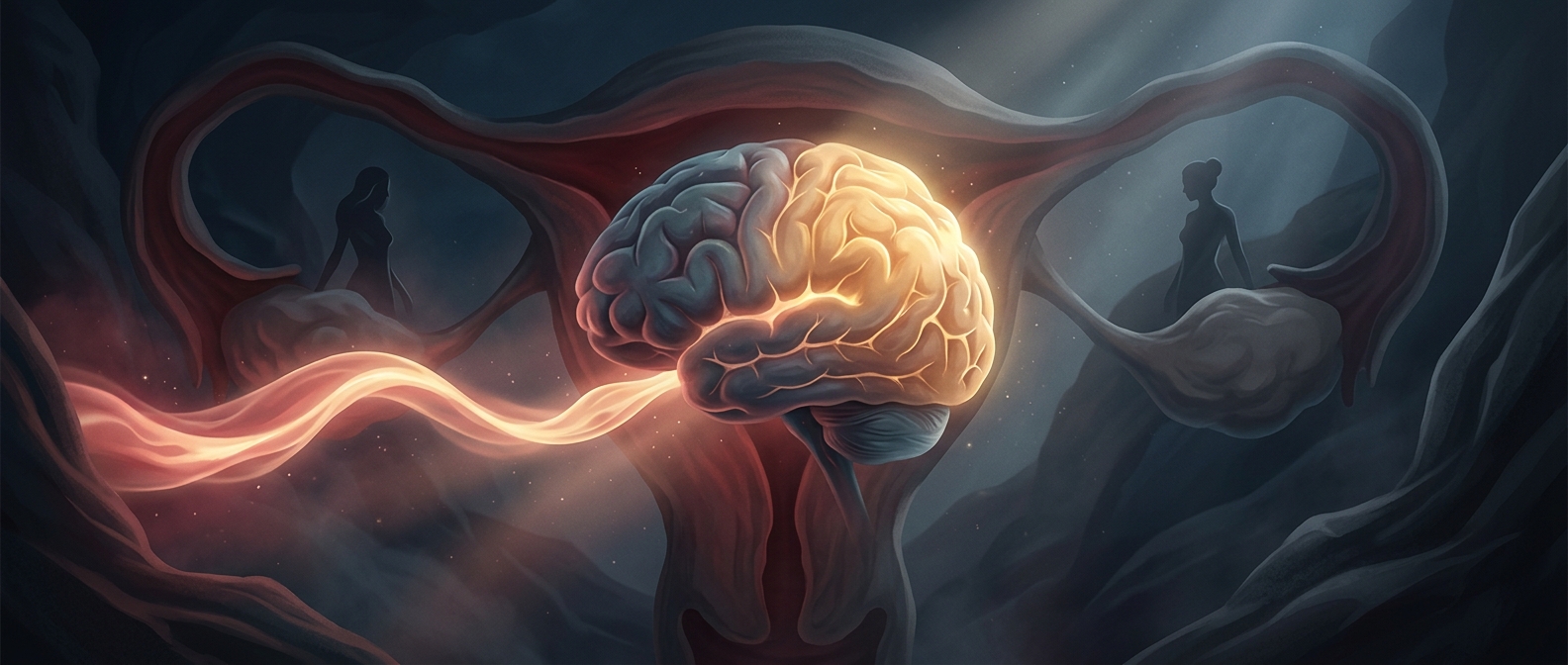
For some people who get migraines, attacks cluster in the days just before menstruation. The timing is linked to a normal change in the menstrual cycle: estrogen levels fall in the late cycle, before bleeding begins. That drop does not cause a headache in everyone, but it can make the nervous system more likely to start a migraine in someone who is susceptible.
From estrogen change to pain
Migraine involves the trigeminal system, a network of nerves that carries sensation from the face and head and helps relay pain signals. A change in estrogen can influence how readily this system responds. When it becomes more excitable, signals can prompt the release of CGRP, short for calcitonin gene-related peptide. This molecule helps transmit pain and contributes to the processes involved in migraine.
The result is not simply a hormone level turning pain on like a switch. Rather, the late-cycle shift can lower the threshold for an attack: ordinary triggers or activity in a migraine-sensitive nervous system may then be enough to set one off. The attack can begin before any bleeding, because the hormonal change comes first.
Why the pattern can matter
Clinicians often distinguish menstrual-related migraine by its recurring timing around the start of a period. Tracking attacks alongside cycle dates can help reveal that pattern, especially when the timing is easy to mistake for coincidence. It also explains why an attack may arrive on schedule even when nothing unusual seems to have happened that day: the trigger may be a predictable internal change, not an obvious event outside the body.