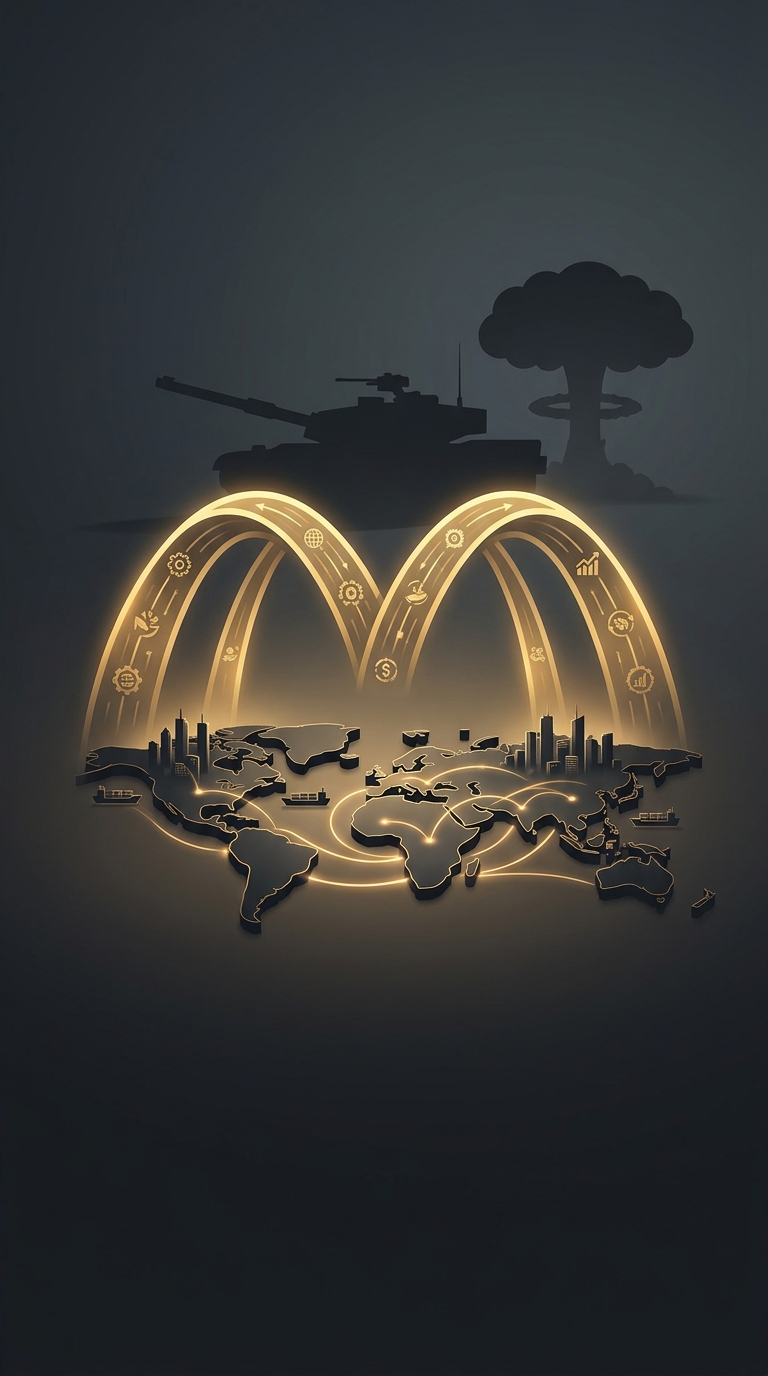
Why a burger chain looked like a peace signal
The Golden Arches Theory treated a McDonald’s restaurant as a visible marker of a much larger economic shift. A country with an international fast-food chain was likely connected to foreign investment, supply networks, tourism, and consumer markets. Those ties could make conflict costly: businesses might lose customers and assets, workers could lose jobs, and governments could face economic pressure from trading partners.
The chain itself was not the cause of peace. It was a convenient sign that leaders and citizens had something to lose from disrupting ordinary commerce. In this view, a border mattered less when people on both sides had a stake in keeping goods, money, and travel moving.
The sign was mistaken for the mechanism
A restaurant cannot bind governments to peaceful conduct. The theory treated a pattern—commercially connected countries often avoiding war—as if it were a dependable rule. But the same conditions that help attract global businesses, such as political stability and predictable institutions, can also make war less likely. The arches may have indicated those conditions rather than created them.
And economic ties do not always outweigh security fears, territorial claims, or leaders’ political aims. A government may decide that those goals matter more than lost trade, or may believe a conflict can be contained. When that happens, businesses face the consequences rather than prevent them.
Russia’s 2022 invasion of Ukraine made the distinction concrete: McDonald’s had operated in both countries before the war, but the restaurants did not prevent it. The chain’s Russian business later closed and was sold. A shared marketplace can raise the price of conflict; it cannot guarantee that anyone will refuse to pay it.