A turn can become a bottleneck
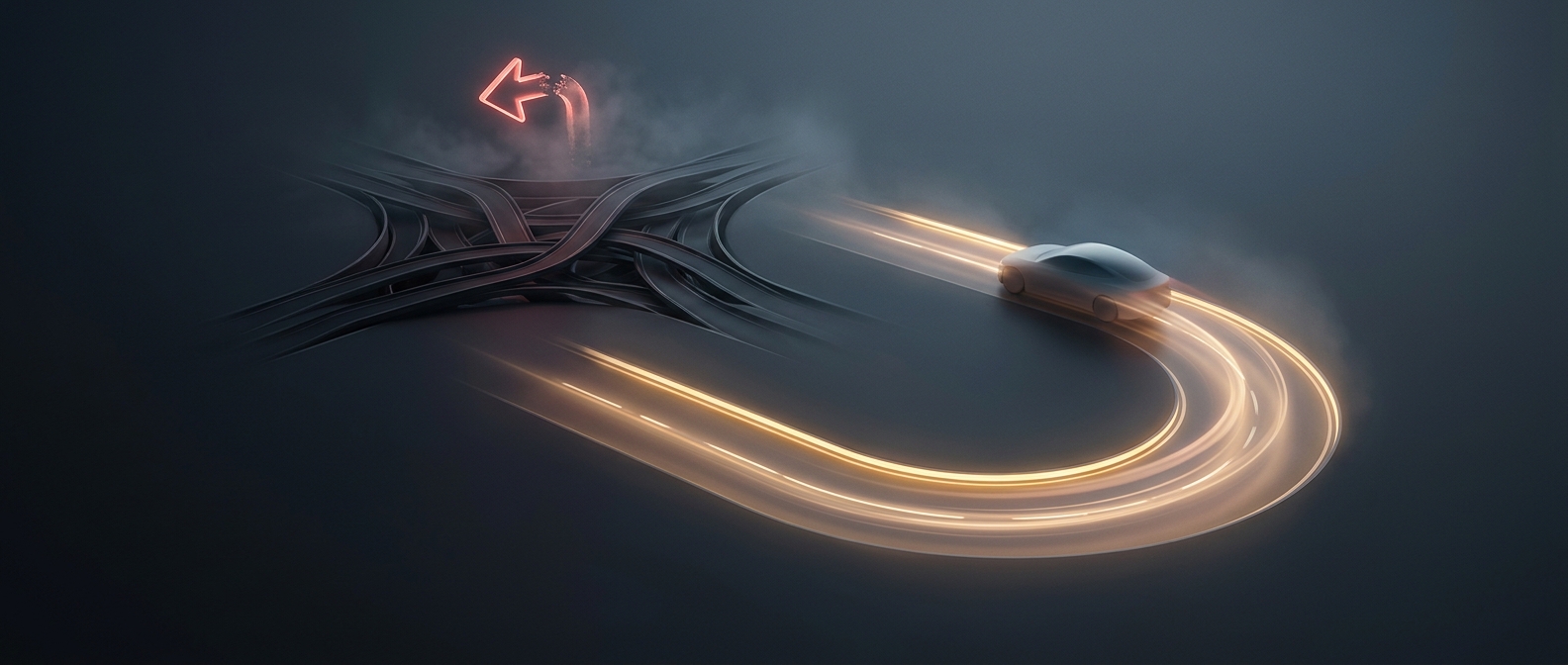
A left turn across oncoming traffic is not just a brief pause for the turning driver. It also interrupts the stream of cars moving behind that driver: they may have to brake, wait, or find room to pass. In a drive-thru, where vehicles are already traveling close together and have few ways around one another, that pause can quickly slow the entire queue.
Designing the queue to keep moving
A drive-thru layout can reduce that conflict by guiding cars through a one-way path around the building, with entrances and exits arranged so drivers do not need to cross opposing traffic to join or leave the line. The point is not that every vehicle moves continuously; customers still stop to order and collect food. It is that one car’s maneuver is less likely to block cars that have no reason to stop.
This is a form of queue management: shaping the route so waiting happens in designated places rather than spilling into the access road or parking lot. A lane that backs up beyond its intended space can obstruct other customers, complicate deliveries, or make it harder for traffic to enter the site. Preventing a turning conflict can therefore protect more than the drive-thru’s pace.
A tradeoff in the site plan
The smoother route takes space. A loop around a building needs room for cars to queue and turn, and its position must fit the entrances, parking, and surrounding streets. For the business, the layout is a practical balance: use land to keep vehicles moving predictably, rather than letting a single difficult turn bring a line to a standstill.