The geometry of the shared space
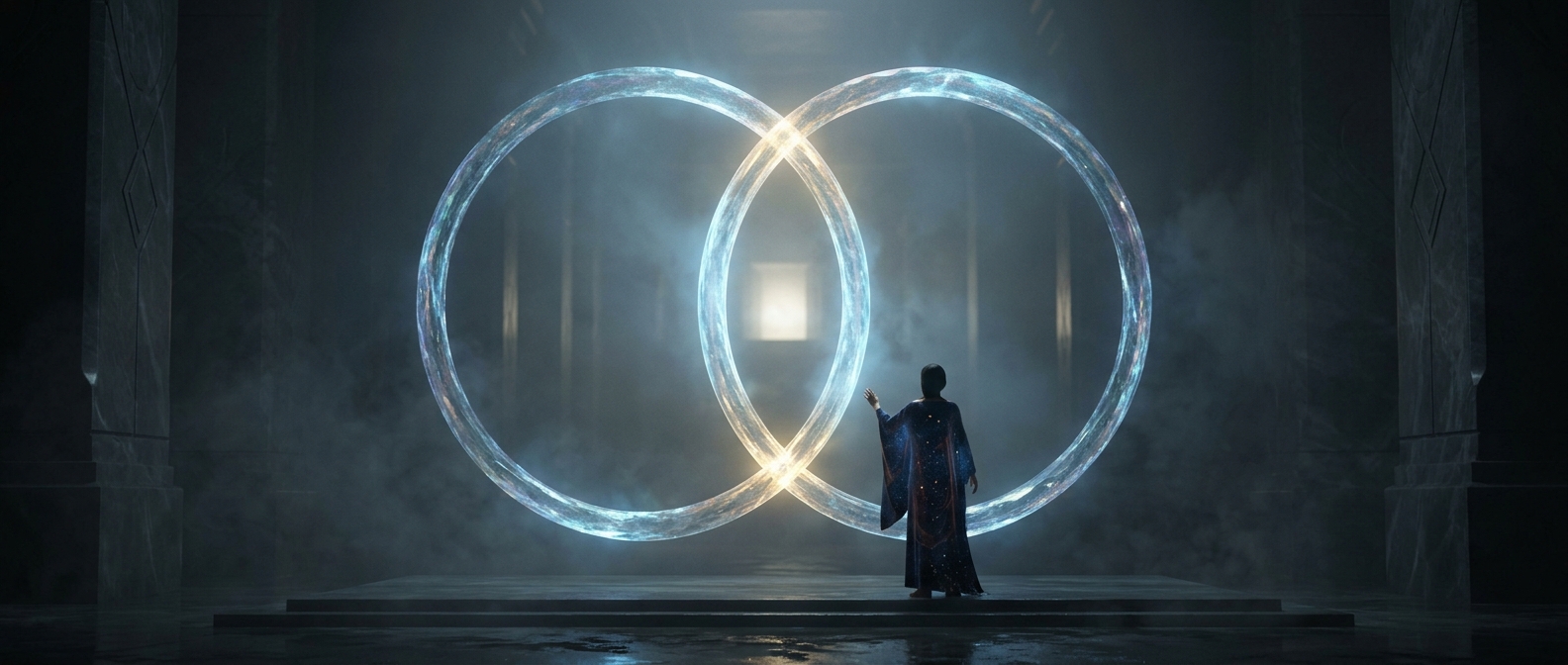
A vesica piscis is the lens-shaped region made when two equal circles overlap. In the classic construction, each circle’s center lies on the other circle’s edge. The result has two pointed ends and a broad middle: neither circle disappears, but their intersection forms a distinct third shape.
That geometry makes the symbol easy to read as a meeting that produces something new. The almond is not a separate object placed between the circles; it exists only because both circles contribute to it. Its outline also gives the eye a clear boundary, making the shared region stand out from the two larger forms.
Why traditions give it creative meaning
Esoteric interpretations treat that shared region as an image of creation, birth, or emergence—the new thing that appears where two sources meet. The geometry itself does not prove a spiritual claim. It supplies a compact visual metaphor: unity without erasing difference, and a result that belongs to the relationship between its parts.
The name is Latin for “fish bladder,” a description of the shape rather than an explanation of its meaning. Its pointed, enclosed form helps the metaphor endure: creation is pictured not as something arriving from nowhere, but as something taking shape in the space held in common.