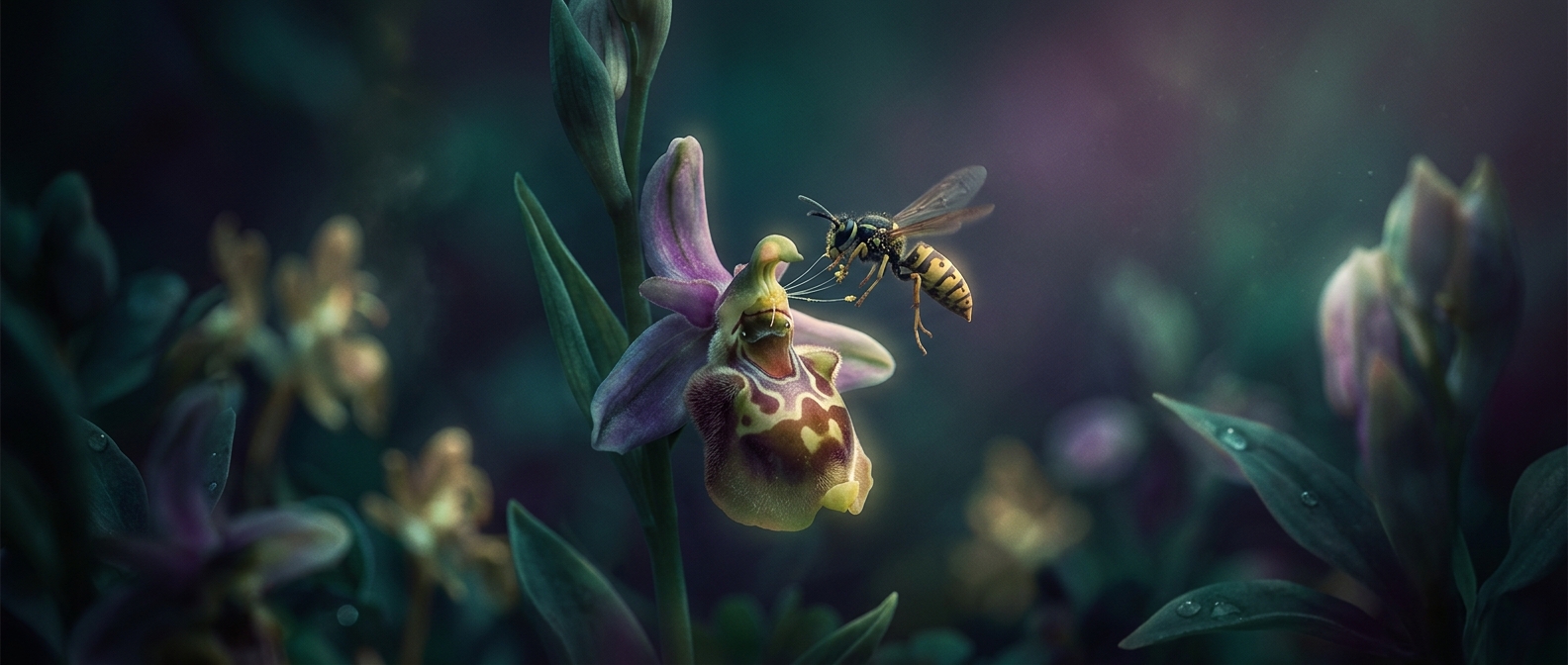
A Flower That Sends the Wrong Signal
In some orchid species, a flower resembles a female insect closely enough to attract a male looking for a mate. The resemblance may include shape, color, and a surface that feels like an insect’s body. More important, the flower can release chemicals similar to the female’s sex-attracting scent. These chemicals are called pheromones: signals one animal uses to influence another of the same species.
The deception is highly specific. A scent that works on one kind of wasp may mean nothing to another, so the orchid’s signal is tuned to the behavior and senses of its particular pollinator.
How a Failed Mating Moves Pollen
The male lands on the flower and attempts to mate with it, a behavior known as pseudocopulation. As he struggles or shifts position, he may pick up a compact bundle of pollen called a pollinium. Orchids often attach it to a precise spot on his body. When he visits another flower and repeats the behavior, the bundle can contact that flower’s receptive surface, transferring pollen between plants.
Unlike a flower that rewards a visitor with nectar, a sexually deceptive orchid offers no food. Its success depends on persuading a male to make the trip anyway—and on placing pollen where it will be carried onward. The encounter that begins as a mating attempt can therefore become a delivery route between flowers.