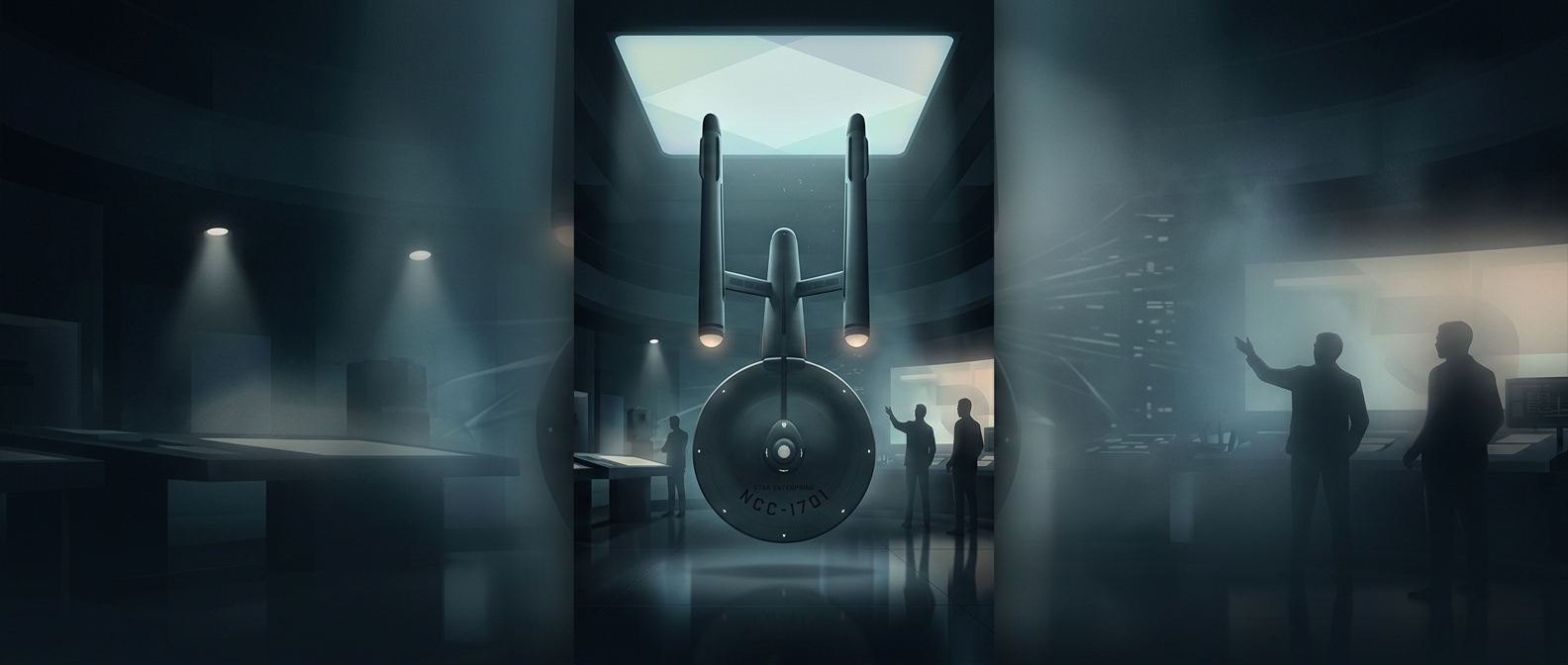
Star Trek fandom made fan stories portable
Fans had been writing stories about existing fictional characters long before Star Trek. What the original series helped create was a durable model for modern fan culture: viewers could turn shared enthusiasm into stories, publish them themselves, and find readers beyond their immediate circle.
In the late 1960s, fans used small-run magazines called fanzines—fan-made publications assembled and distributed outside commercial publishing. Their pages mixed stories with commentary and art. Copies traveled through the mail, often reaching readers who then wrote to the editors or submitted work of their own. That exchange turned isolated writing into a community.
From a pairing to a genre
Some stories imagined Captain Kirk and Mr. Spock as lovers, not merely colleagues. This kind of pairing-focused fiction became associated with the term “slash,” named for the mark placed between the characters’ names. It gave fans room to explore emotional and romantic possibilities the televised series did not portray.
These stories were not simply a way to fill time between episodes. They let readers reinterpret characters and relationships on their own terms, while the zines provided a practical means to circulate those interpretations. The creators were fans themselves, and the audience could become the next set of writers.
The pre-internet publishing network
Mail-order zines required more effort than posting a story online: someone had to edit, print, assemble, and mail each issue. But the basic pattern—make unofficial work, share it with a community, and build on one another’s ideas—was already in place. The internet did not invent fan fiction; it made a fan practice that zines had organized far easier to find and spread.