A model turned the Enterprise’s “up” upside down
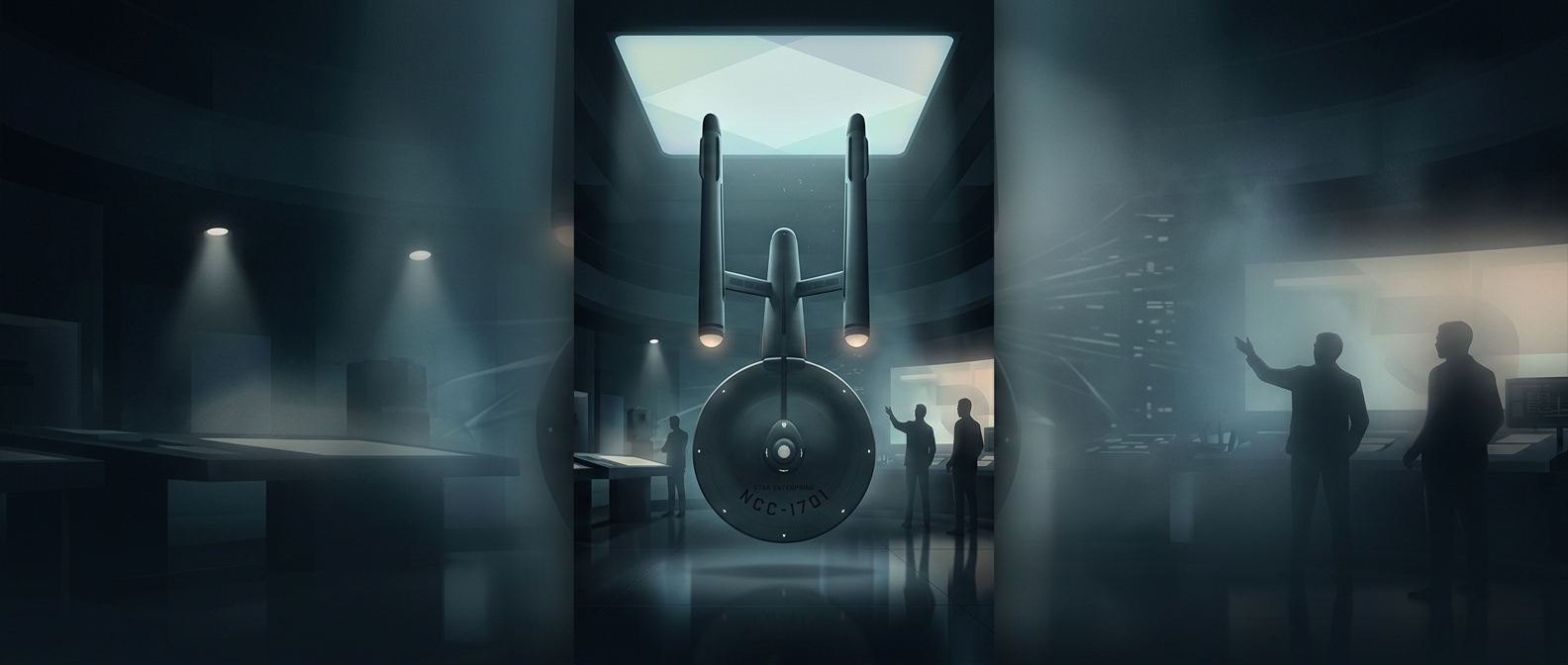
The Enterprise’s familiar orientation was not inevitable. When Gene Roddenberry saw the model resting on its top, he approved it in that position. The nacelles—the long engine pods—were meant to hang underneath the main body, so the approved arrangement made the ship appear to fly belly-up compared with the intended layout.
That reversal matters because a model’s physical position can become a story’s visual convention. Once the ship is filmed and shown consistently, viewers learn which side is “up” from its shape and details, even though the model itself could be turned over.
Space has no natural up—but television does
In open space, there is no universal vertical direction. A spacecraft can point or roll in any orientation without being upside down in the everyday, gravity-bound sense. But a television audience still needs a readable view: the bridge, hull, and engine pods give the ship a recognizable front, back, and top.
That is why the approved model’s orientation could feel striking. The Enterprise still read as a coherent spacecraft, but its engine pods sat above the body in the resulting image rather than below it. A simple change in how the model rested could redefine the ship’s visual identity without changing its basic parts.