Hair follicles run on staggered schedules
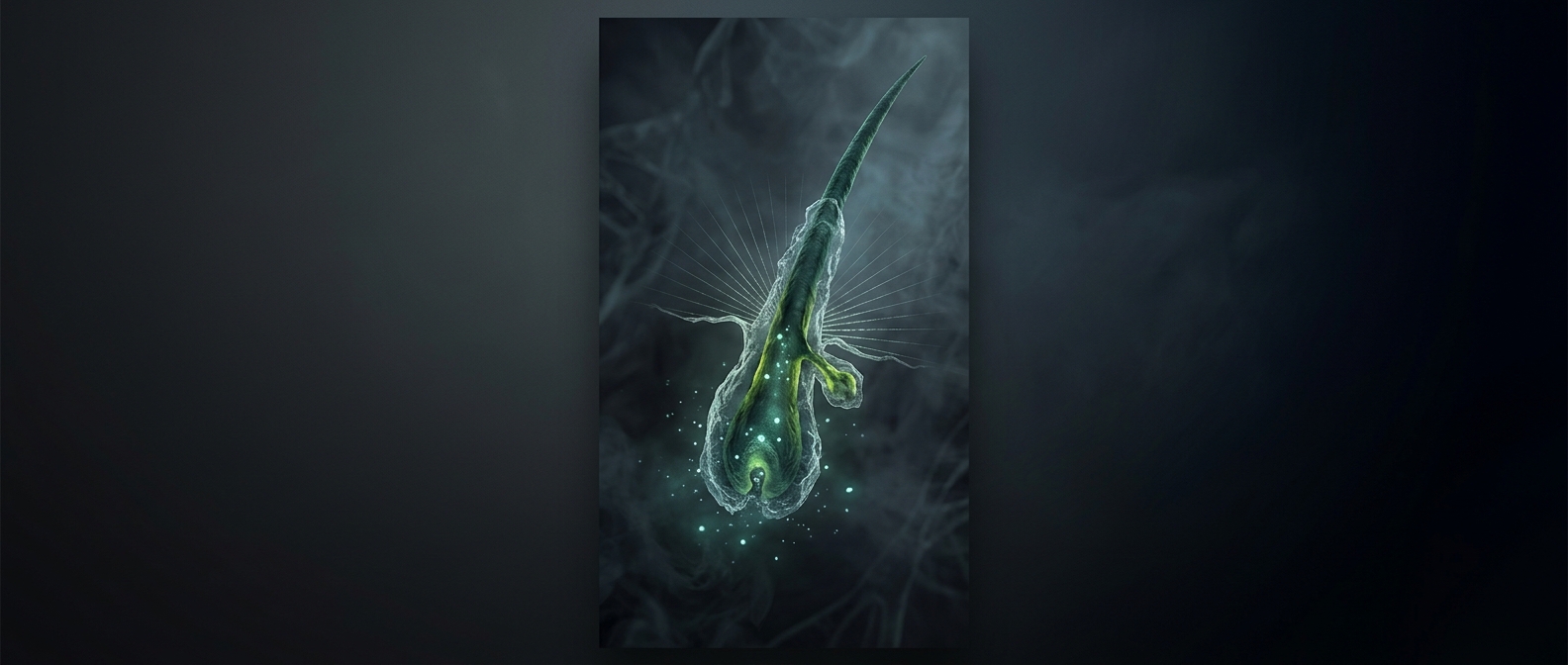
A hair follicle—the tiny structure in the skin that produces a strand—cycles through growth, transition, rest, and release. These phases do not happen in lockstep across the scalp. While one follicle is making a strand, another may be holding a finished hair before letting it go. Staggering the cycle prevents the whole scalp from shedding at once.
After a strand is released, the follicle can begin producing another. The visible hair is the part that falls out; ordinary shedding does not mean the follicle itself has disappeared. That distinction helps explain why a loose strand on a brush is not, by itself, evidence of lasting hair loss.
Why shed hair can seem to arrive all at once
Hair that has already detached may stay caught among surrounding strands until washing, brushing, or styling frees it. So a shower or brush can collect hairs that would otherwise have come away at different moments. The timing of what you notice is not necessarily the timing of when each hair’s cycle ended.
The more useful clue is the pattern over time: whether hair is being replaced as usual or whether thinning, a widening part, or a persistent change in shedding is becoming noticeable. A daily count is only a snapshot of normal turnover, not a verdict on how much hair the scalp is keeping.