How a Place Becomes a Picture on a Magnet
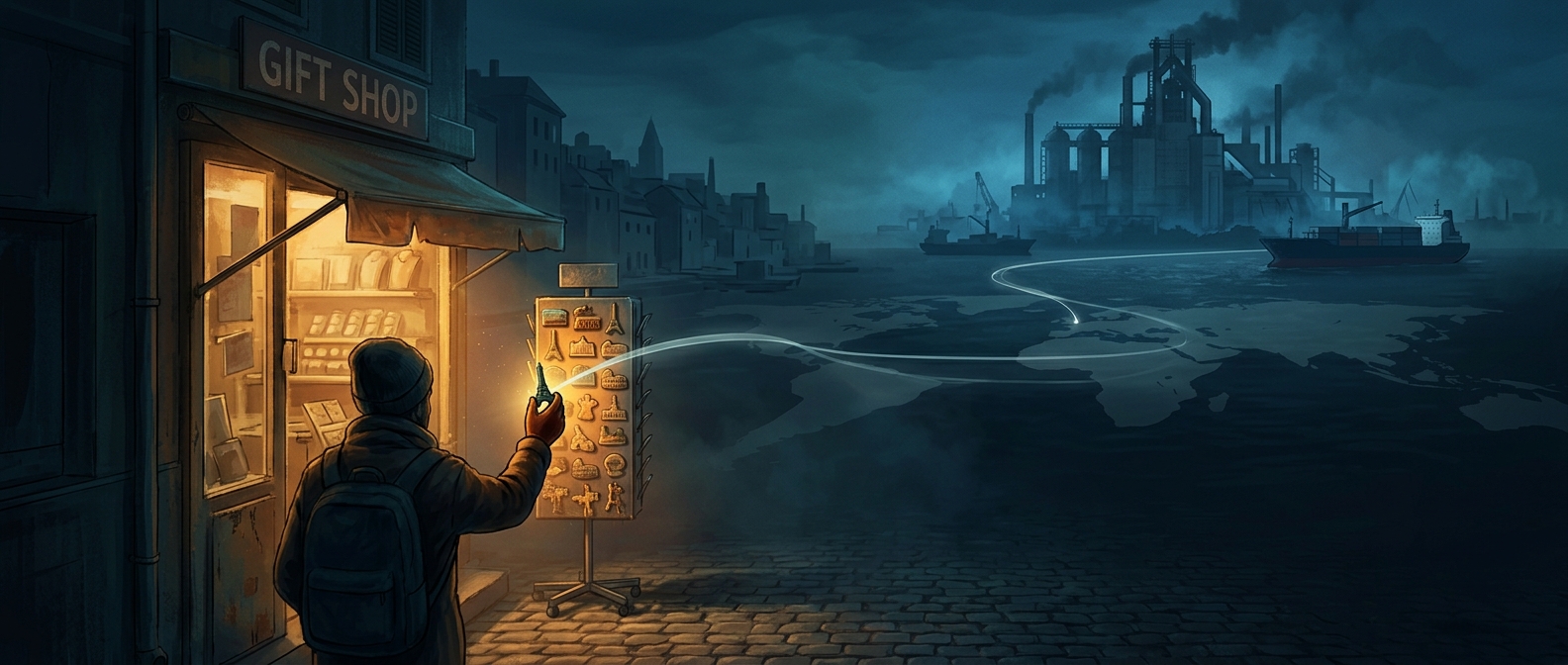
A souvenir can look unmistakably local because its image is local, even when its manufacture is not. A familiar skyline, landmark, or place-name can be printed or molded onto a small plastic object made in a distant factory. The design carries the destination’s identity; the object itself need not have been shaped there.
Plastic goods are often made in batches, which spreads the cost of setting up production across many copies. That can make a standardized, lightweight souvenir less expensive than producing each item locally in small numbers. Once packed and shipped, it can travel through wholesalers to shops near the very attraction depicted on it.
What the Magnet Actually Represents
For a gift shop, the practical choice is between the cost and availability of an item and the value visitors place on its connection to a place. A locally made object may embody local materials or skill; an imported magnet may instead offer an inexpensive, easy-to-carry reminder of a visit. Its image can still be meaningful to the buyer, but it is not evidence of where the object was made.
That distinction is easy to miss at the souvenir rack: the magnet’s strongest link to its destination may be the memory attached to the picture, not its manufacturing journey.