A clean hit matters more than brute force
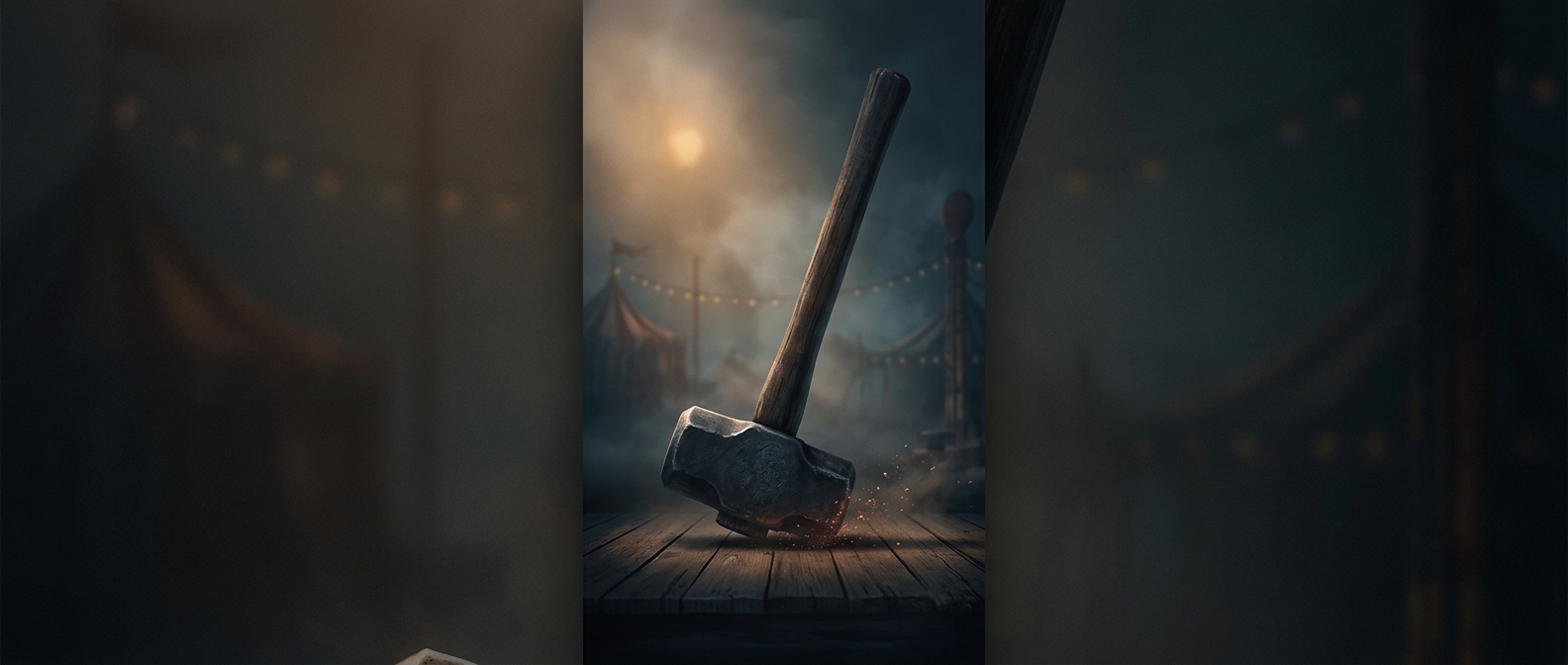
The fairground “high striker” turns a swing into a brief transfer of energy. The hammer must hit a small plate squarely, sending a sliding weight up a vertical track. A hard-looking blow is not enough if the hammer lands at an angle or near the edge: some of its motion goes sideways instead of driving the weight upward.
That makes accuracy part of the challenge. The player has to guide a long, heavy tool through an arc and bring its striking face onto the center of the plate. A glancing blow can also twist or deflect the hammer, wasting energy and making the impact less effective.
Why the hammer feels awkward
A sledgehammer’s mass gives it momentum once it is moving, but that same mass makes it harder to start, steer, and stop. Players unused to swinging one may lift it with their arms, lose control of its path, or strike before the head has gathered much speed. The goal is not simply to swing as hard as possible; it is to combine a controlled arc with a fast, centered impact.
The game’s visible result—the weight racing up the track—makes the test seem like a contest of strength. In practice, it also tests timing and aim. A player can put considerable effort into a swing and still get a disappointing result if the hammer misses the plate’s center.