Why a mirror maze turns reflections into apparent corridors
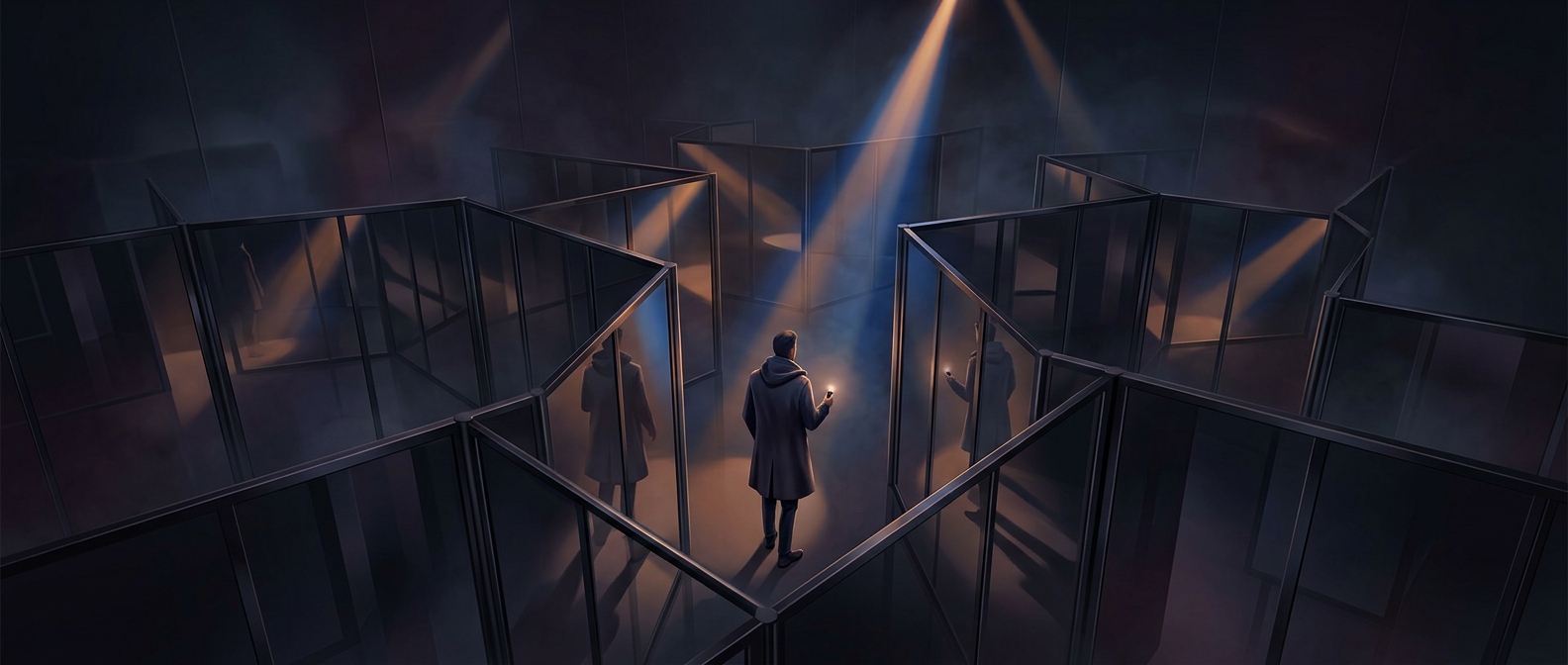
Your brain does not measure distance directly. It estimates it from clues: nearby objects shift more as you move your head, shadows reveal where surfaces meet, and the two eyes see slightly different views. A mirror maze disrupts several of those clues at once. A reflection can show a corridor continuing where a solid pane actually stands, while a real opening may look like another reflected space.
The missing cues make the image hard to read
In an ordinary room, a wall’s edges, shadows, and changing appearance as you move help you tell it from an opening. Maze designers can reduce those distinctions with even lighting and repeated surfaces. When a mirror reflects another part of the maze, familiar visual patterns appear to continue, but they do not reliably reveal how far away the reflected scene is—or whether it lies directly ahead at all.
Movement usually helps: as you step sideways, a nearby wall shifts against the background more than a distant view would. But reflections complicate that comparison, because the scene shifts according to the reflected space, not the space in front of you. Your eyes receive a coherent picture; the problem is interpreting which parts of it are physically reachable.
Why a small step can settle the question
The illusion is strongest when you rely on a quick glance. Moving cautiously changes the view and lets other clues emerge: a reflection may slide differently from a real passage, or a hand or foot may find the glass before your eyes do. That is why mirror mazes reward slow, exploratory movement: the body can test what the image alone leaves ambiguous.