The riverbank becomes the viewing window
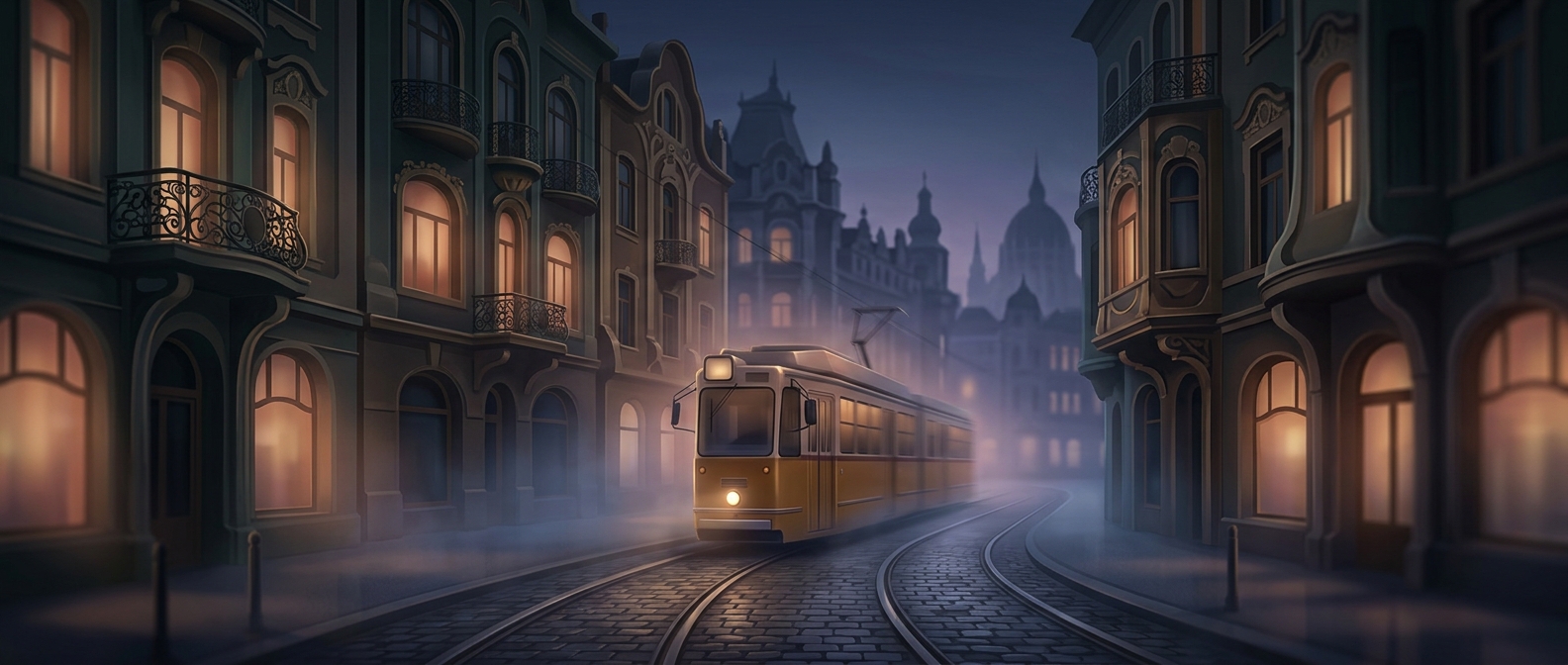
Tram 2’s appeal comes from where its tracks run: along the Pest-side embankment, with the Danube separating the moving carriage from the hills and landmarks on the opposite bank. The riverfront keeps much of the view open, so the ride unfolds as a sequence rather than a single postcard stop. From the windows, the Hungarian Parliament’s pointed towers and broad riverside façade appear in context, framed by the water and the city’s long promenade.
A route through Budapest’s architectural layers
The buildings along the ride do not belong to one style or one moment. The Parliament is an elaborate Gothic Revival landmark; nearby façades reflect other periods of Budapest’s rapid growth around the turn of the 20th century. Art Nouveau—known in Hungary as szecesszió—often favored flowing lines, plant-inspired ornament, and colorful materials over rigid historical imitation. Looking from the tram, riders can notice those details as part of an ordinary streetscape, not as isolated exhibits.
That contrast is what makes the ride more than a cheap way to see famous façades. The tram keeps moving at street level, giving a sense of how the monumental riverfront and everyday city fit together. A short ride can turn architecture into a readable timeline: each change in roofline or ornament marks a different idea of what a modern capital should look like.