Why Bankrupt Changes the Whole Turn
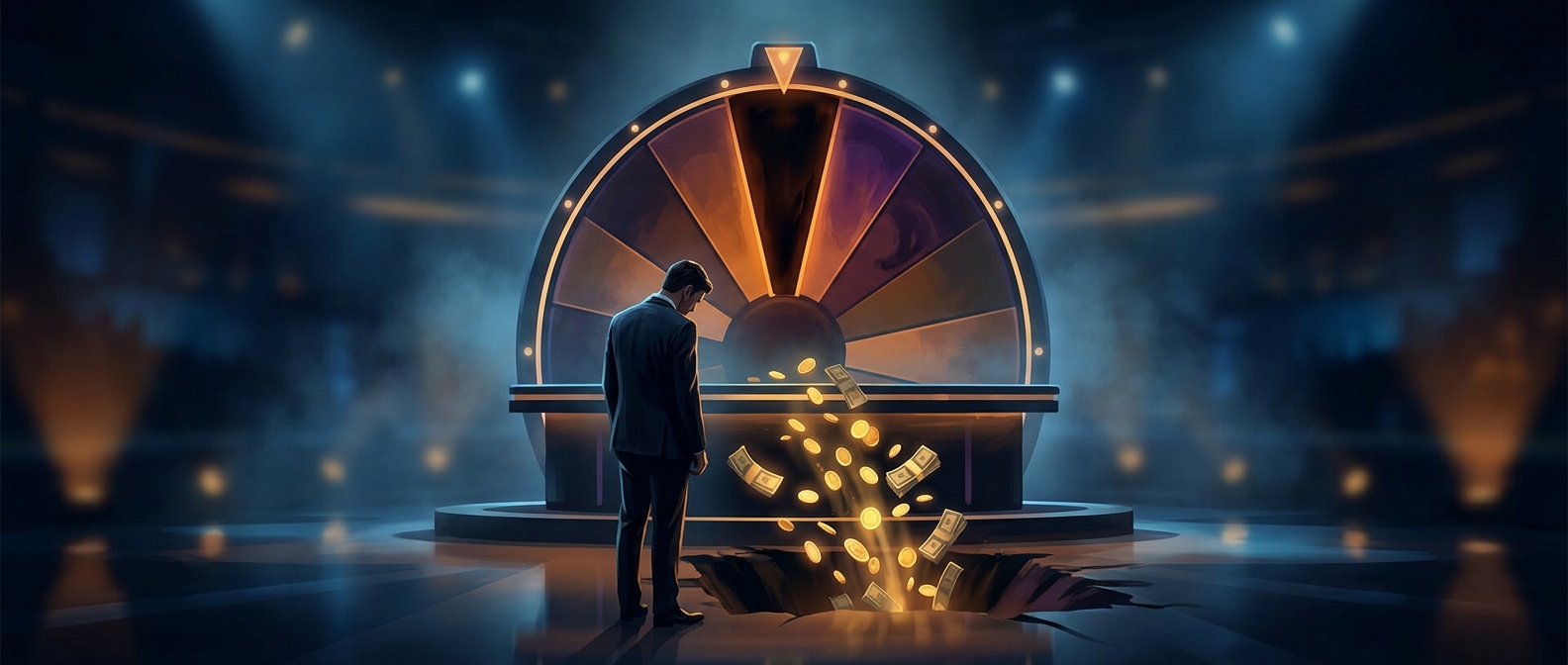
Wheel of Fortune separates a player’s cash for the current round from their standing in the overall game. A correct consonant guess can add money to that round’s total, while buying a vowel spends some of it. The Bankrupt wedge erases the round’s cash and ends the player’s turn; it does not erase winnings carried over from earlier rounds.
That distinction makes a growing total feel both valuable and vulnerable. A player may have earned a substantial amount by spotting letters, yet still be only one spin away from losing it before solving the puzzle.
The Risk Is Part of the Puzzle
After a spin, the player has to decide whether to guess a letter, spend money on a vowel, or try to solve. A consonant can pay off if it appears in the puzzle, but a wrong guess or another player’s turn can cost momentum. Spinning again may bring a larger reward—or Bankrupt.
The wedge therefore adds a decision beyond simply figuring out the phrase: when is the chance to earn more worth risking what is already on the board? A player who solves locks in the round’s result, while a player who keeps spinning is gambling that the next result will help. That tension turns a correct guess into more than a word-game success: it can be money earned, money put at risk, or both.