From invisible particles to settleable clumps
Much of the dirt in cloudy water is too fine to sink on its own. These tiny particles can remain suspended for a long time, and their similar electrical charges make them repel one another rather than gather into larger pieces. A coagulant changes that balance, allowing the particles to collide and stick.
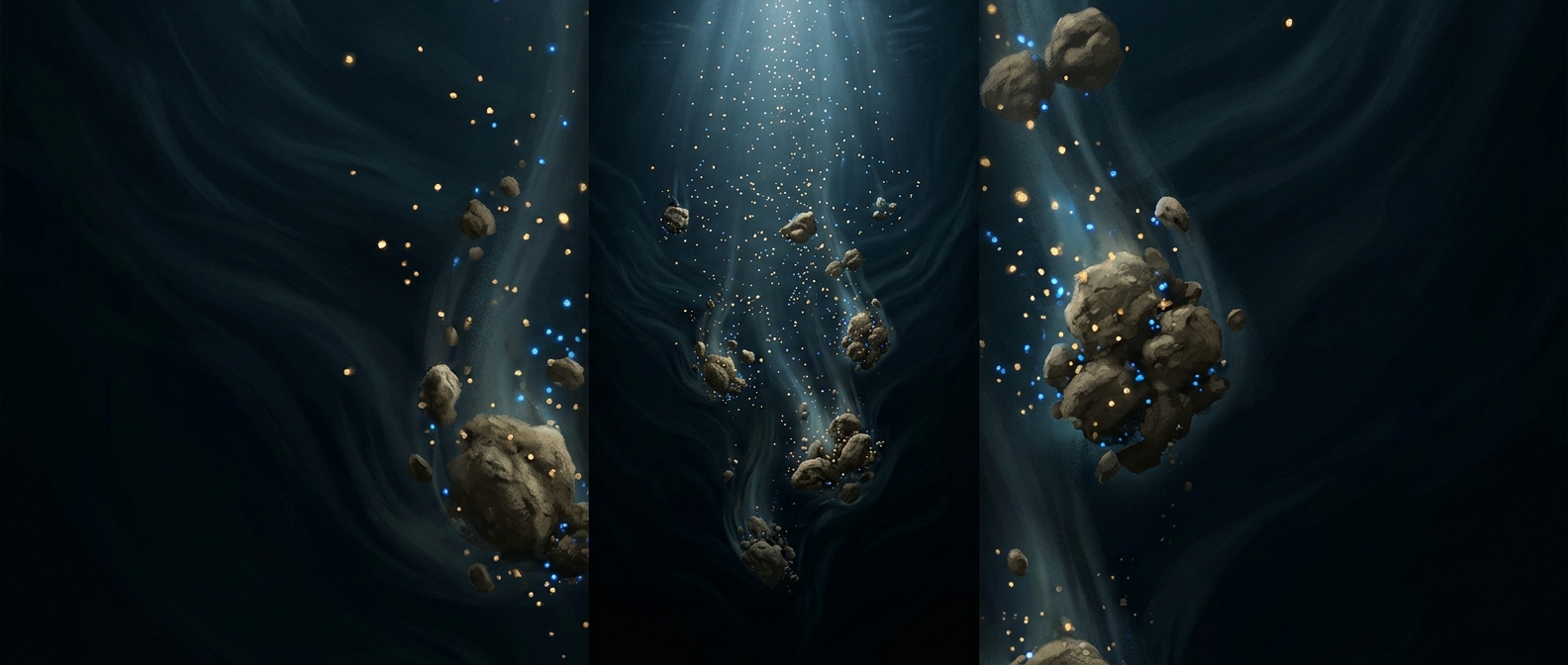
The first step is rapid mixing, which spreads the chemical through the water. Then the water is stirred gently. Those slower currents bring the newly destabilized particles together without breaking apart the growing clusters, called floc. What began as specks too small to catch or settle becomes a collection of larger, heavier clumps.
Settling is only one stage
In a settling basin, gravity pulls the floc toward the floor, where it can be removed as sludge. The clearer water above it is not necessarily ready to drink: fine material can remain, so treatment commonly continues with filtration and disinfection. Coagulation makes those later steps easier by taking a large share of the suspended load out first.
The process depends on matching the treatment to the water. Its chemistry and particle content can vary, so operators adjust conditions such as coagulant dose and acidity to help floc form reliably. Too little chemical may leave particles dispersed; more is not automatically better. The practical payoff is a transformation in scale: instead of trying to remove countless stubborn specks one by one, a treatment plant can gather them into masses that gravity can carry down.