From Corn Starch to Sweetener
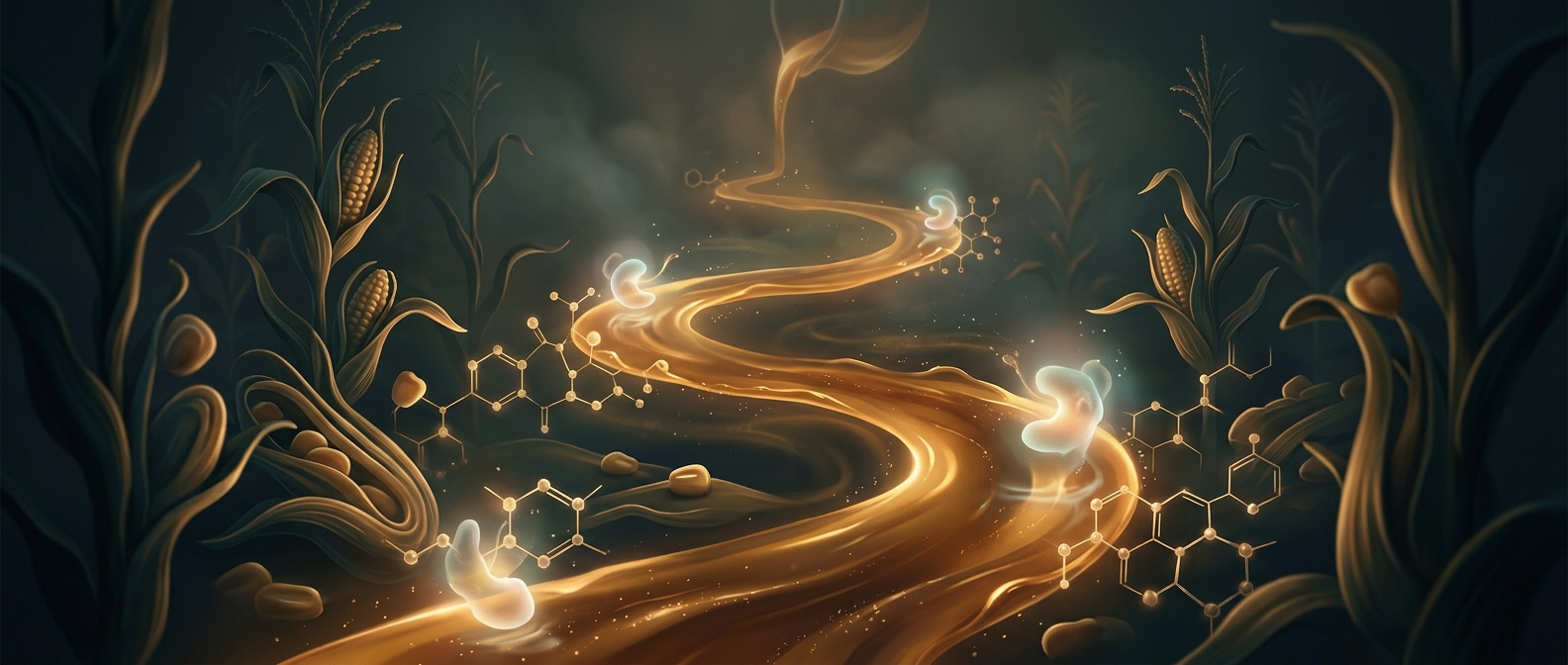
Corn starch is made of long chains of glucose molecules. To make syrup, processors first use enzymes to break those chains into individual glucose molecules. A second enzyme—commonly called glucose isomerase—then rearranges some of the glucose into fructose. The molecules have the same basic chemical formula, but their structures differ, giving fructose a sweeter taste.
That distinction matters: ordinary corn syrup is largely glucose, while high-fructose corn syrup contains a mix of glucose and fructose. The conversion does not turn every glucose molecule into fructose; processors control how much is changed to produce a syrup with the desired composition and sweetness.
Why Use Enzymes?
Enzymes act as catalysts: they speed up a specific chemical reaction without being used up in it. Bacterial enzymes are useful here because they can carry out the glucose-to-fructose conversion selectively under controlled processing conditions. In commercial production, the enzyme can be held in place in a reactor while syrup flows past it, allowing the same catalyst to keep working rather than mixing it into each batch.
The result is a practical way to adjust sweetness without extracting fructose directly from corn. The key step is a molecular rearrangement, not the addition of a separate sweet ingredient.