Gas trapped inside a sealed cell
A lithium-ion battery is not a hollow container of liquid. Its electrodes are separated by thin porous material and soaked in an electrolyte, which carries charged particles between them as the battery charges and discharges. In a healthy cell, those reactions are controlled. Heat, age, overcharging, manufacturing defects, or physical damage can upset that balance and trigger unwanted chemical reactions at the electrodes.
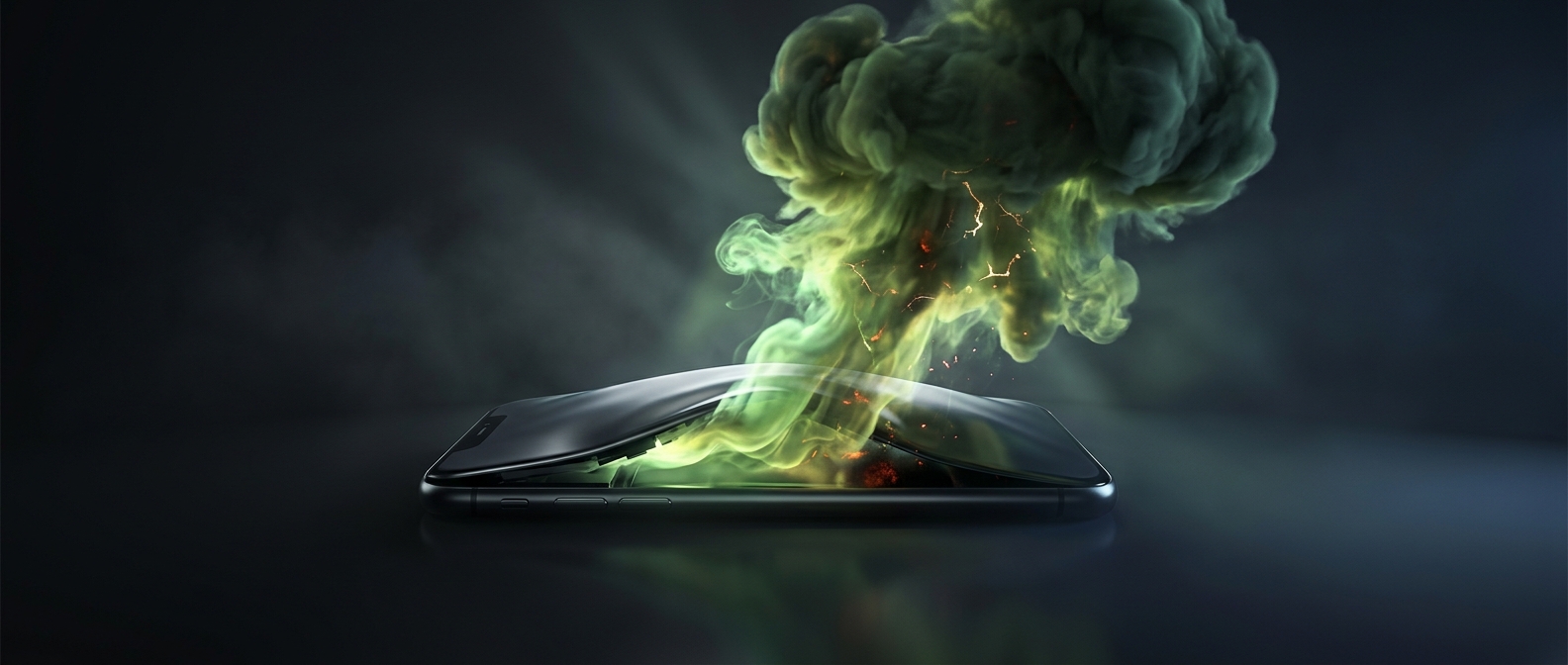
Some of those reactions break down electrolyte or other cell materials and release gas. Because the cell is sealed, the gas cannot simply escape. Pressure builds within the pouch or rigid casing, pushing its layers outward. A flexible pouch may visibly bulge; a rigid cell can deform or force apart the device around it.
Why a bulge matters
Swelling is evidence that the cell has changed internally, not just that its exterior has softened. The same damage that produced gas may have weakened the separators or other components that keep the battery’s reactions contained. If those protections fail, the cell can overheat and enter thermal runaway: a self-reinforcing rise in temperature that can lead to fire. A swollen battery is not guaranteed to ignite, but its condition is unpredictable.
Puncturing or squeezing the casing can expose reactive materials to air, cause an internal short circuit, or release flammable contents. Any of those can turn a damaged cell into an immediate hazard. Do not try to flatten it, open it, or keep charging it. If a device’s battery is swelling, stop using and charging it, keep it away from heat and combustible materials, and arrange handling through a qualified repair service or local battery-disposal program. The bulge is a warning to remove the cell from service—not a defect to press back into shape.