Why a trace of moisture sets superglue off
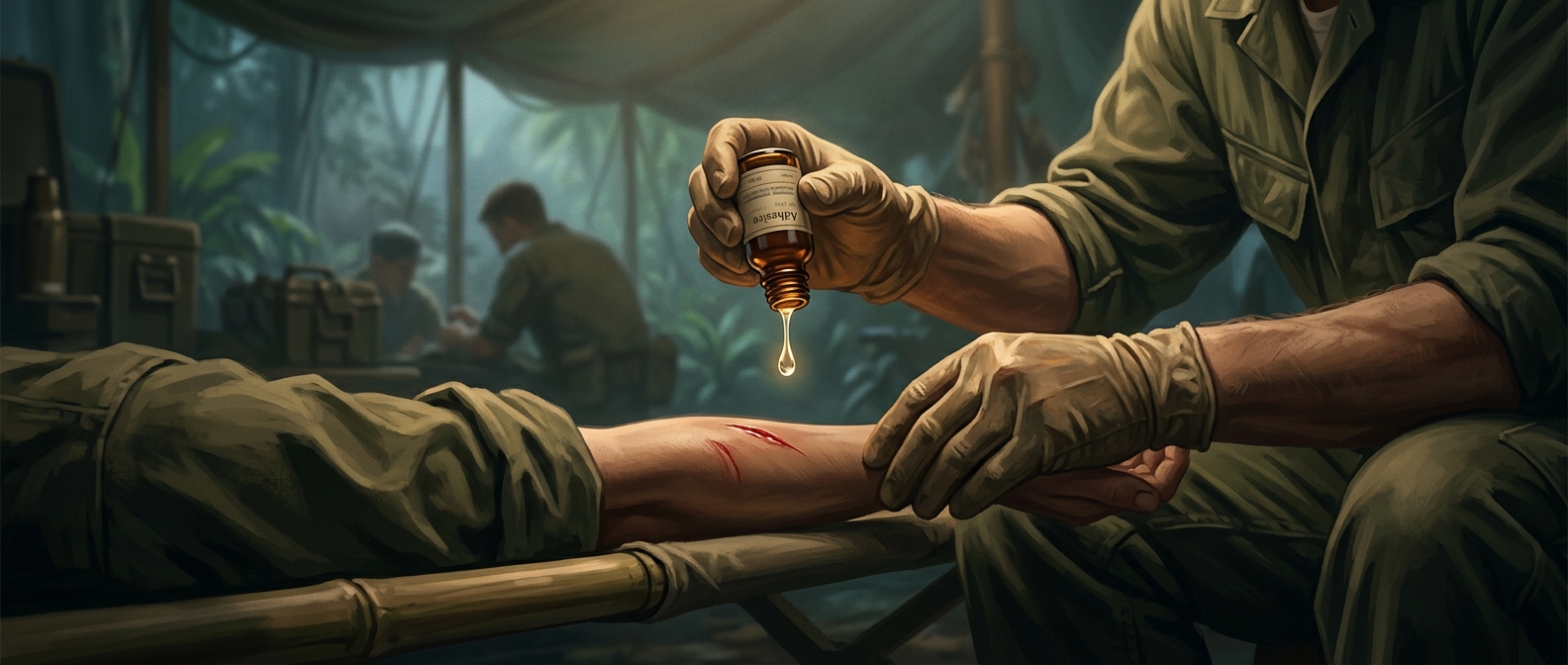
Cyanoacrylate—the active ingredient in most household superglues—does not need a puddle of water to begin curing. A thin, nearly invisible film of moisture on a surface is enough to start a reaction called polymerization: small molecules join into long chains. Those chains tangle and stiffen into a hard plastic layer, turning liquid glue into a solid bond.
Skin is especially effective at starting that reaction because it is naturally moist and covered with microscopic irregularities. Glue spreads into those tiny grooves, where the fast-forming plastic can grip the surface. If two fingers touch with glue between them, each provides moisture and contact area, so the adhesive can set before there is time to pull them apart easily.
Why the repair may take longer
Ceramic can be smooth and relatively dry, particularly after cleaning. With less surface moisture to trigger curing, the glue may harden more slowly there than it does on skin. The same adhesive can therefore feel nearly instant on a fingertip yet need more time to form a dependable bond between pieces of a hard material.
Moisture is only part of the story: a close fit also matters. Superglue works best when the joined surfaces meet with a very thin layer of adhesive between them. A thick blob has more material to cure and may not make as effective a contact, while a small, even amount can spread across the surfaces and set into a continuous plastic bridge.
That is why a drop that seems harmless can seize two fingertips together so quickly: the skin supplies the trigger, and close contact gives the newly forming plastic plenty to hold onto.