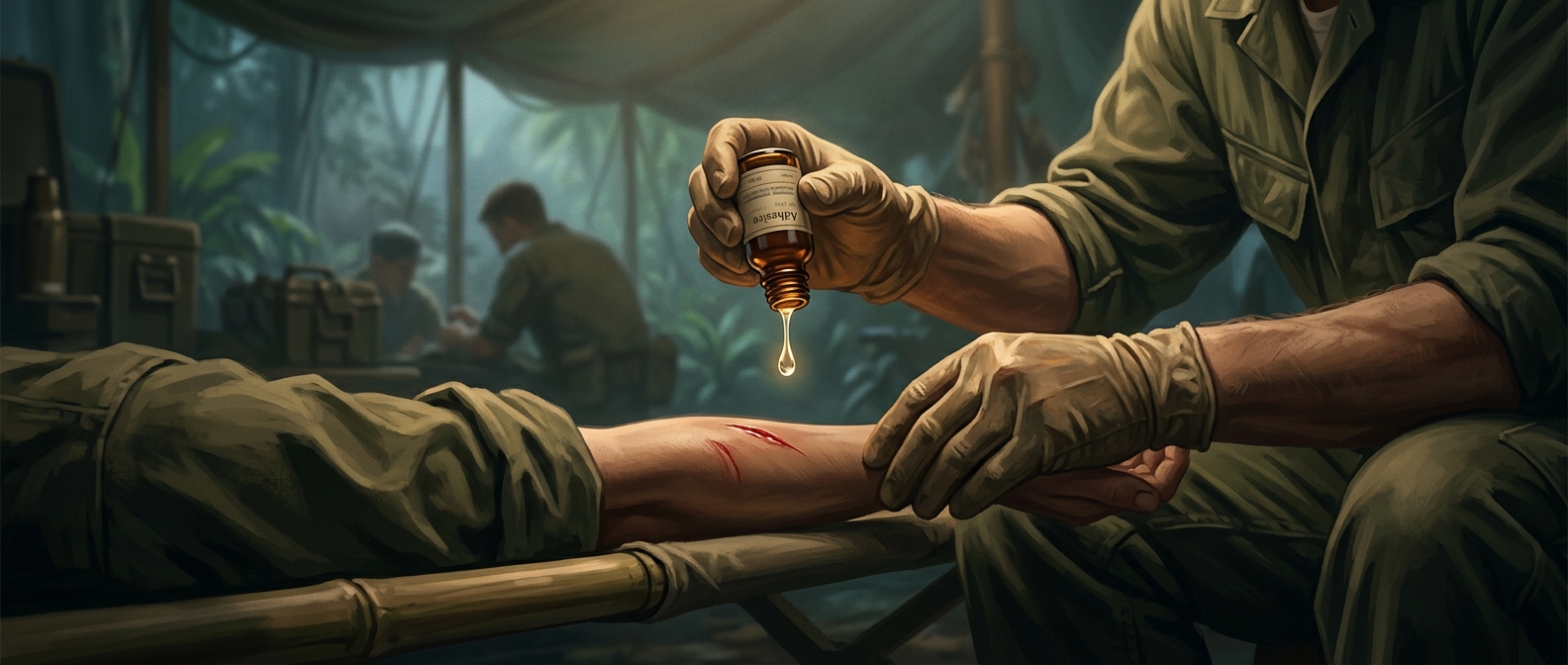
How a drop of adhesive could buy time
Cyanoacrylate—the family of chemicals behind many fast-setting glues—hardens when it meets moisture. Blood and tissue provide plenty. The liquid quickly links into a thin plastic-like layer that can stick to the surface of skin and hold wound edges together.
In battlefield care, that speed mattered. A medic could use the material to cover or close some wounds when stitching was impractical and evacuation was still ahead. The seal could help limit bleeding and contamination during transport, buying time rather than repairing the underlying injury.
A temporary seal, not a fix
The adhesive works best on wounds whose edges can be brought together. It does not reconnect damaged blood vessels or organs, and a surface layer cannot reliably control heavy bleeding from a deep wound. Severe injuries still require definitive medical treatment at a hospital.
That distinction also explains why ordinary household superglue is not simply a substitute for medical care. Medical skin adhesives are formulated for use on the body, while household products can irritate tissue and may generate heat as they harden. Even a suitable adhesive can trap problems beneath the surface if used on the wrong wound.
The battlefield use was therefore less like “gluing someone back together” than putting a fast, temporary cover over an injury: useful for the trip to care, but never the care itself.