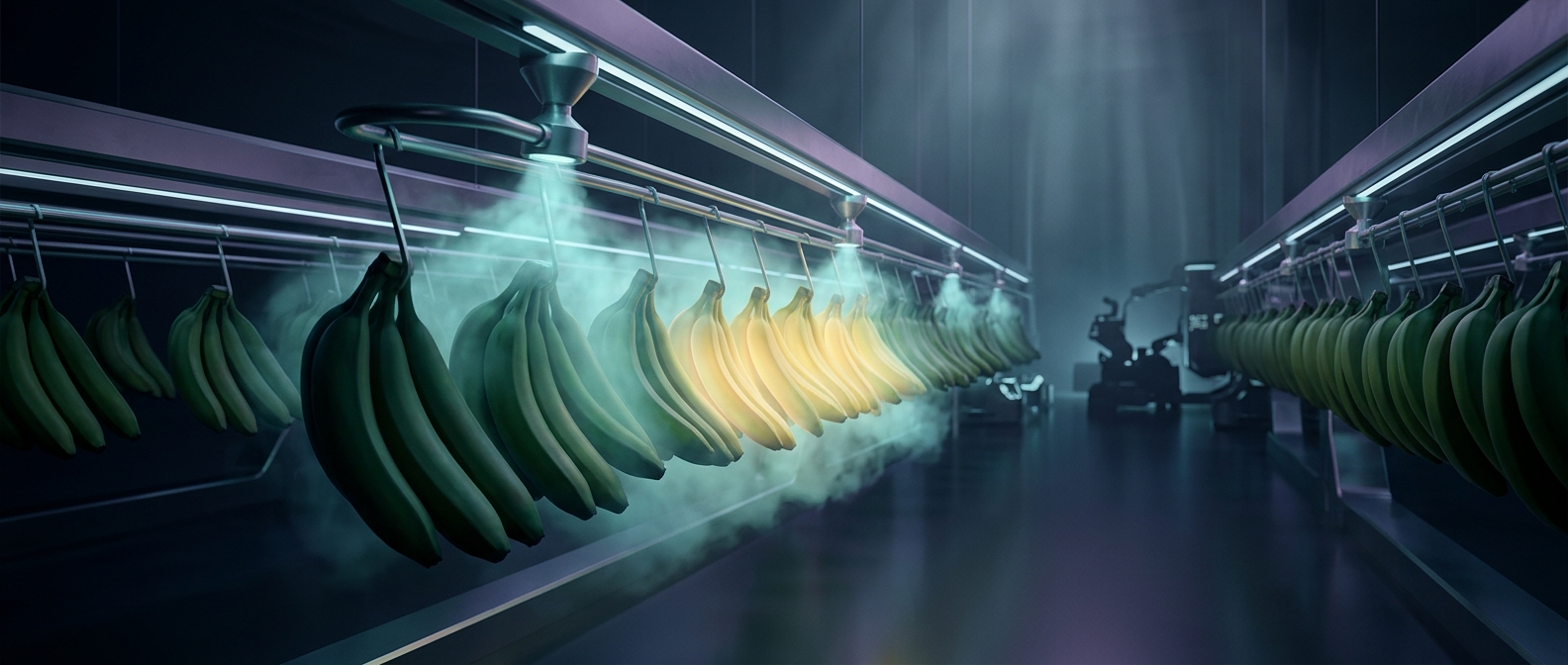
A gas signal synchronizes ripening
Bananas do not simply change color because they have spent enough time in transit. They are climacteric fruit: after harvest, they can continue ripening, and exposure to ethylene—a natural plant hormone released as a gas—can start that process. Ethylene acts like a signal, switching on changes that soften the fruit, turn its peel from green to yellow, and convert some of its stored starch into sugars.
Once ripening begins, the fruit produces more ethylene of its own, helping the changes proceed. A carefully managed dose can therefore get a whole batch moving through ripening on a similar schedule, rather than leaving some bunches green while others become too soft.
Why the timing matters
The ripening room is not just a gas-filled storage space. Operators manage the conditions so the signal reaches the fruit and ripening advances at a useful pace. If bananas ripened fully during a long journey, they would be more vulnerable to bruising and spoilage. If they arrived too green and were not ripened under controlled conditions, stores could not reliably offer fruit ready to eat.
The result is a practical compromise: bananas travel while firm, then ripen in a coordinated batch closer to where they will be sold. The yellow display in a grocery store is thus partly the outcome of timing—using a plant’s own ripening signal to make many individual fruits reach the same stage together.