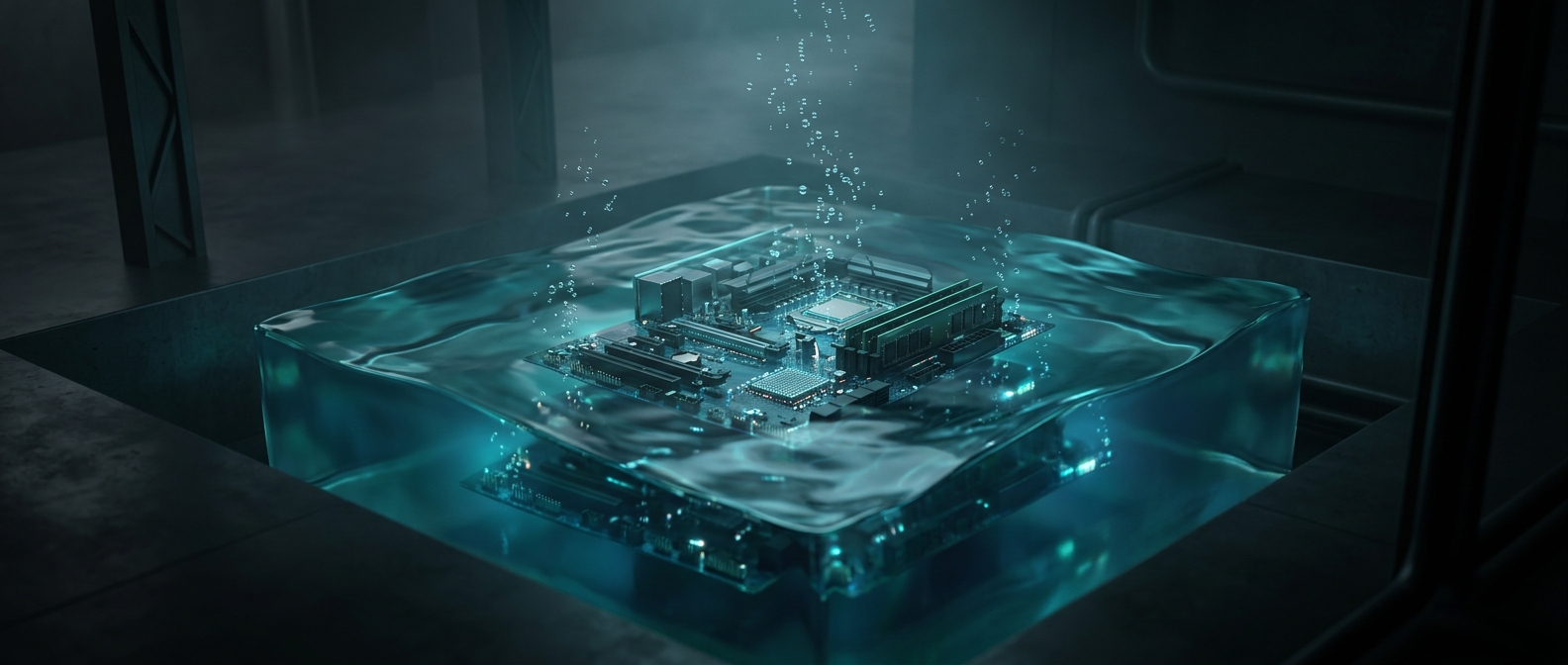
How mineral oil cools a running computer
A computer generates heat wherever electrical current meets resistance—especially in its processor and graphics chip. In an ordinary PC, fans move air across heat sinks: metal parts that draw heat away from those chips. An oil-cooled system uses a liquid instead. The computer’s components sit in mineral oil, which absorbs heat from their surfaces and carries it elsewhere.
Why the oil does not short the electronics
Mineral oil is an electrical insulator, meaning it does not readily let electric current flow through it. That matters because the exposed circuitry can be immersed without the liquid creating the conductive path that water or many other liquids could. The computer still needs power supplied through its normal electrical connections; the oil simply surrounds the parts rather than acting as a power source.
“Nonconductive” does not mean “safe to use any liquid.” The oil must be suitable for electronics, and water or contaminants can undermine the protection. Components also need to be compatible with long-term immersion, since oil can affect materials such as some plastics and cable coatings.
Moving the heat out of the tank
Oil can collect heat, but a tank that only lets it sit will gradually warm up. In practical systems, circulation carries the warmed oil to a heat exchanger—a device that transfers heat from one fluid to another—where the heat can be released to the surrounding air or another cooling loop. The key is not merely submerging the computer; it is giving the absorbed heat somewhere to go.
The tradeoff is a different kind of maintenance. Fans and air filters may be less important, but the system needs a tank, compatible materials, and a way to circulate and cool the oil. The computer can run underwater because the liquid is not water—and because its heat is continuously transported away from the chips.