How plastic threads become carbon fiber
Polyacrylonitrile fibers are heated without oxygen so they don’t burn; the treatment removes non-carbon atoms, leaving strong carbon-rich fibers.
Keep exploring facts in this topic.
Technology →


Polyacrylonitrile fibers are heated without oxygen so they don’t burn; the treatment removes non-carbon atoms, leaving strong carbon-rich fibers.
Keep exploring facts in this topic.
Technology →Keep discovering with Stacky. Interesting facts in an app that is always within reach.

Carbon-fiber strands look like black yarn before they’re wrapped in resin and cured under heat and pressure, forming a rigid composite.
Discover more
Sunlight activates the titanium dioxide coating, which breaks down organic grime; rain then sheets across the glass and carries the dirt away.
Discover more
Water moves into the hydrogels through osmosis, and chemical cross-links keep the polymer network from dissolving. The material swells into a gel that can…
Discover more
Unlike natural rubber, neoprene resists damage from oils and greases while staying flexible across a range of temperatures.
Discover more
Expanded polystyrene is about 98% gas by volume: blowing agents expand the beads, leaving air trapped in a rigid plastic matrix. Those bubbles make it…
Discover more
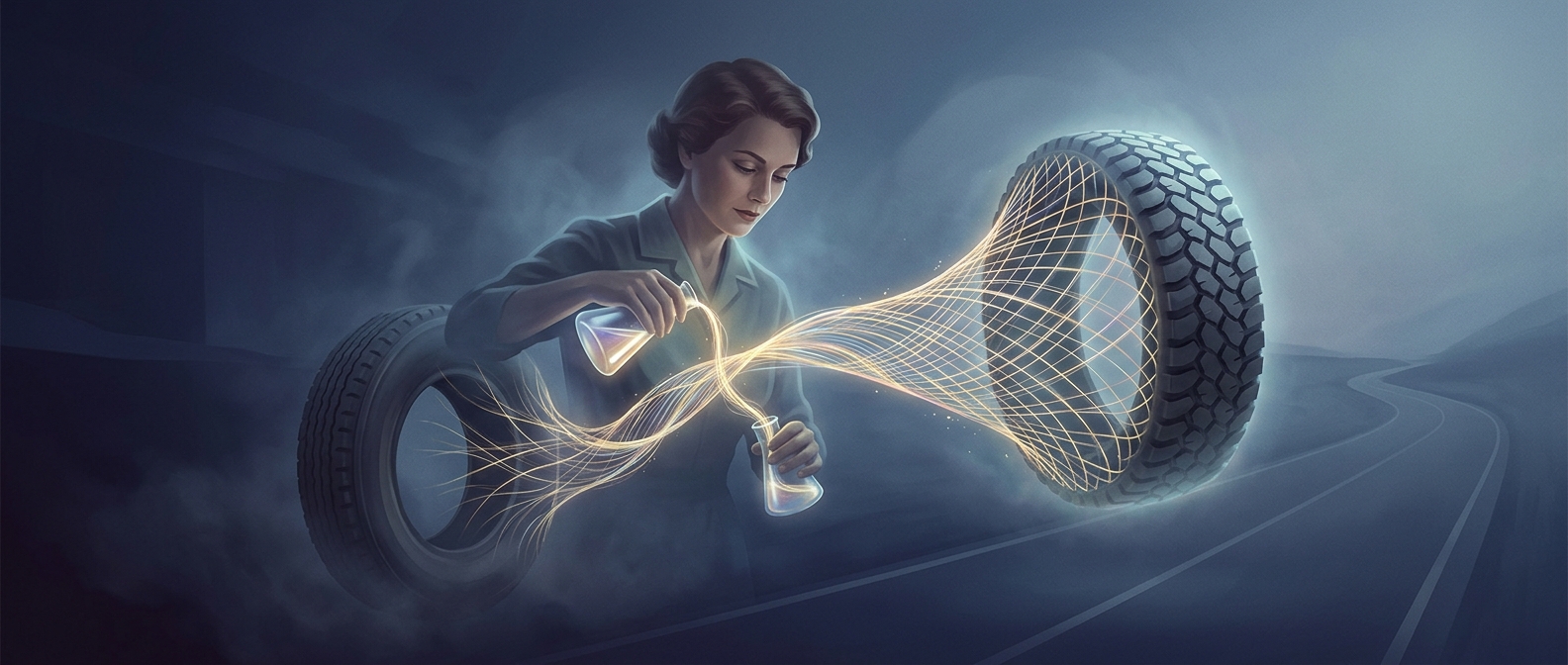
Stephanie Kwolek was investigating lightweight fibers for tire reinforcement when her work led to Kevlar. Its high tensile strength relative to its weight…
Discover more