A Thin Barrier Slows Water Loss
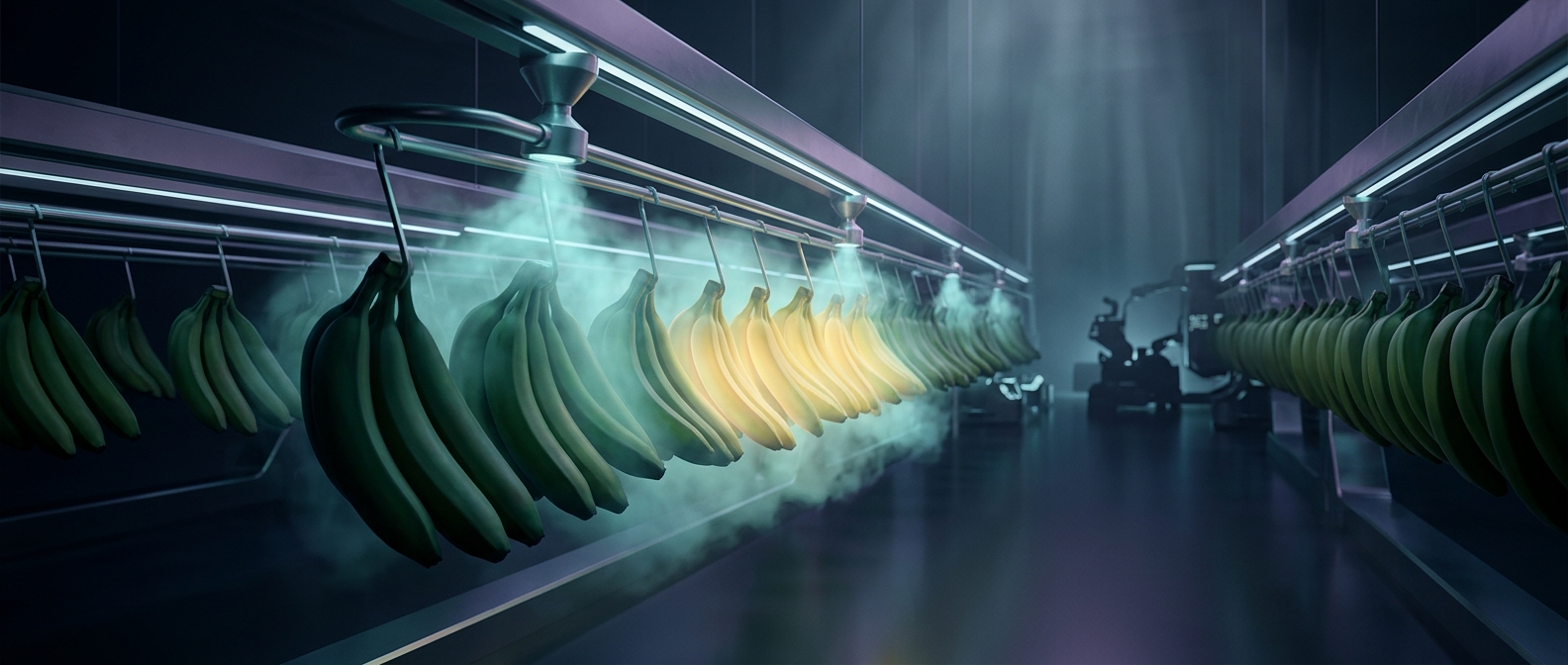
Fresh produce keeps losing water after harvest. Moisture escapes through tiny openings in the skin and from exposed cut surfaces; as the produce dehydrates, leaves wilt and fruits can shrivel. A spray-applied coating made from plant lipids—fats and fat-like substances—forms a thin, water-resistant layer that slows this escape.
The coating does not add water back. It helps the produce hold on to the water it already contains, preserving firmness and appearance for longer.
Slowing the Changes That Dull Freshness
Oxygen also contributes to deterioration. It can drive oxidation, a set of reactions that changes color, flavor, or texture; in cut fruit, oxidation is one cause of browning. By limiting how quickly moisture and gases move across the surface, a coating can slow some of these changes as well.
That barrier has to be a balancing act: produce remains biologically active after harvest, so a coating should slow exchange rather than simply seal the surface. The goal is not to make fruit or vegetables last indefinitely, but to delay visible and textural decline.
Freshness Without a Visible Layer
Because the coating is designed to be edible and is applied in a very thin layer, it can work without changing the produce into something that looks packaged. Its practical effect is small but useful: the fruit or vegetable may stay appealing through more time in storage and handling before it dries out or deteriorates.