Why greenhouses add carbon dioxide
A plant builds much of its dry matter by taking carbon from carbon dioxide in the air. In leaves, photosynthesis uses light energy to combine CO₂ with water and make sugars; the plant then uses those sugars to build stems, roots, and fruit. In a closed greenhouse, a dense crop can draw CO₂ down as it grows, so growers may add more to keep it from becoming a bottleneck.
Enrichment works only when conditions line up
Extra CO₂ can help plants photosynthesize faster, but it is not a stand-alone growth switch. The benefit depends on having enough light, water, and nutrients, as well as temperatures suited to the crop. If light is weak, for example, leaves cannot use the additional CO₂ as effectively.
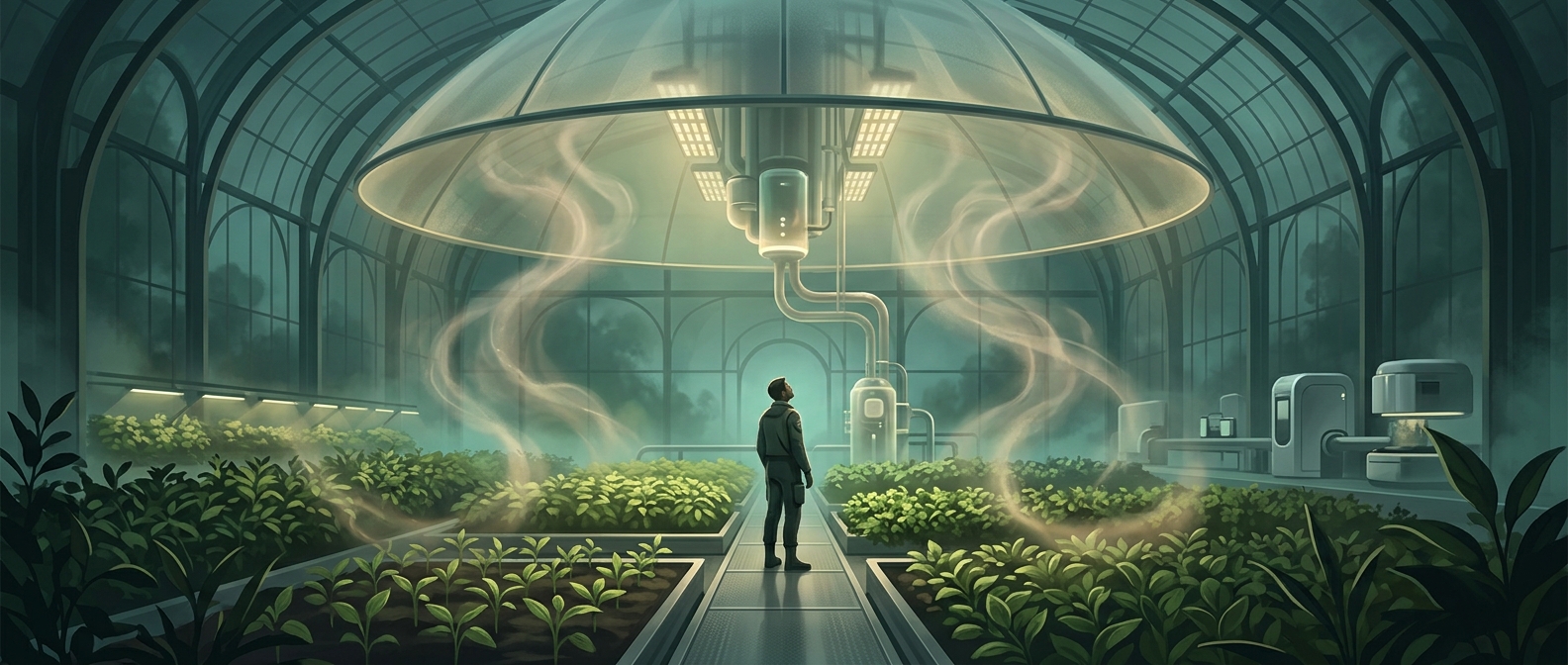
That is why enrichment is typically managed alongside the greenhouse environment. Sensors can track CO₂, while vents and climate controls help balance concentration against heat and humidity. Opening vents exchanges indoor air with the outside, which can let added CO₂ escape; keeping a greenhouse tightly closed, meanwhile, can make temperature control harder.
A resource to manage, not simply maximize
The practical goal is to supply CO₂ when the crop can use it, without wasting it through ventilation or allowing other growing conditions to become limiting. The same gas that helps plants make new tissue is therefore part of a larger control problem: growers must coordinate carbon, light, and climate to turn enrichment into growth.