Why a Riding Mower Needs Tractor-Like Power
A riding mower has two demanding jobs: move a heavy machine across uneven ground and keep its blades turning through grass that can resist the cut. Its transmission—the system that carries engine power to the wheels—must provide enough torque, or twisting force, to get the mower moving and maintain traction without requiring high speed. That is why many riding mowers use sturdy, high-torque drivetrains rather than the lighter arrangements found in ordinary lawn tools.
Rear-Wheel Drive Helps Put Power to Work
With rear-wheel drive, the rear wheels receive power from the transmission. As the mower climbs or crosses a slope, weight shifts toward the rear, helping those driven wheels press against the ground. More contact can mean better grip, so the mower is less likely to spin its wheels when the turf is thick or the terrain is challenging.
The design is a tradeoff, not a guarantee of safe performance on every hillside. Traction also depends on the ground, tires, slope, and how the mower is operated. A drivetrain can help the machine keep moving, but it cannot eliminate the risk of slipping or tipping.
A Lawn Machine Built Around a Chassis
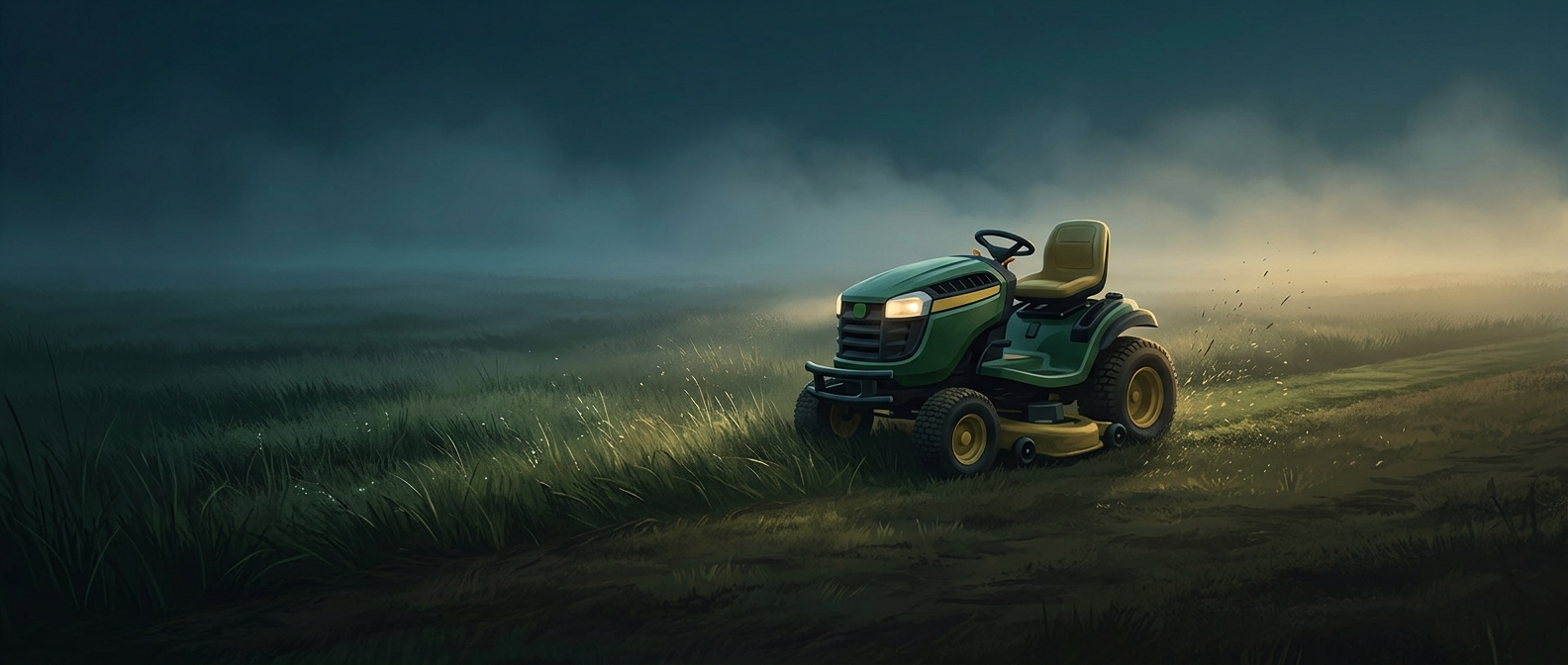
The tractor comparison is about function: a riding mower has a seat, steering, a powered drivetrain, and a cutting deck carried by a machine that must travel over terrain. The deck handles the grass; the transmission and wheels handle movement and traction. Together, those systems make it a compact vehicle specialized for lawn work—not merely a powered blade with a seat attached.
That distinction matters most when the lawn is large or uneven: the mower’s ability to cut depends not only on its blades, but also on how reliably its drivetrain carries it across the ground.