A moving processing line in the field
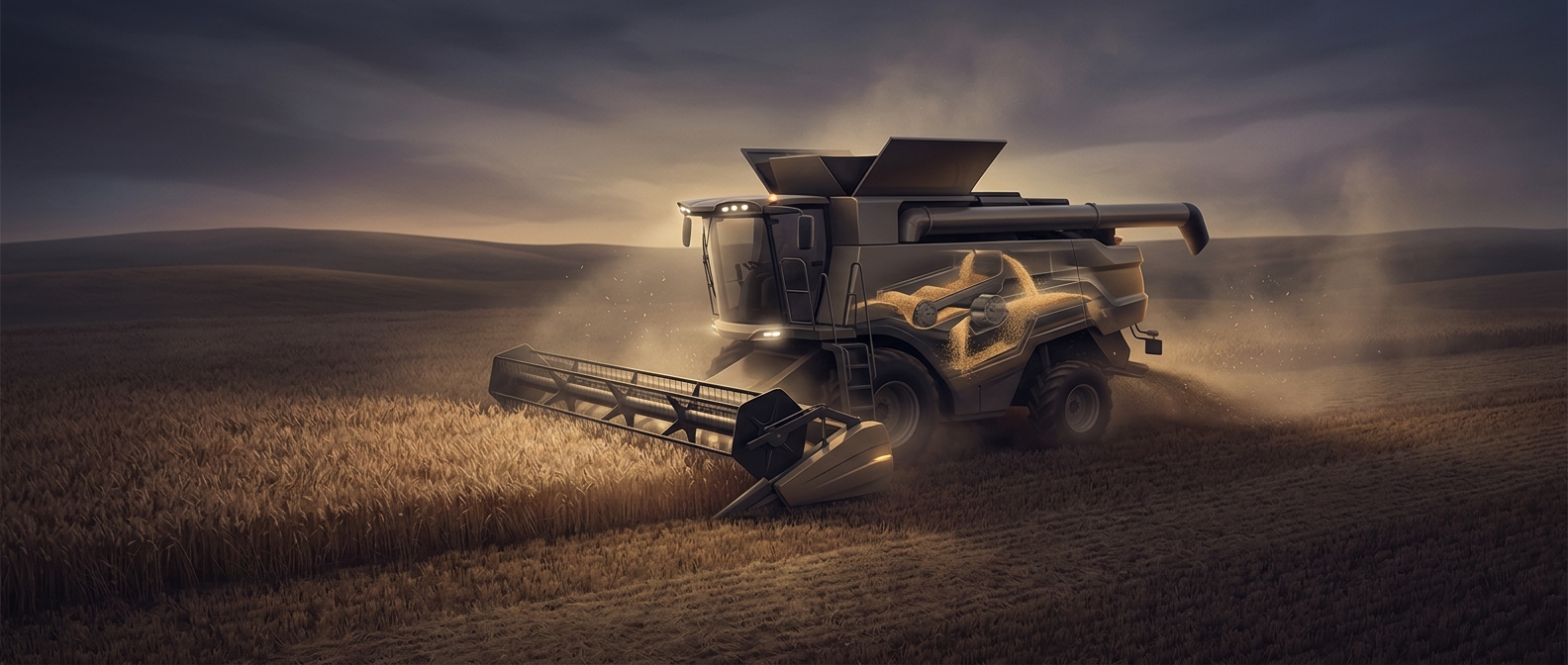
A combine harvester works because it turns a standing crop into a continuous stream of plant material, then separates that stream inside the machine. At the front, a wide attachment called the header gathers the stalks and cuts them. A conveyor carries the cut crop into the combine as it moves forward, so cutting and processing happen at the same time.
From stalks to clean grain
Inside, rotating parts rub or beat the crop to free the kernels from their husks and stalks. This step is called threshing. The mixture then passes through sieves while moving air blows lighter chaff away. The heavier grain falls through into a storage tank; the remaining straw and other plant material are discharged behind the machine, sometimes chopped and spread across the field.
The sequence matters: the machine must separate grain without losing too much of it in the residue or carrying too much chaff into the tank. Operators adjust the combine for the crop and conditions, because a setting that works for one harvest may not work as well for another.
Why combining the jobs matters
Before combines, harvesting required separate stages and often more handling between them. A combine brings cutting, threshing, and cleaning together in one moving operation. That means grain can be collected while the machine is still working across the field, rather than waiting for each job to be completed in turn. The tradeoff is that the combine must keep a steady flow moving through several mechanisms at once—and leave the field with both the grain and the leftover stalks accounted for.