Why suspended roots can still feed a plant
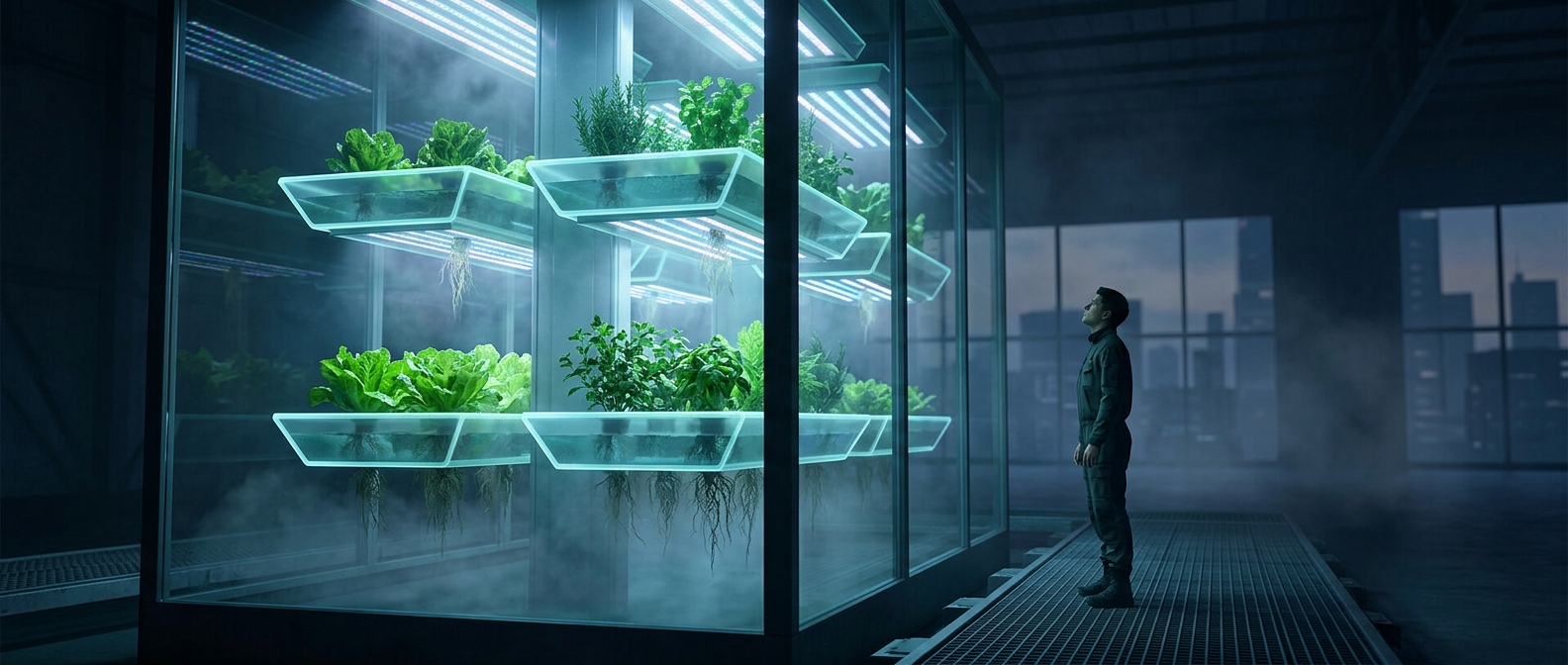
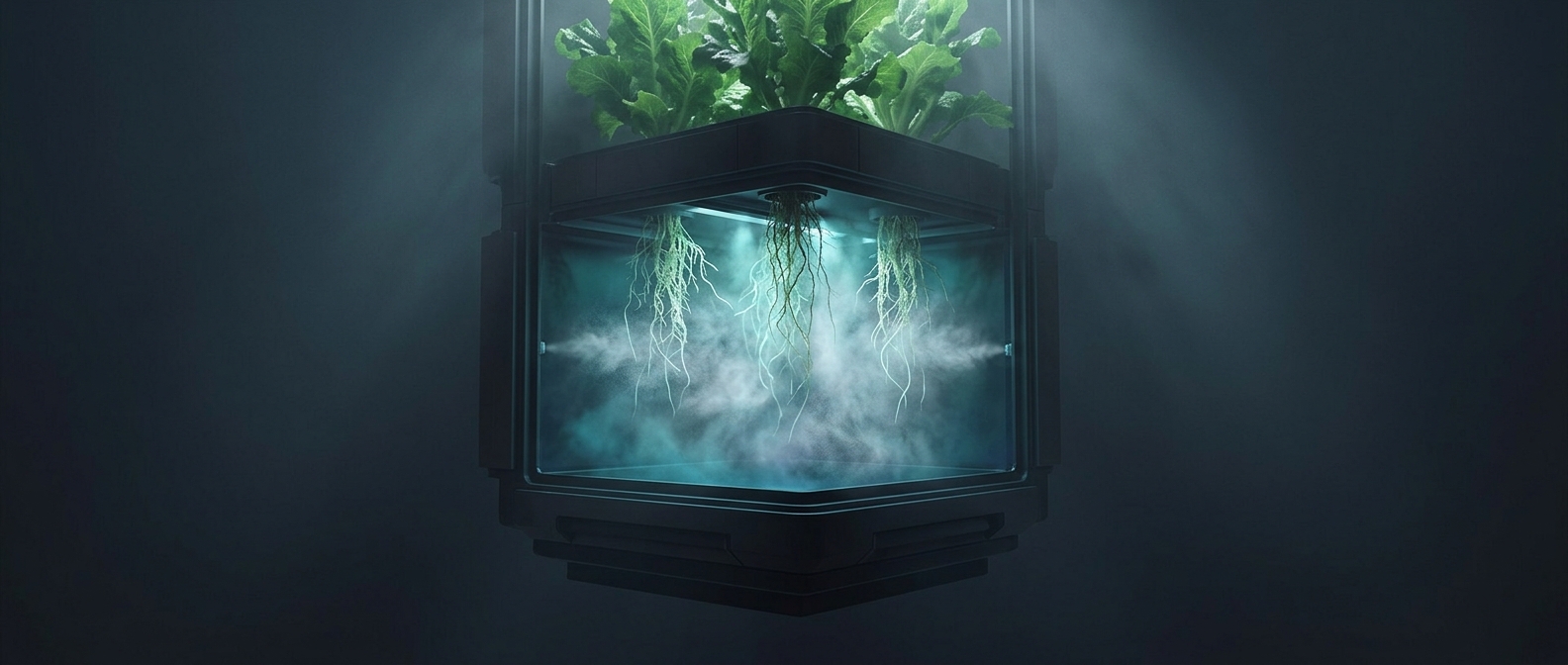
A plant does not need soil itself; it needs water, mineral nutrients, oxygen, and something to hold it upright. In aeroponics, a frame supports the plant while its exposed roots receive nutrient-bearing droplets. The roots take up dissolved minerals through their surfaces, much as they would from water in soil, while the open air around them supplies oxygen.
That combination is the key design choice. In waterlogged growing systems, roots can get too little oxygen; in dry air, they can lose water quickly. Aeroponics keeps roots moist without submerging them, so growers must control both the timing and coverage of the mist.
A resource-saving system with a precise weak point
Because the roots are sprayed directly, the system can deliver water and fertilizer without soaking a large volume of soil. Excess solution can be collected and reused, reducing waste. The dark chamber also helps keep light off the roots and nutrient solution, limiting conditions that encourage algae growth.
But the same efficiency makes the setup dependent on reliable equipment. If a pump or spray nozzle stops working, exposed roots may dry out faster than roots buffered by soil. Nozzles can also clog, so the solution needs maintenance and the mist must reach the roots evenly.
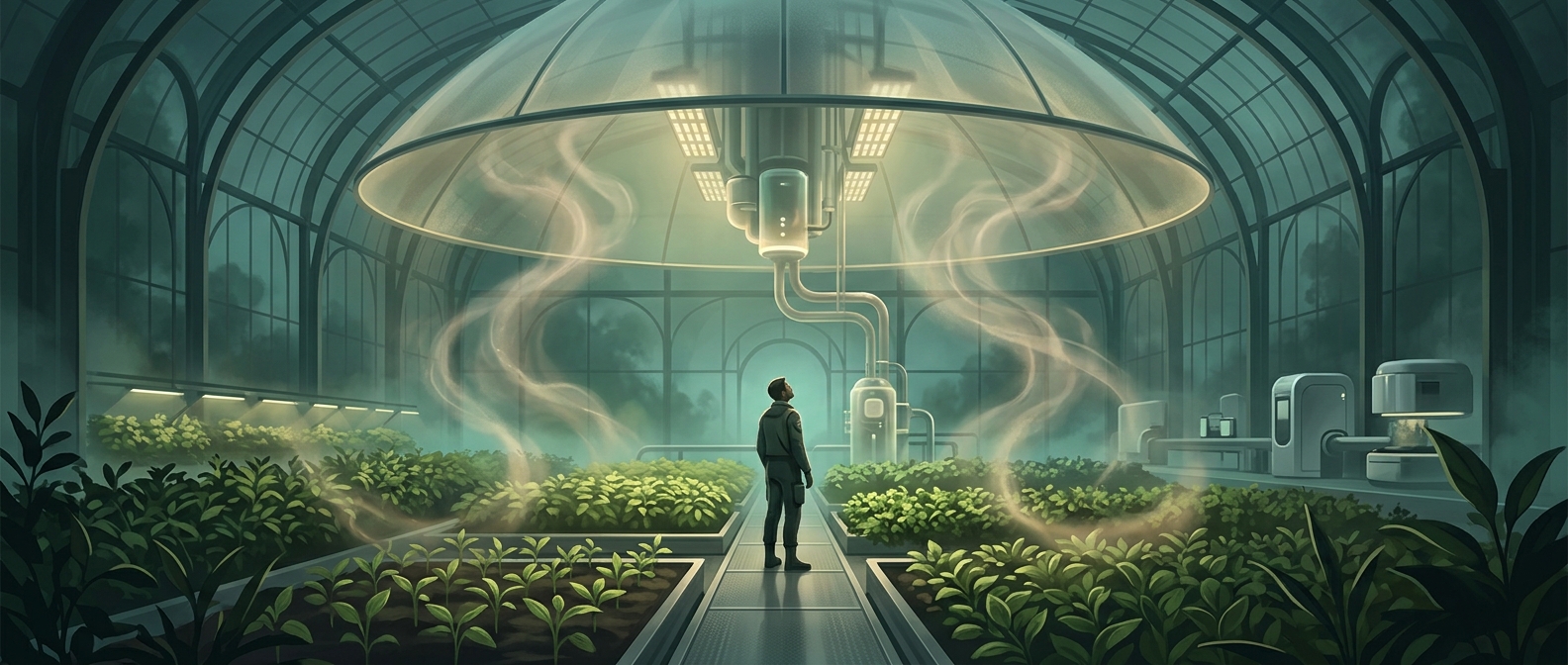
Aeroponics is therefore less a matter of simply removing soil than of replacing soil’s functions with careful engineering. The growing chamber, nutrient mix, and misting system together have to provide steady support—because in this method, a brief interruption can reach the roots directly.