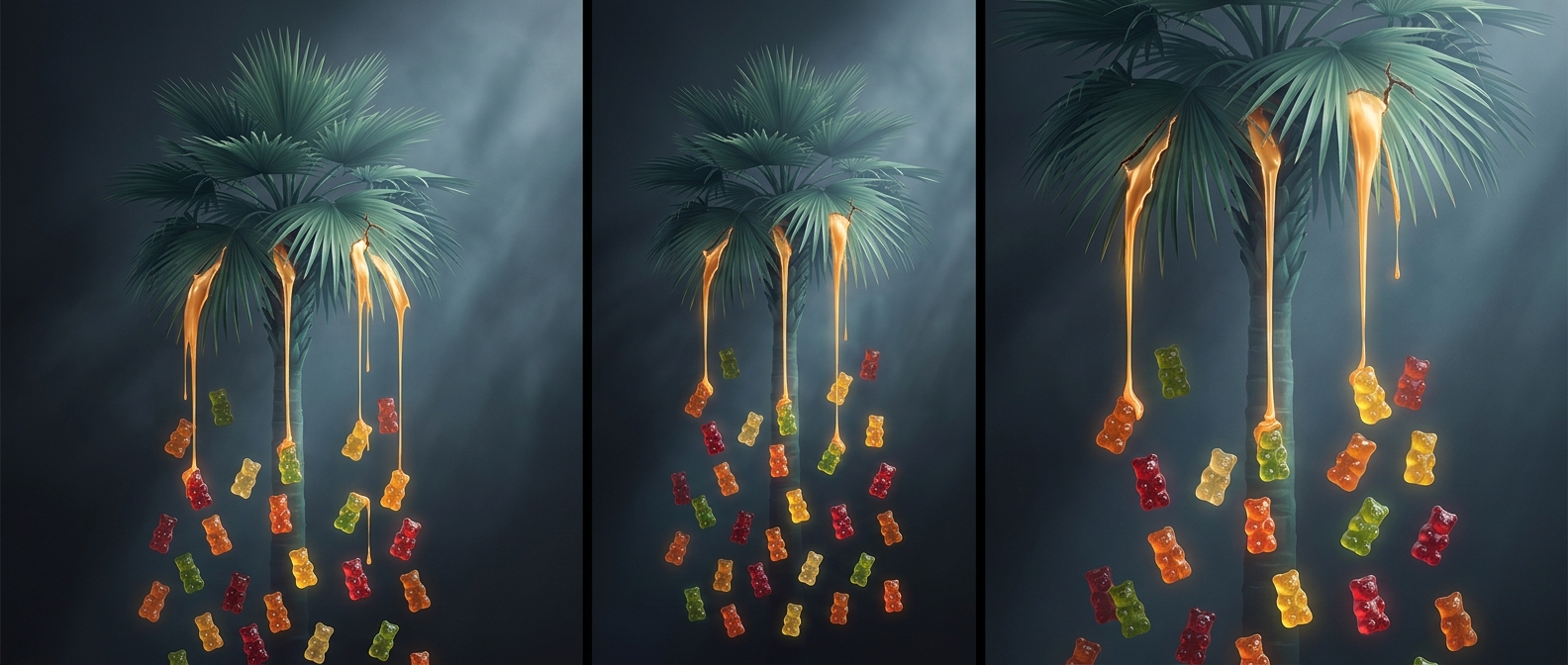
A Thin Barrier Between Sticky Candies
Gummy bears are tacky because their sugar-and-gelatin surfaces can hold onto moisture and cling when candies touch. A very thin coat of carnauba wax creates a smoother, water-repelling surface between them. That barrier makes the bears less likely to fuse into a single lump during handling and packaging, while also reflecting light to produce their shine.
Carnauba comes from the leaves of a Brazilian palm. The leaves produce the wax as a protective coating; after it is collected and refined, the material can be used in products that need a durable, glossy finish. In candy, only a small amount is needed: the wax sits on the outside rather than changing the gummy center’s texture.
Why the Same Wax Polishes Floors
The connection to hardwood-floor polish is the wax’s surface behavior. Carnauba forms a hard, glossy layer that can help smooth and protect a surface. On a floor, that layer helps create a polished finish; on a gummy bear, it is a barely noticeable coating that keeps neighboring candies from grabbing onto one another.
The practical difference is scale and purpose, not a different kind of material: one finish is meant to cover a large surface, while the candy coating is just enough to keep a handful of gummies separate and shiny.