Why milking depends on a repeating pulse
A calf does not draw milk by holding the teat under an unchanging pull. It alternates between drawing milk and easing pressure. Milking machines are designed around the same basic rhythm: a vacuum draws milk out, then the teat is allowed to recover before the next pull.
That pause matters because the teat is living tissue, not a pipe. Repeated suction can draw blood and fluid into it, making the teat swollen and less able to release milk. A continuous vacuum would keep pulling without giving the tissue time to recover, increasing the risk of injury.
How the machine creates the rhythm
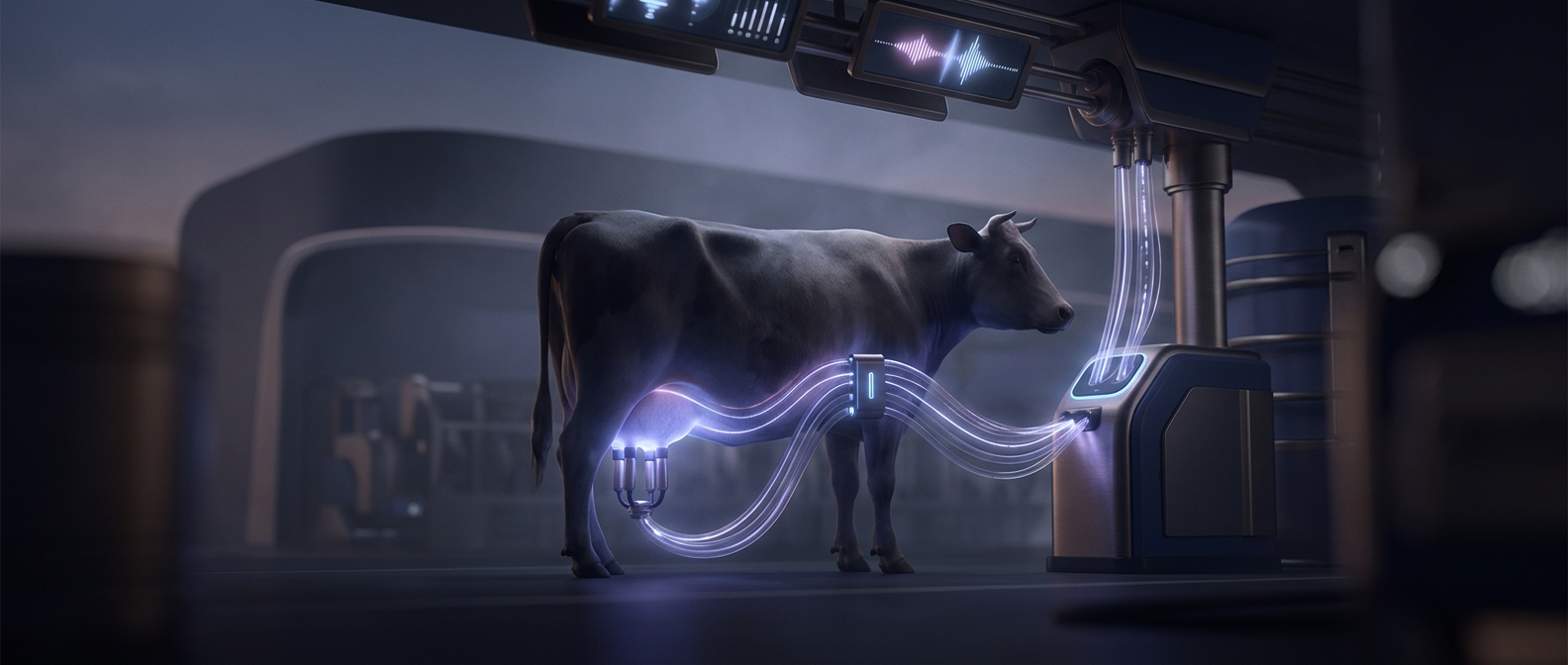
The teat cup fits around each teat. Inside it, vacuum helps draw milk through the teat canal. Outside the teat, a flexible rubber liner repeatedly opens and closes. A pulsator changes the pressure around that liner: it opens for the milking phase, then squeezes the teat gently during the rest phase.
That squeeze briefly interrupts milk flow and helps blood and fluid move away from the teat. The cycle repeats many times during a milking session, producing a steady flow without subjecting the tissue to nonstop suction.
The tradeoff is controlled extraction
The machine must pull firmly enough to remove milk, but not so continuously that the teat remains congested or stressed. Its pulse is therefore not just a way to automate a calf’s action; it is a practical balance between extraction and recovery. The pause between pulls is part of the milking process, not wasted time.