How a thermal receipt makes its own ink
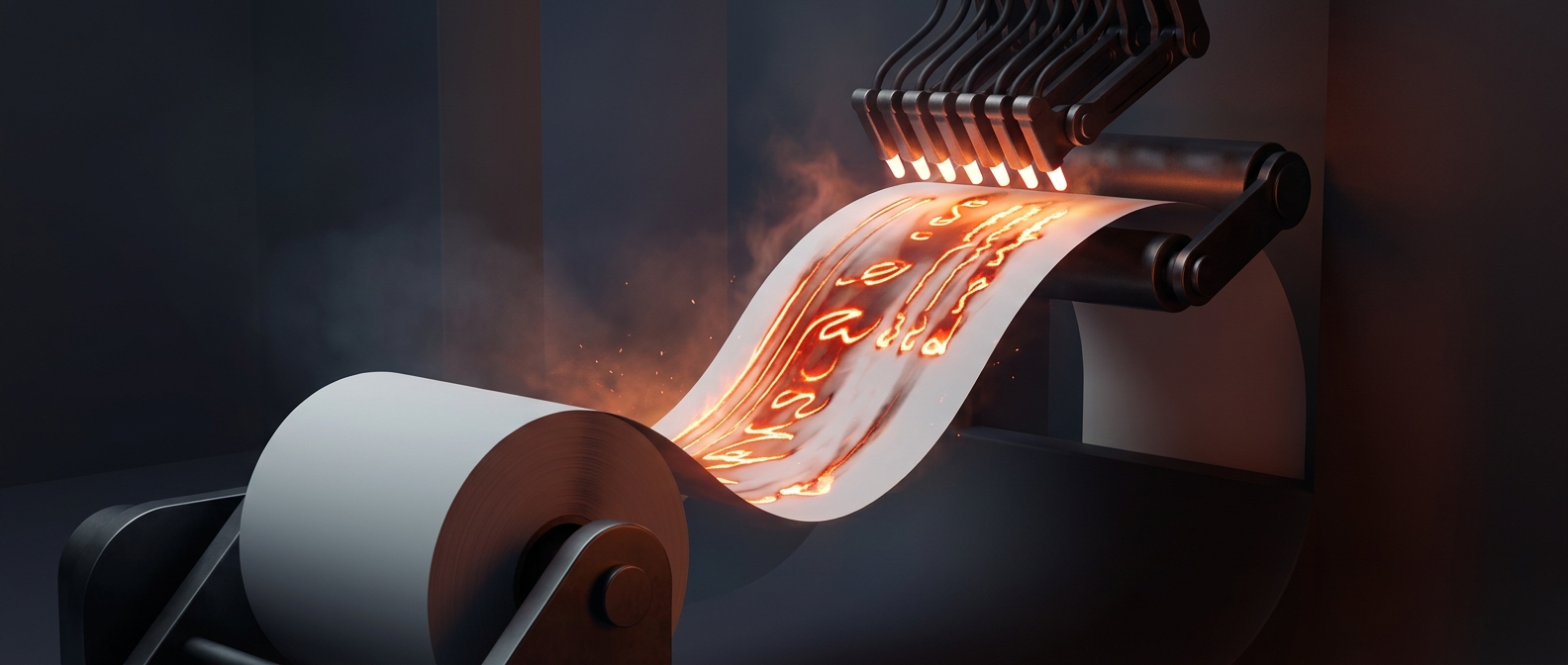
A thermal printer does not press ink onto a receipt. Its printhead contains tiny elements that heat selected spots on special paper as the paper moves past. The paper’s coating contains chemicals that react to that heat, changing color—usually to black. The printer can therefore form letters and numbers without an ink cartridge or ribbon.
Why heat can darken the whole page
The coating is designed to react when it receives a brief, concentrated pulse of heat. But it cannot distinguish a printer’s pulse from warmth delivered another way. A hot car, a radiator, or direct sun can warm the coating enough to trigger the same color change across areas that were meant to stay blank. If the reaction spreads over much of the sheet, the receipt can turn gray or black and its text may become hard to read.
Why the words can disappear, too
Thermal print is a chemical change in the paper’s surface, not a durable layer of pigment sitting on top. Heat, light, friction, and contact with some chemicals can alter the coating over time. Depending on the paper and conditions, printed marks may fade or the background may darken, reducing the contrast between the two.
That is why a receipt left on a dashboard can become nearly useless: the sun heats both the paper and the air inside the car, while the dark dashboard can intensify the warming. Keeping important receipts cool, dry, and out of direct light helps preserve the contrast that makes the printing legible.