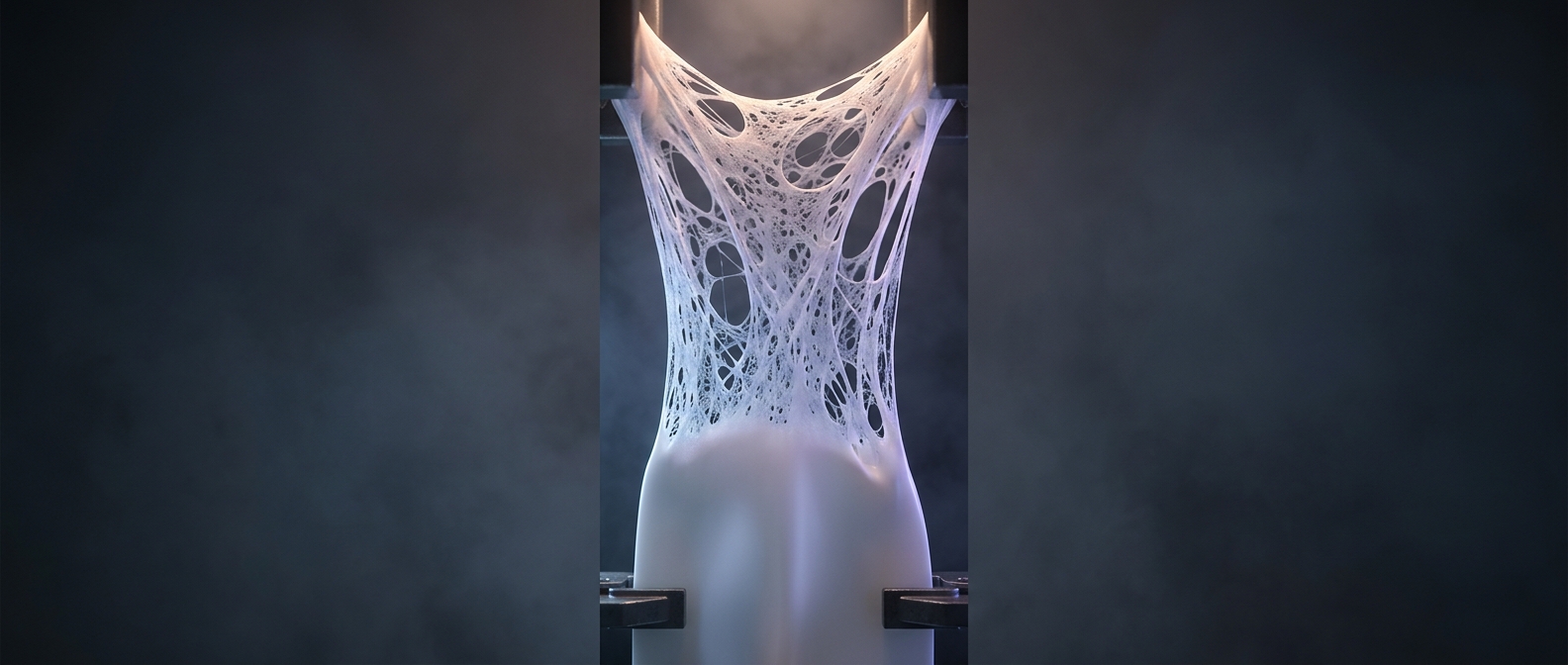
How stretching turned Teflon into a membrane
Gore-Tex’s key material is expanded polytetrafluoroethylene, or ePTFE: the familiar nonstick plastic Teflon transformed into a thin, porous sheet. When heated PTFE is pulled rapidly, its structure stretches apart into a network of fine fibers and tiny openings. The result is not a solid film with holes punched through it, but a delicate, interconnected web.
That change matters because water behaves differently depending on its form. Liquid raindrops are held back by the membrane’s small openings and the material’s resistance to being wetted. Water vapor, made of individual molecules, can move through the open network. So the membrane can block rain while allowing some moisture from perspiration to escape.
The membrane is only part of the garment
A bare ePTFE sheet would be too fragile for a jacket. In clothing, the membrane is bonded to fabric layers that protect it and provide the strength and surface people wear. The finished garment’s performance depends on that whole construction, not just on the membrane: seams, outer fabric, and the way the layers are joined all affect whether water gets in and how well vapor gets out.
“Breathable” also does not mean sweat vanishes instantly. Liquid sweat must first evaporate, and vapor moves outward most effectively when conditions favor that movement. The practical breakthrough was making one thin material do two seemingly conflicting jobs—resist liquid rain while leaving a route for water vapor—by changing the structure of a familiar plastic rather than simply making a tighter barrier.