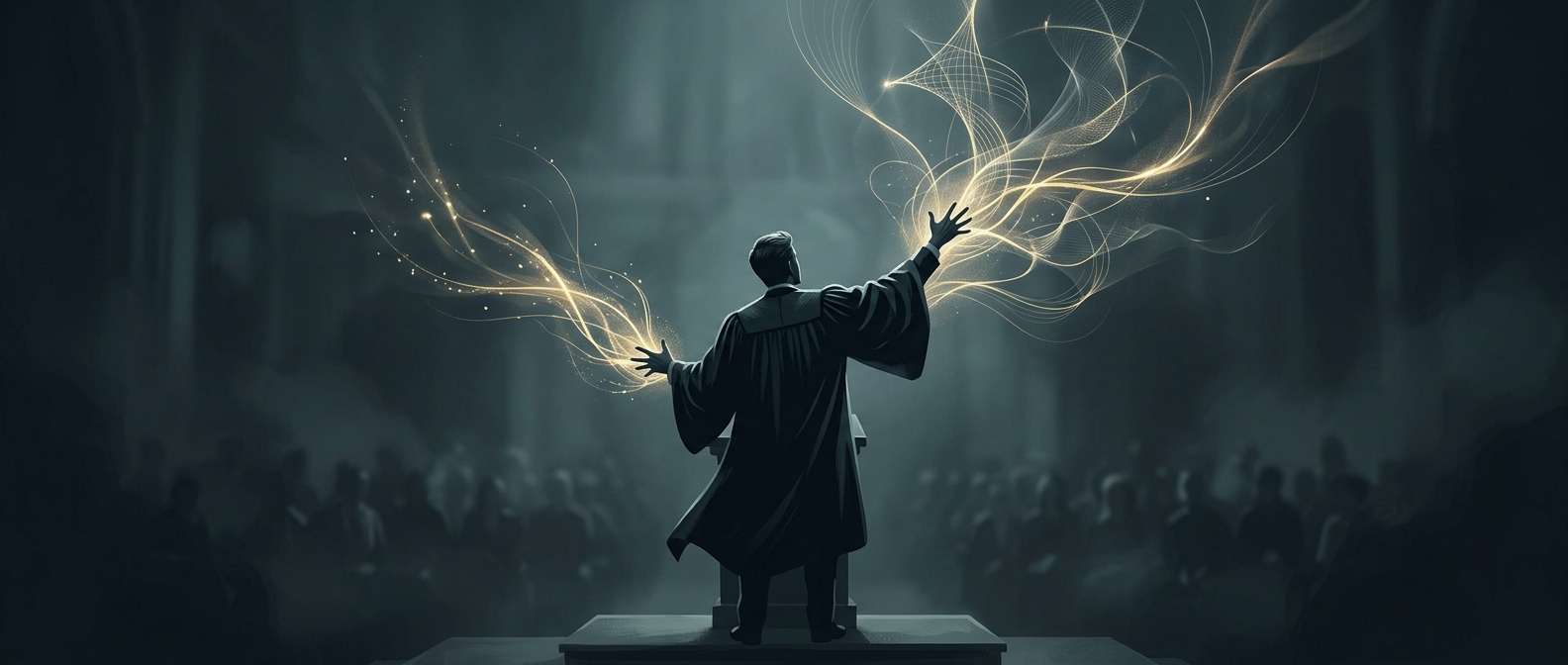
The hands make relationships visible
Spoken language arrives one word at a time, so listeners have to hold earlier details in mind while they work out how those details fit together. A gesture can put part of that structure in view. A speaker might move one hand from left to right to mark a sequence, or hold both hands apart to compare two alternatives. The motion gives listeners a spatial cue they can grasp before the explanation is finished.
That cue can make an account feel clearer and easier to follow. Because people often use clarity as a shortcut when judging a speaker, they may also infer that the person is capable or intelligent. The impression is not proof of greater expertise; it is a response to how fluently the idea is being communicated.
Gesture can help the speaker think
Moving a hand is not always decoration added after a thought is complete. When explaining a shape, direction, or sequence, a speaker can use movement to keep those relations organized. A hand can stand in for an object, trace a change, or separate two parts of an argument. That lets some information be carried by the body rather than managed entirely in words.
This is especially useful when an idea is hard to describe precisely. If a speaker is searching for the right phrase, a gesture may express a relation that language has not yet pinned down—and may help the speaker settle on what to say next. The same movement can therefore support both sides of communication: it gives the listener another route into the explanation and gives the speaker a physical way to work through it.
The effect is most meaningful when a gesture matches the point being made. Hands that trace the actual sequence or contrast can reveal the structure of an explanation; movement without that connection may add little. A small motion can make an abstract relationship visible long enough for both people to follow it.