A Branch That Gives Away a Heavy Approach
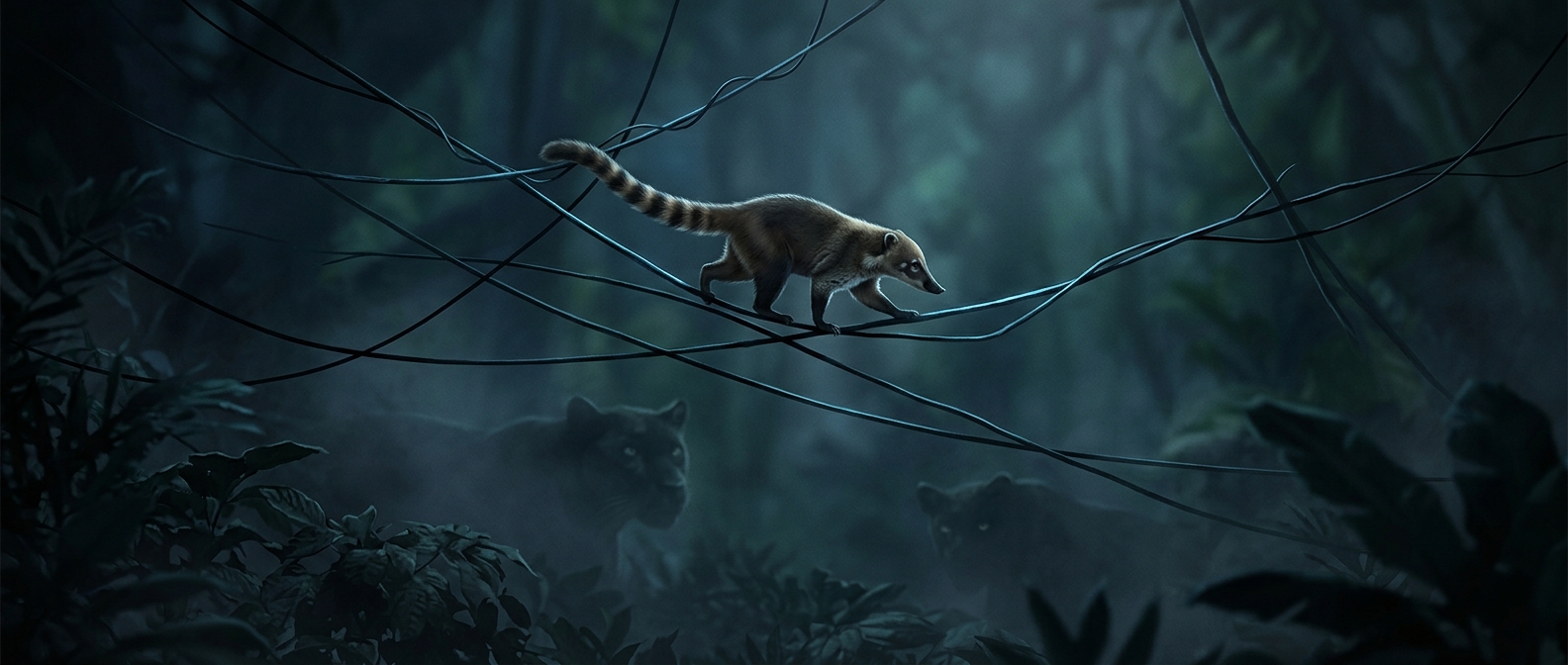
A thin branch is more than a precarious perch for a coati. It can also make an approaching animal’s weight noticeable. A small, agile climber can move onto slender supports that would bend sharply—or break—under a heavier pursuer. The difference in load turns the branch into a simple warning system.
From Bending Wood to an Escape Cue
When a heavy animal steps onto a branch, the wood flexes and may crack. That movement can travel through the connected branches, while the sound provides an immediate cue. The coati does not need to see the hunter to detect that something has disturbed its route.
The warning matters because it arrives before the pursuer reaches the coati’s position. The animal can respond by moving farther through the canopy or choosing another route while the heavier hunter is still negotiating the unstable foothold.
An Advantage Built Into the Route
This is a tradeoff, not a perfect barrier: a slender branch may bend, sway, or break, and it does not make a coati unreachable. But navigating supports that a heavier animal cannot use as easily can buy the coati time. In the canopy, even a branch too weak to carry a pursuer may be strong enough to carry a warning.