How a mirror adds another sightline
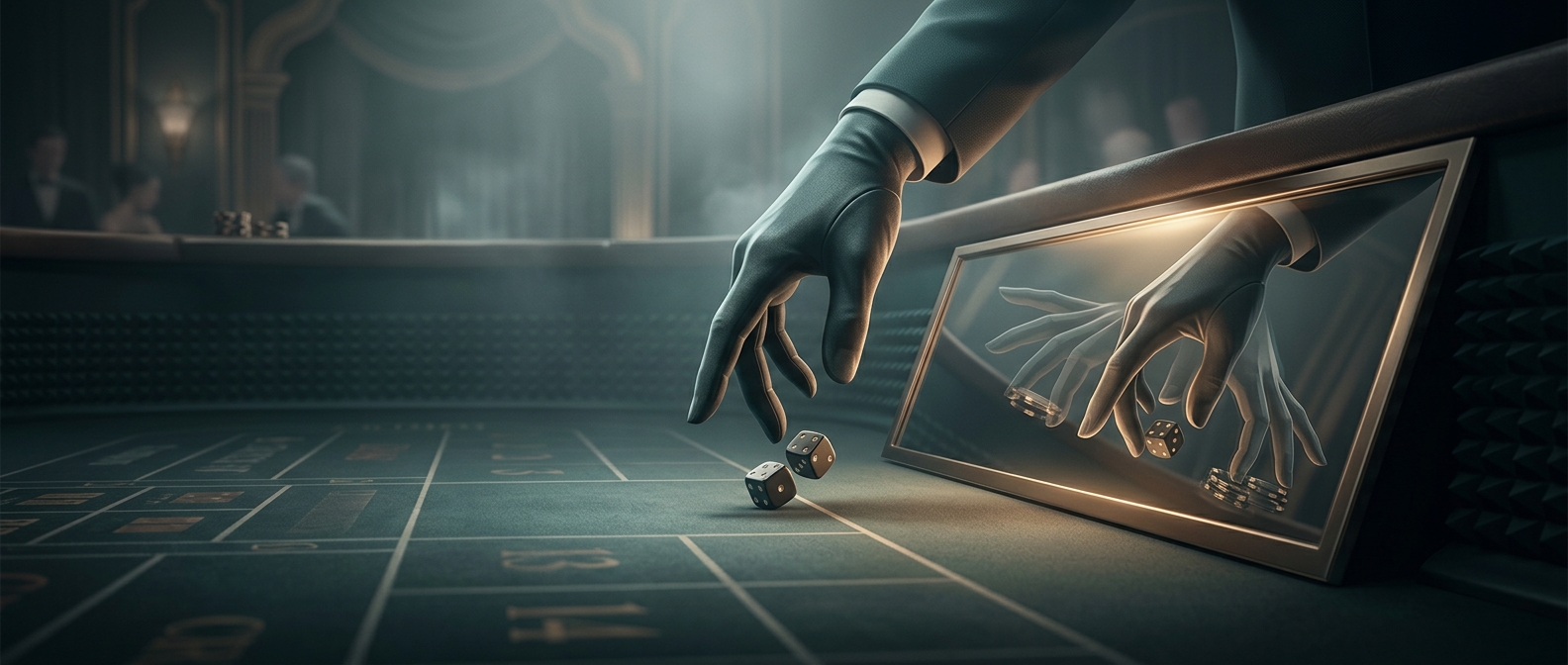
A craps table is a crowded work surface: players place bets in marked areas, chips accumulate, and the dice move through the center. A dealer cannot watch every hand and every stack while also handling the game. A reflective panel near the table can provide a second view of activity that would otherwise sit outside the dealer’s direct line of sight.
The benefit is geometry, not magnification. Light from a hand or chip stack bounces off the mirror into the dealer’s eyes, making an obscured area visible without requiring the dealer to turn away from the game. That extra angle can make it harder for someone to conceal a chip movement behind a pile or another player.
Visibility is part of the table’s design
Craps involves many simultaneous bets and frequent chip handling, so the table’s layout already helps organize what can be seen: betting areas are marked, and dealers keep chips in designated places. Mirrors supplement that arrangement by reducing blind spots. They do not make every move visible or prevent cheating on their own; they make certain movements harder to hide in the first place.
The practical result is a table where the dealer can keep attention on the action in front of them while still catching more of what is happening at the edges. A small reflective surface can turn a hidden hand into one that is visible from the dealer’s normal position.