Why the Atacama Can Stay Dry for Generations
The Atacama’s extreme dryness is not simply a matter of being far from the ocean. The desert sits between two atmospheric barriers that make rain unusually hard to produce. To the east, the Andes block much of the moisture carried inland from the Amazon basin. To the west, a cold Pacific current cools the air above the coast, discouraging the warm, rising air that typically builds rain clouds.
The result is a landscape where clouds can form without delivering rain. Coastal fog may drift across parts of the desert, but fog is made of tiny droplets suspended in air; it does not necessarily gather into the heavy drops needed to fall as rain. A station can therefore register long stretches with no measurable precipitation even when the sky is not always clear.
What the Long Record Does—and Doesn’t—Mean
The account of stations recording no rain for centuries describes particular sites, not every part of the Atacama. The desert spans a large area, and its conditions vary with elevation and distance from the coast. Even so, the reported record captures how exceptionally persistent the dryness can be in some locations: a brief shower is not just uncommon, but potentially absent across many generations.
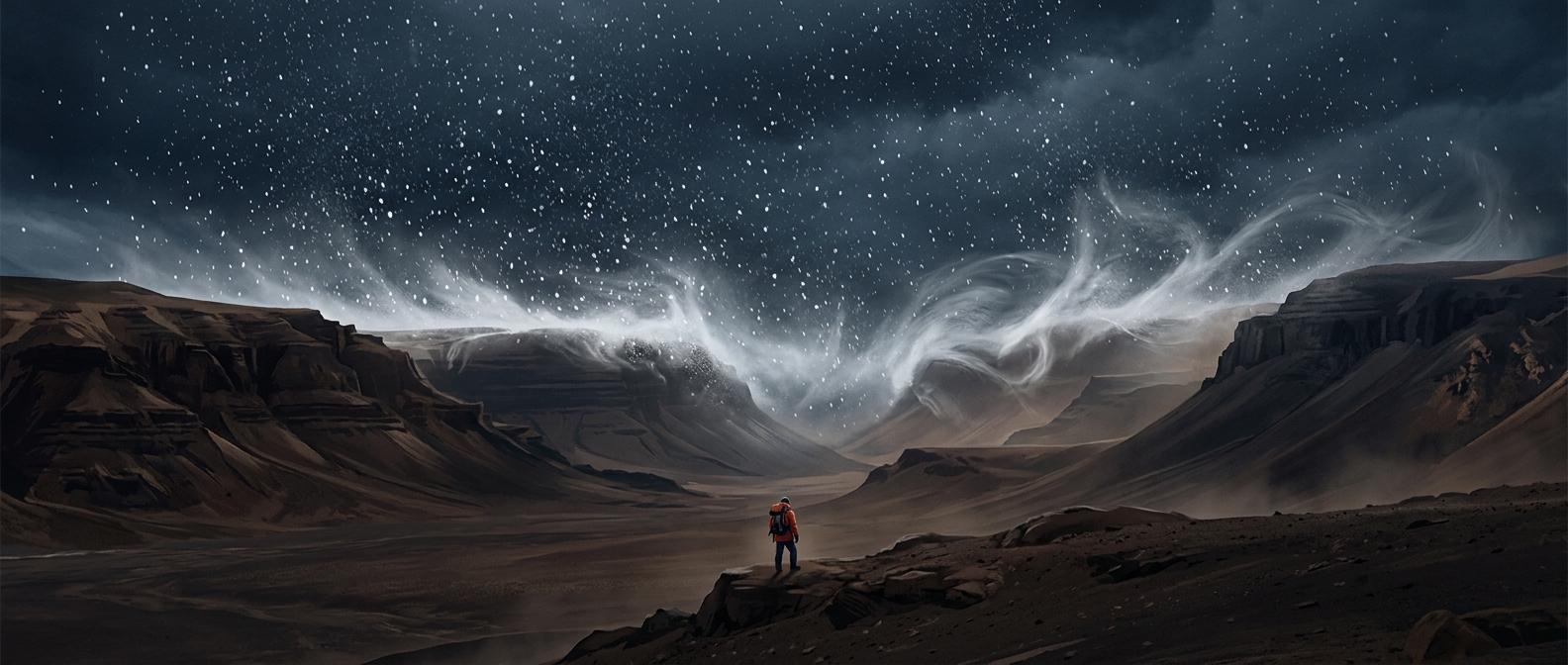
That persistence shapes the experience of the place. Visitors may see a fog-softened coastline, salt flats, or strikingly clear skies and assume these belong to different climates. They are connected by the same underlying scarcity of rain: moisture may be nearby, but the region’s geography and cool air often keep it from becoming a downpour. In the driest pockets, the landscape can preserve that absence long enough for a weather record to span centuries.