The flashlight made the dark less private
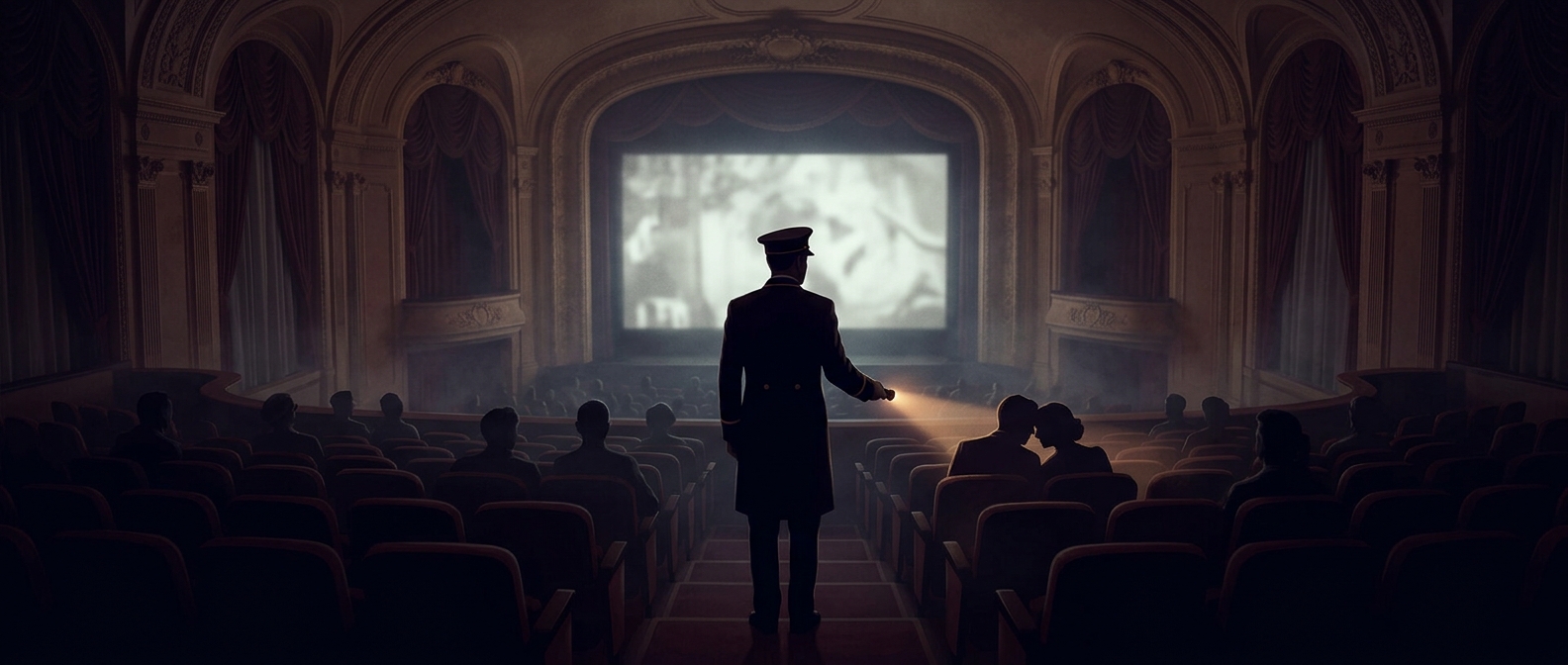
A movie theater needed darkness for the screen, but that same darkness gave patrons a measure of privacy. In early cinemas, ushers moved through the aisles with flashlights, keeping an eye on both the audience and the room. When couples became visibly affectionate, a beam of light could expose them to nearby moviegoers—and make clear that staff had noticed.
Ushers guarded the theater’s respectability
The job was about more than finding seats or keeping order. Theaters depended on attracting audiences, including families, while operating in a space where strangers sat close together in the dark. Monitoring behavior helped owners present the cinema as a respectable public venue rather than an uncontrolled gathering place. An usher could interrupt conduct without stopping the film: a light directed at a couple, or a public reprimand, turned private behavior into a visible breach of the room’s rules.
A small intervention with a large audience
That public exposure was part of the enforcement. The couple might feel embarrassed, and other patrons could understand that the same rule applied to them. The flashlight therefore served as both a practical tool and a warning: the screen could be dark, but the theater was not beyond supervision.