A Dream That Did Not Read Like a Story
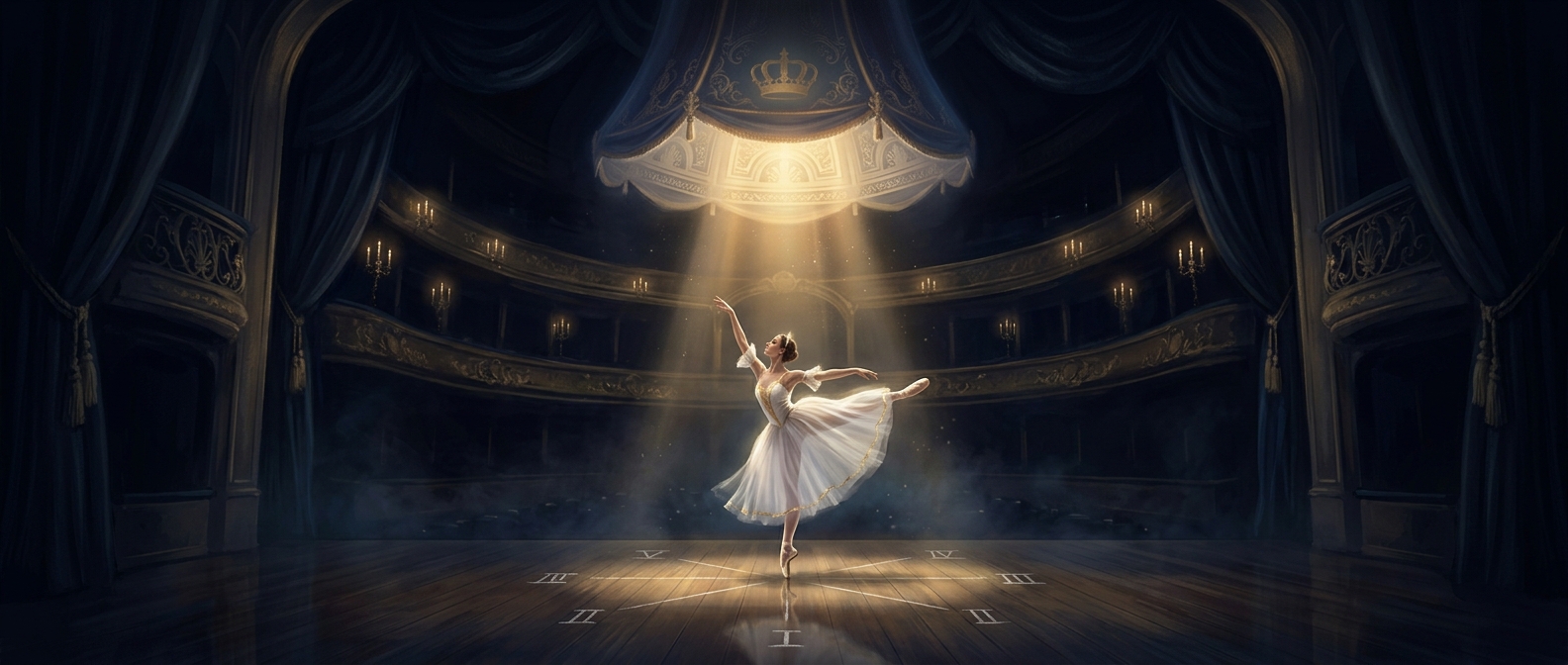
When The Nutcracker premiered in St. Petersburg in 1892, its structure offered critics plenty to question. The ballet begins with a family’s Christmas celebration, shifts into a battle between toy soldiers and mice, then sends its young heroine, Clara, through a sequence of fantastical scenes. The plot eventually gives way to dances in the Kingdom of Sweets—beautiful set pieces that do little to move the story forward.
That loose, dreamlike progression could feel less like a tightly connected drama than a chain of episodes. The choreography also drew criticism, though reactions were not uniformly hostile: Pyotr Ilyich Tchaikovsky’s music was widely recognized as a strength. The production’s mixed reception shows how a work can contain memorable elements without immediately succeeding as a whole.
How Its Weakness Became Its Advantage
The ballet’s episodic design later proved useful. A production can preserve the recognizable Christmas party, battle, and fantasy journey while staging the dances and scenery in its own way. And because the later scenes are a series of contrasting performances rather than one continuous dramatic action, they can hold an audience’s attention even when the plot is simple.
Over time, repeated productions helped turn that structure into a seasonal ritual. The very feature critics found disjointed gave theaters room to create a lavish holiday spectacle, with familiar scenes audiences could anticipate. The Nutcracker did not become a staple because its story suddenly became seamless; its scattered dream logic became part of the appeal.