Why the 15 Puzzle Was Hard to Put Down
The 15 puzzle looks almost too simple to interrupt a workday: fifteen numbered tiles sit in a square frame with one space left empty. Slide a tile next to the gap into it, and keep going until the numbers are in order. There are no pieces to collect and no rules to memorize. The challenge comes from planning a sequence of small moves that can easily undo one another.
Every Move Changes the Board
A tile cannot jump over another or move freely across the frame. To shift a number toward its destination, a player may first have to move several other tiles out of the way, using the empty space as a temporary passage. The board is small enough to grasp at a glance, but each move changes what can happen next. That combination makes it easy to start solving—and easy to keep trying “just one more” arrangement.
The puzzle also hides a trap for hopeful solvers: not every imaginable arrangement can be reached by sliding. For example, a board that is solved except that 14 and 15 have swapped cannot be fixed by legal moves. The tiles can travel around the empty space, but their order is constrained by how they move. Knowing this does not diminish the challenge; it shows why a board that looks nearly finished may still resist every attempt.
A Small Game With a Large Claim on Attention
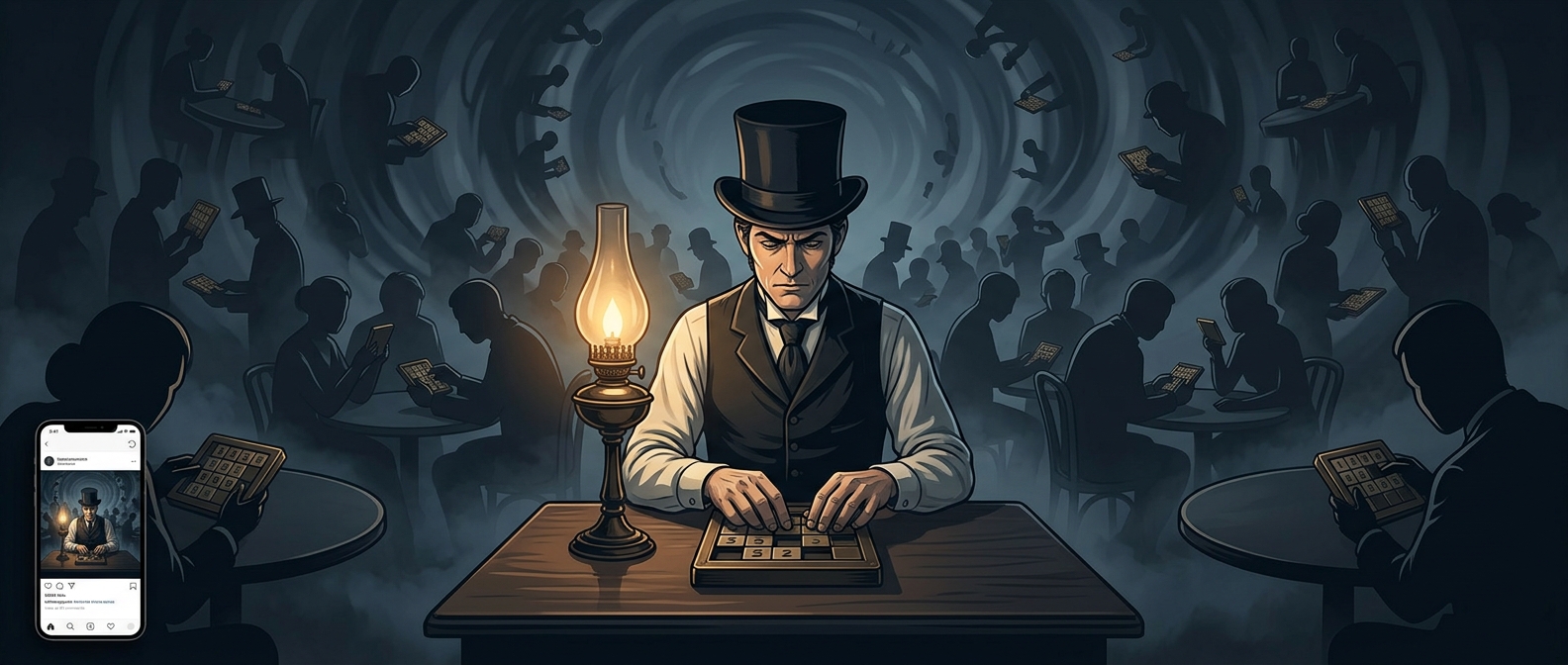
The puzzle needed no elaborate equipment or special setting. A player could pick it up, make a move, and immediately see whether the board seemed closer to its goal. That quick feedback, paired with the difficulty of seeing several moves ahead, made it easy for the game to take over attention. When workers kept solving instead of working, employers were confronting a design feature as much as a pastime: the puzzle made stopping feel like abandoning an unfinished problem.