A crossword without the familiar black squares
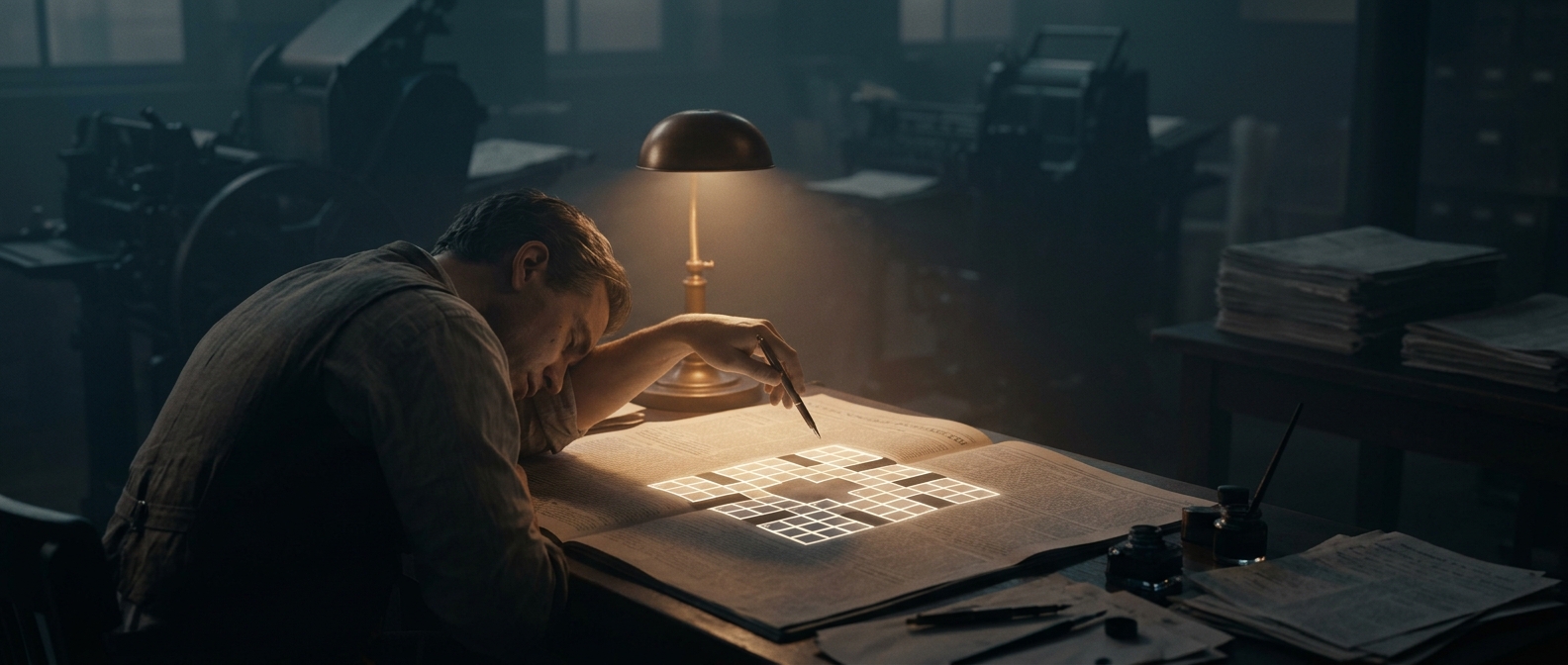
Arthur Wynne’s “Word-Cross” looked unlike the compact, block-patterned puzzles common today. Its answer spaces formed a diamond, and the grid contained no black squares to divide one entry from another. Instead, the diamond’s outer shape helped define where answers began and ended.
Solvers still used the essential crossword trick: a letter in one answer also belonged to another. Clues pointed to entries running across or down, and the shared letters gave solvers a way to check their guesses. Numbering linked each clue to its starting square, making the open layout navigable without dark blocks.
The shape was part of the design
In a modern crossword, black squares do two jobs: they separate answers and create a pattern of open and closed spaces. Wynne’s design relied more on its outline and the intersections between words. That made the puzzle feel less like a filled rectangle and more like a word pattern arranged around a central space.
The format showed that a crossword did not need the visual grid conventions readers now take for granted. Its defining feature was the crossing of answers, not the black-and-white pattern. The diamond was an early solution to the practical problem of fitting a self-checking word game onto a newspaper page.