A blank patch of newspaper became a puzzle
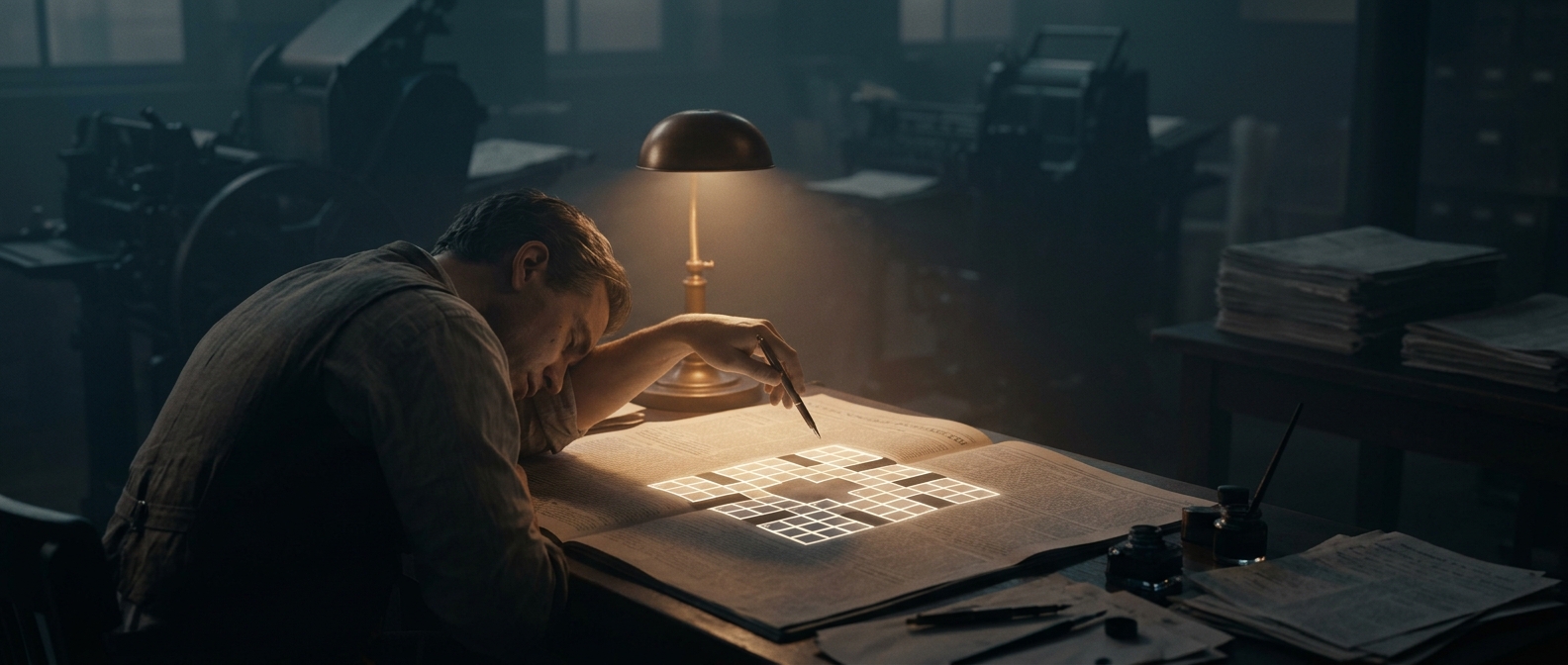
In 1913, a newspaper page had a practical problem: an open space needed something to fill it. New York World editor Arthur Wynne turned that layout gap into a reader activity, arranging numbered clues so readers could write answers across and down in a grid.
That choice made the puzzle more than a block of text. Each answer crossed others, so a reader who was unsure of one word could use intersecting answers to work it out. Solving became a small act of deduction—and a reason to linger over the page.
From page filler to a newspaper feature
Wynne’s first version was diamond-shaped and did not use the black squares familiar from many modern crosswords. Its basic appeal, however, was already there: a compact puzzle could occupy a defined patch of the page while inviting readers to participate rather than simply read.
The format also suited newspapers. Editors could fit a puzzle into available space, while readers could return to it, share clues, or compare answers. What began as a solution to a page-design problem became a recurring form of entertainment, eventually recognizable far beyond the newspaper that first printed it.
The unlikely consequence is that a blank spot helped establish a new kind of newspaper content: one whose success depended on readers filling in the page themselves.