A heckle the whole street could see
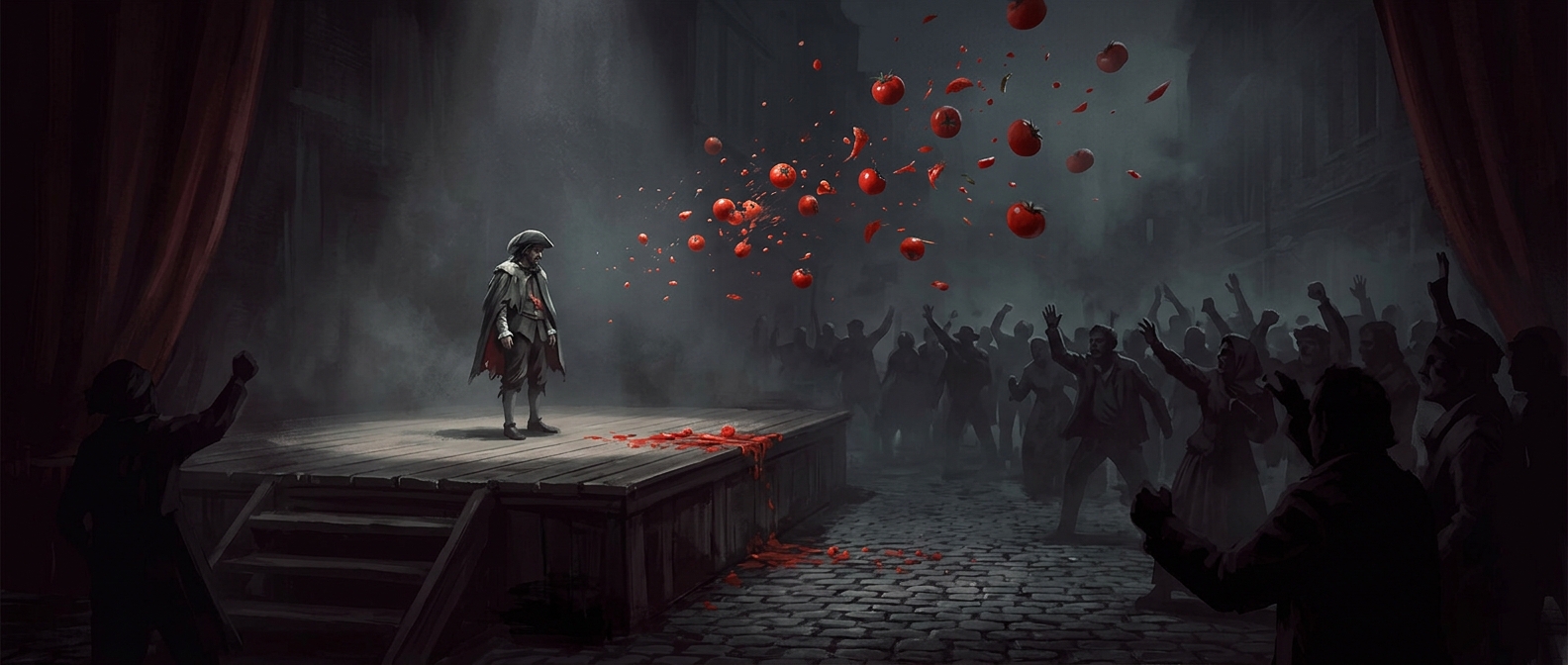
A bad performance could provoke more than boos. In some 19th-century street crowds, spectators threw rotting vegetables at acts they disliked. The choice made displeasure physical and public: unlike a muttered complaint, a flying cabbage or turnip could interrupt the show and make the audience’s verdict visible to everyone nearby.
Why throw produce?
Vegetables were familiar objects, not specialized tools of protest. Spoiled produce had little use as food, so it could serve as a cheap projectile without sacrificing something valuable. Its size and mess also made the response hard for performers to ignore. A performer might keep going through jeers; being struck—or having to dodge food—changed the performance itself.
The gesture worked as a kind of crowd-made review. Spectators were not only deciding whether an act entertained them; they could impose an immediate cost on the person performing. That power was informal and uneven: a lively crowd might turn a poor act into a target, while a performer had limited ways to control the response.
The audience became part of the show
Street entertainment took place in shared public space, where passersby could gather, react, and leave without the boundaries of a seated theater. That made audience behavior unusually direct. A thrown vegetable was both punishment and spectacle, drawing attention from people who might not otherwise have stopped.
The memorable point is that the crowd’s criticism was not merely spoken. It could become part of the act—sometimes literally landing on the performer.