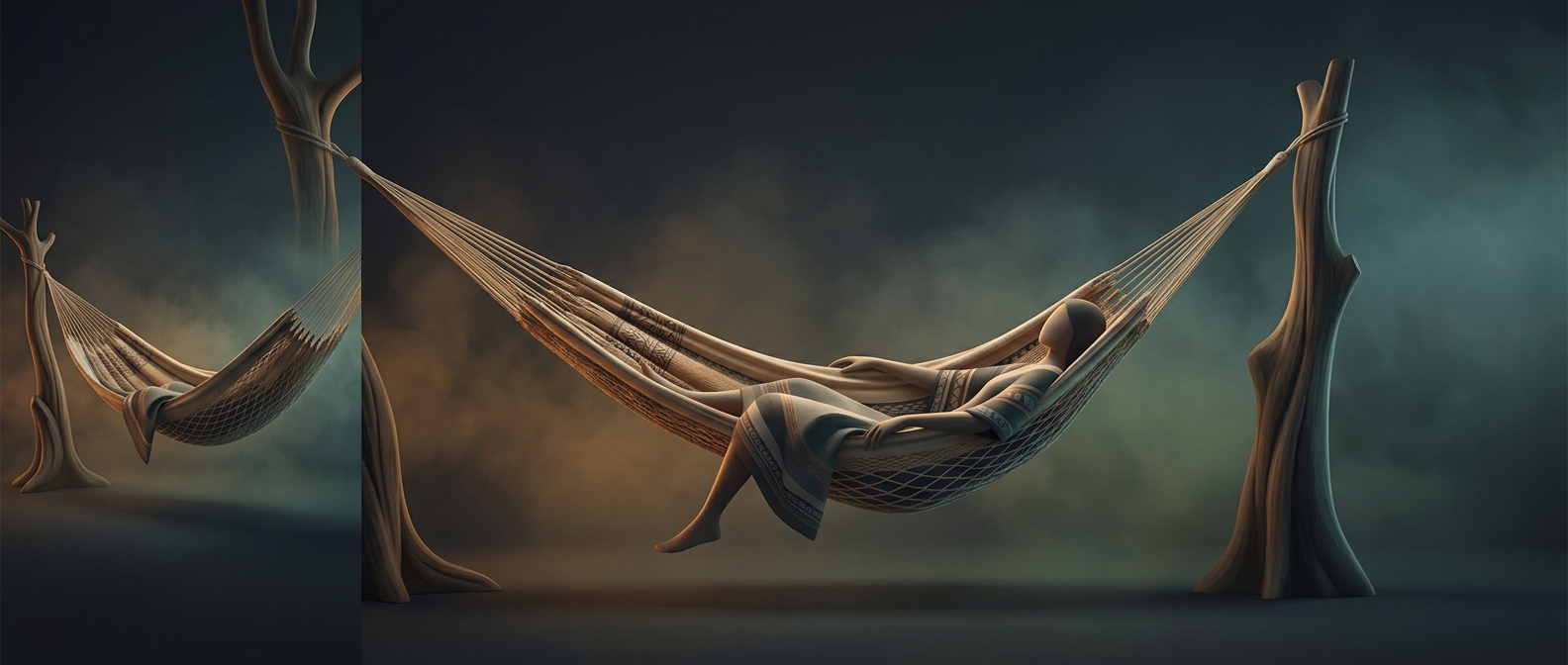
A bed that lifted its sleeper off the ground
For Indigenous communities in tropical parts of the Americas, a hammock could solve a practical problem: how to sleep without lying directly on the ground. Some were woven from plant fibers, including bark. Suspended between two supports, the bed kept a sleeper above crawling insects and often away from damp soil. Its open weave also let air pass around the body in warm, humid conditions.
The design depended on more than simply hanging a mat. A broad, flexible weave spread a person’s weight across many strands, while the attachment points held the bed securely. The result was portable: it could be taken down, carried, and hung again where supports were available.
Why Europeans adopted the design
European visitors encountered hammocks in the Americas and adapted the idea rather than the original materials and techniques in every detail. The suspended bed proved especially useful aboard ships. A hammock could move with the vessel instead of throwing its occupant against a rigid bunk, and it could be taken down and stowed when the space was needed for other work.
That change in setting shows how a local solution could travel: the hammock’s basic advantage was not tied to one landscape. On land, it separated sleepers from ground-level nuisances; at sea, it made a bed that could fit a crowded, moving environment. The key innovation was elevation paired with portability—a simple arrangement that made the same kind of bed useful in very different places.