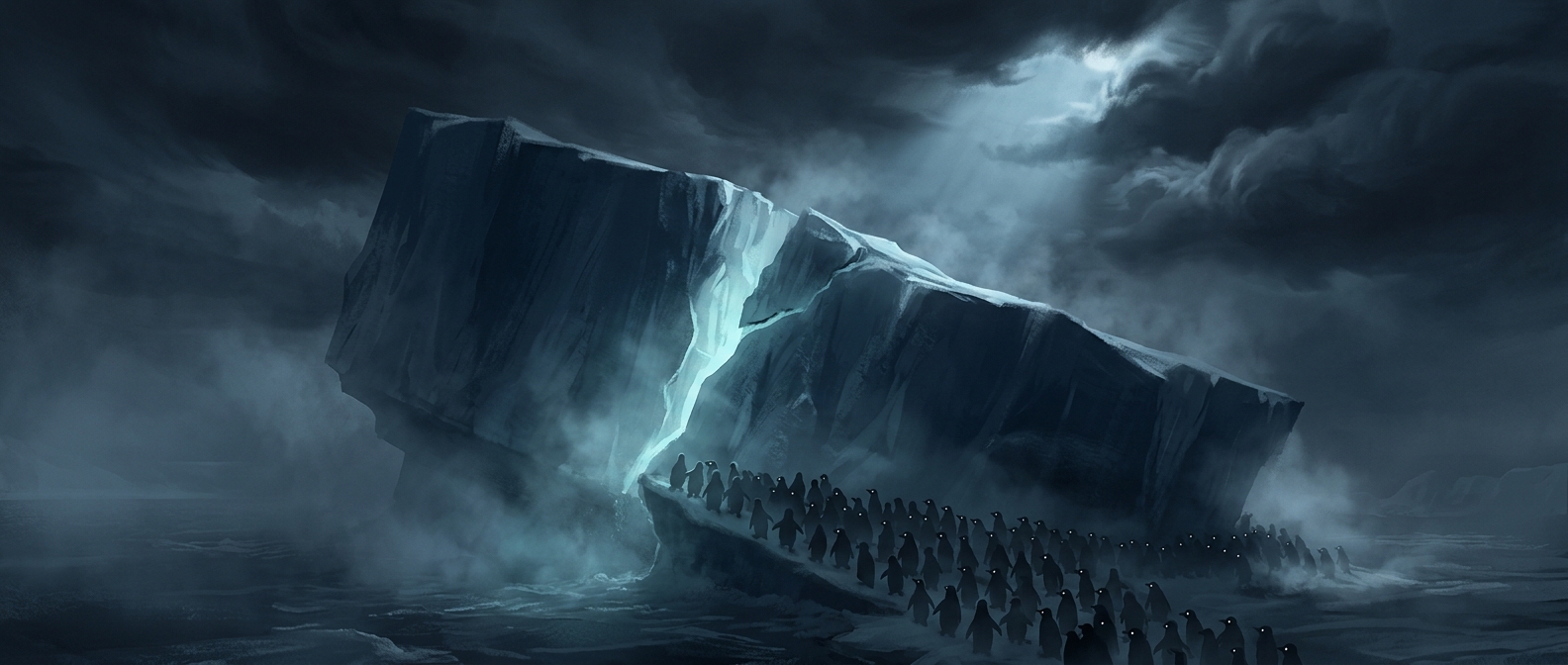
A rumor became a shared event
The iceberg was more than a place to stand: it was a familiar, seemingly permanent part of Club Penguin’s world. Players turned the idea of tipping it into a community challenge, gathering and trying to make the landscape change. The appeal was partly the uncertainty—was there a hidden way to do it, or was the iceberg simply never going to move?
Near the game’s shutdown, the creators made the change real. This was not an iceberg responding to weight according to realistic physics. In a multiplayer game, the room’s appearance is controlled by software: the game can recognize player activity and switch the scene to a new version. The tip was a designed event, turning a long-running player belief into something everyone in the room could witness.
Why the timing mattered
Club Penguin’s shared rooms made the payoff social. A player could see other penguins taking part, and the result mattered because it changed a place the community already knew—not because it unlocked a complicated new system. The developers could use a familiar landmark to create a final, collective moment without rebuilding the whole game.
Because the iceberg tipped just before the servers closed, the event also became a farewell built into the world itself. A years-old question ended not with a forum answer, but with players standing together on a changed iceberg.