A mirror turns geometry into a joke
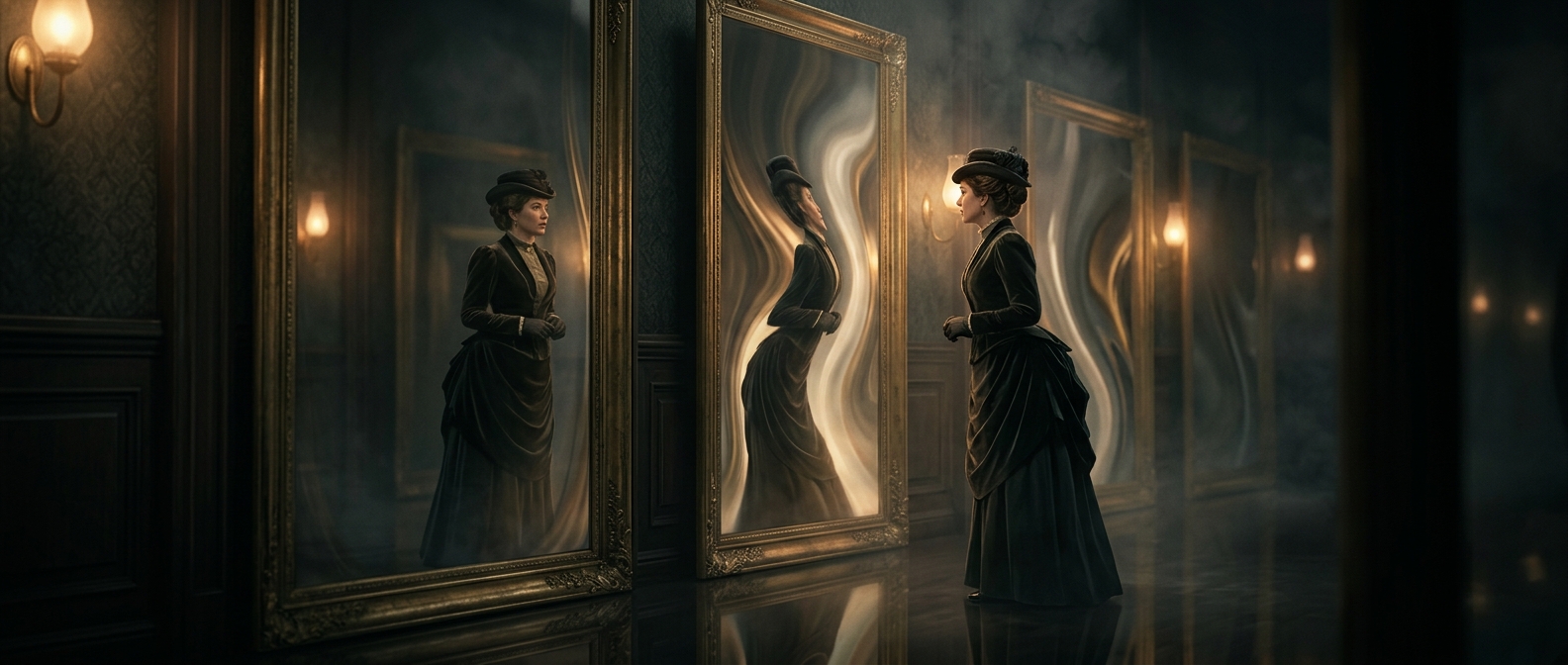
A funhouse mirror does not need to change the person standing in front of it. It changes the direction in which light reflects. A flat mirror sends light back in an orderly pattern, preserving proportions. A curved surface redirects light differently across its face, so the reflected image can appear stretched, squashed, widened, or pinched.
The effect depends on the curve. A mirror that bulges outward and one that bends inward distort the image in different ways; a surface with uneven curves can make one part of a reflection look enormous while shrinking another. Move a few steps, and the reflection changes again because the light now meets the mirror at different angles.
From optical curiosity to crowd attraction
That changeability helped make curved mirrors entertaining beyond the setting of a private room. Their distortions were visible at a glance, required no explanation, and gave visitors an amusing version of themselves to compare with their companions. The illusion was sophisticated in its cause but simple in its payoff: stand, look, laugh, and try another mirror.
Traveling carnivals could turn that brief encounter into a sequence. Instead of viewing one optical curiosity, visitors moved through an attraction of reflections, each offering a different visual surprise. The mirror’s appeal came from the gap between what people expected—an ordinary reflection—and what the curved surface delivered.
That is why the attraction has endured: the trick is physical and immediate. A person’s own familiar face and shape become the spectacle, and a small change in the mirror’s curve is enough to make the familiar look absurd.